



• Angkor’s water system is famous for its scale: enormous reservoirs, long canals, and monumental engineering.⠀
⠀
New research by archaeologist Sarah Klassen highlights how Angkor’s agricultural system also depended on more than 1,000 local temple communities spread across the Greater Angkor Region. These communities helped organise labour, manage local water systems, and coordinate rice production - and suggests that Angkor’s success was built through a combination of top-down and bottom-up management.⠀
⠀
The state created the large hydraulic framework. Local communities adapted to it, expanded around it, and helped make the wider agricultural landscape function.⠀
⠀
Over time, however, this balance changed. Land and resources became increasingly concentrated, the system became more centralised, and some of the flexibility that had helped Angkor cope with earlier environmental stress may have been lost.⠀
⠀
Beyond its temples and kings, Angkor
  • New Evidence from the Southeast Asian Borderlands⠀
⠀
This week in Southeast Asian Archaeology: new dates, new methods, and some wonderfully untidy timelines.⠀
⠀
🪨 Uranium-thorium dating pushes the Mangguan rock paintings in Yunnan back to at least 4,220 years ago⠀
 🥁 AI-assisted restoration takes on damaged imagery on Guangxi bronze drums⠀
 🌾 New work at Angkor asks how infrastructure, local communities and water management shaped resilience⠀
 🗿 Lao-Australian fieldwork maps and excavates the enigmatic Hintang standing stones⠀
⠀
Plus archaeology and heritage news from across Southeast Asia, new research, opportunities, and more.⠀
⠀
I’ve also started experimenting with short visual explainers of new archaeology papers here on Instagram — so follow along if you like your archaeology with fewer footnotes and more pixels.⠀
⠀
Read the latest SEAArch newsletter via the link in bio.⠀
⠀
#Archaeology #SoutheastAsianArchaeology #SoutheastAsia #RockArt #Angkor #Laos #Yunnan #Heritage #ArchaeologicalResearch #DigitalHeritage
  • This week on Southeast Asian Archaeology: fish traps, tidal flats and maritime memory.⠀
⠀
The main story looks at tambek, stone tidal fish weirs on Bawean Island in Indonesia. A new study records 54 of these structures and shows how they reflect local knowledge of tides, fish behaviour, construction, ownership and coastal life.⠀
⠀
Also in the highlights:⠀
⠀
Bronze and Iron Age layers beneath Korat’s historic city wall⠀
Nguyễn-era military posts at Hải Vân Pass⠀
A reminder that coastal archaeology is not always shipwrecks and trade ceramics⠀
Sometimes the quieter story is sitting in the tidal flats, waiting for the water to go out.⠀
⠀
Read the full issue: https://bit.ly/4wkInNI ⠀
⠀
#SoutheastAsianArchaeology #Archaeology #Indonesia #Bawean #MaritimeHeritage #CulturalHeritage #Thailand #Vietnam #HeritageConservation #IslandArchaeology
  • How do you catch fish without a net, hook or boat?⠀
⠀
On Bawean Island in Indonesia’s Java Sea, coastal communities developed tambek: stone walls built across the intertidal zone that use the movement of the tides to trap fish.⠀
⠀
A new study by Dwi Kurnia Sandy and colleagues documents these remarkable structures through archaeological survey, drone photography, interviews, historical sources and mapping. The researchers recorded different forms of tambek, from relatively simple U-shaped structures to more elaborate V-shaped systems directing fish into enclosed spaces. Their locations were carefully chosen around productive coastal environments, particularly extensive intertidal zones and mangroves.⠀
⠀
But tambek were more than fishing equipment. They were also part of Bawean’s social landscape. Individual structures could belong to particular families, with ownership remembered and passed down across generations. Tambek could even be traded, while customary rules governed who could fish around them at different stages of the tide.⠀
⠀
Today, new tambek are no longer being built and many surviving structures are little used or abandoned. The researchers link their decline to modern fishing technologies, damage to reefs and mangroves, and the gradual loss of knowledge about how the structures were used and maintained. Some have even been dismantled, with their stones reused for coastal infrastructure.⠀
⠀
The study highlights how archaeology can document not only things from the distant past, but also traditional technologies and knowledge systems that are disappearing within living memory.⠀
⠀
📖 Sandy, D. K., et al. 2026. “Tambek as Traditional Fish Trapping Techniques: The Role of Stone Tidal Fish Weirs in Bawean Island Indonesia’s Maritime Culture.” Journal of Island and Coastal Archaeology.⠀
 DOI: 10.1080/15564894.2026.2703955⠀
⠀
#Archaeology #SoutheastAsianArchaeology #Indonesia #Bawean #MaritimeArchaeology #UnderwaterArchaeology #FishingHeritage #MaritimeHeritage #TraditionalKnowledge
  • Tiger bones. Blood-bound pigments. Temple walls. Digital museums.⠀
⠀
This week’s newsletter leads with two fascinating studies: evidence for Ice Age tigers living on Palawan, and research into blood-bearing mineral binders used in the Huashan rock art of southern China.⠀
⠀
Also inside: UNESCO decisions, Angkor conservation, Chăm heritage digitisation and the archaeology of wartime railways.⠀
⠀
Read Blood, Big Cats and Buffer Zones at the link in bio.⠀
⠀
#SoutheastAsianArchaeology #Archaeology #RockArt #Palawan #CulturalHeritage #MuseumStudies #AsianArchaeology
  • New issue out now — and it’s a bumper one.⠀
⠀
This week:⠀
Wat Phra Mahathat Woramahawihan becomes Thailand’s newest World Heritage Site; Fort Cornwallis and the Penang State Museum reopen with fresh questions about how colonial and local histories are told; and at Don Yai Thong, archaeologists continue the careful work of lifting fragile burials, gold ornaments and all.⠀
⠀
Also featuring Muna rock art, Angkor conservation, Butuan boats, Cham exhibitions, Bagan finds, and archaeology’s awkward cameo in South China Sea claims.⠀
⠀
Read via the link in bio.⠀
⠀
#SoutheastAsianArchaeology #Archaeology #WorldHeritage #Museum #CulturalHeritage #Thailand #Malaysia #Penang #Indonesia #Cambodia #Vietnam
  • This week in Southeast Asian Archaeology: Prambanan gets some renewed attention, Phimai Black pottery surfaces at Mun Bon Dam, and I’m taking a short break next week.⠀
⠀
The featured stories look at the new Indonesia–India conservation project at Prambanan, focusing on the temple complex’s ruined perwara shrines, and a striking Late Prehistoric find in northeast Thailand: a remarkably complete Phimai Black vessel discovered as water levels fell at Mun Bon Dam.⠀
⠀
Temples, pottery, reservoirs, and a little scheduled rest. Back again on 27 July.⠀
⠀
Read this week’s newsletter: [link in bio]⠀
⠀
#SoutheastAsianArchaeology #Archaeology #Heritage #Prambanan #Thailand #Indonesia #Cambodia #Vietnam #CulturalHeritage #Substack
  • Gold rings, bronze drums, ancient burials, and better ethics in bioarchaeology — this week’s Southeast Asian Archaeology newsletter is a two-week catch-up edition.⠀
⠀
The lead story comes from Don Yai Thong in Phetchaburi, Thailand, where excavations have revealed gold ornaments, bronze drums, burials, beads, pottery and more. One newly reported gold signet ring bears Brahmi script, raising interesting questions about status, ritual and long-distance connections in the region.⠀
⠀
Also featured: a new paper on ethical collaboration when working with human remains in Southeast Asia — a timely reminder that care, respect, training, authorship and local authority are all part of good archaeological practice.⠀
⠀
Read the latest issue through the link in bio.
  • Cobbles, Caves and Committees 🪨⛰️📜⠀
⠀
This week’s Southeast Asian Archaeology newsletter moves from UNESCO heritage diplomacy to synchrotron science in Malaysia’s Nenggiri Valley, and then back into deep time with Early Palaeolithic cobble tools from Cambodia’s Mekong terraces.⠀
⠀
Cover image: Wat Phra Mahathat, Nakhon Si Thammarat — because temple towers do improve most things.⠀
⠀
Read the latest issue at the link in bio.⠀
⠀
#SoutheastAsianArchaeology #Archaeology #Heritage #Cambodia #Malaysia #UNESCO #WatPhraMahathat #NakhonSiThammarat #CulturalHeritage
  • This week in Southeast Asian Archaeology: broken pots, painted hands, and returning relics.⠀
⠀
The main story is a new paper on Angkorian ceramics from Thala Borivat and Sambor, showing how Angkor’s eastern Mekong provinces were connected through roads, rivers, rapids and local choices — not one neat supply chain.⠀
⠀
Also featured: Tham Pha Mue in Laos opens to visitors, a site I studied and helped document; Cambodia welcomes the return of three sculptures from the US; plus updates from Bujang Valley, Mỹ Sơn and Bagan.⠀
⠀
Read this week’s issue: https://bit.ly/3QjsdVO ⠀
⠀
#SoutheastAsianArchaeology #Angkor #Cambodia #Laos #RockArt #Archaeology #Heritage #Mekong
Sunday, August 23, 2026
Southeast Asian Archaeology
  • News
  • Resources
  • Countries
    • Southeast Asia
    • Mainland Southeast Asia
      • Cambodia
      • Laos
      • Malaysia
      • Myanmar
      • Thailand
      • Vietnam
    • Island Southeast Asia
      • Brunei
      • Indonesia
      • Malaysia
      • Philippines
      • Singapore
      • Timor Leste
    • Peripheral Southeast Asia
  • Topics
    • Artifact Type
      • Architecture
      • Bones and Burials
      • Ceramics
      • Intangible Cultural Heritage
      • Lithics
      • Megaliths
      • Rock Art
      • Sculpture
    • Field
      • Anthropology
      • Bioarchaeology
      • Epigraphy
      • General Archaeology
      • Metallurgy and Metalworking
      • Paleontology
      • Underwater Archaeology
      • Visual Art
      • Zooarchaeology
    • Other Themes
      • Animism
      • Buddhism
      • Christianity
      • Disaster Risk Management
      • Hinduism
      • Islam
      • Archaeological Tourism in Southeast Asia
  • Visit
    • Virtual Archaeology
    • Unesco World Heritage
  • Jobs
  • Subscribe
  • About
    • About
    • Supporters
    • Terms of Use
    • Privacy Policy
    • Contact
No Result
View All Result
Southeast Asian Archaeology
  • News
  • Resources
  • Countries
    • Southeast Asia
    • Mainland Southeast Asia
      • Cambodia
      • Laos
      • Malaysia
      • Myanmar
      • Thailand
      • Vietnam
    • Island Southeast Asia
      • Brunei
      • Indonesia
      • Malaysia
      • Philippines
      • Singapore
      • Timor Leste
    • Peripheral Southeast Asia
  • Topics
    • Artifact Type
      • Architecture
      • Bones and Burials
      • Ceramics
      • Intangible Cultural Heritage
      • Lithics
      • Megaliths
      • Rock Art
      • Sculpture
    • Field
      • Anthropology
      • Bioarchaeology
      • Epigraphy
      • General Archaeology
      • Metallurgy and Metalworking
      • Paleontology
      • Underwater Archaeology
      • Visual Art
      • Zooarchaeology
    • Other Themes
      • Animism
      • Buddhism
      • Christianity
      • Disaster Risk Management
      • Hinduism
      • Islam
      • Archaeological Tourism in Southeast Asia
  • Visit
    • Virtual Archaeology
    • Unesco World Heritage
  • Jobs
  • Subscribe
  • About
    • About
    • Supporters
    • Terms of Use
    • Privacy Policy
    • Contact
No Result
View All Result
Southeast Asian Archaeology
No Result
View All Result
ADVERTISEMENT

Related Posts

Source :Vietnam Net 20240713

An Giang Museum Showcases National Treasures from Oc Eo Culture

19 July 2024
0
106

...

Chau Thanh Oc Eo Gold Sheets. Source: 20240615

Tra Vinh’s Oc Eo Gold Sheets Recognized as National Treasures

26 June 2024
0
50

...

Source: Wang et al. 2024

[Paper] Early Holocene exploitation of taro and yam among southern East Asian hunter-gatherers

6 June 2024
0
38

...

AI-generated image

[Paper] Stable Isotope Variation in East and Southeast Asian Marine Ecosystems and its Relevance for Archaeological Analysis

28 May 2024 - Updated on 31 May 2024
0
60

...

Popular This Week

  • Southeast Asian Archaeology memes that will tickle your funny bone and also make you ponder

    Southeast Asian Archaeology memes that will tickle your funny bone and also make you ponder

    68 shares
    Share 68 Tweet 0
  • The most influential books on Southeast Asian Archaeology (a crowdsourced list)

    0 shares
    Share 0 Tweet 0
  • Southeast Asian Archaeology from a Rock Art Perspective (with annotations)

    0 shares
    Share 0 Tweet 0
  • Negritos or Malays: Who are the original inhabitants of the Philippines?

    2 shares
    Share 2 Tweet 0
  • Philippines and India: Politics and ancient history

    3 shares
    Share 3 Tweet 0
Buy me a coffeeBuy me a coffee

If you found this site useful, you can help support it by buying me a coffee!

Recreating a 2000-Year-Old Curry: A Gastronomic Adventure into Oc Eo’s Ancient Culinary Heritage

9 September 2023
in Vietnam
Tags: experimental archaeologyfoodOc Eo (site)
0
SHARES
437
VIEWS
Recreating a 2000-Year-Old Curry: A Gastronomic Adventure into Oc Eo’s Ancient Culinary Heritage

Note: This article first appeared on my newsletter Southeast Asian Archaeology on August 6, 2023. Sign up! It’s free!

Last month, a new paper by Wang et al. reported on the evidence of spice processing from grinding tools found at Oc Eo, and archaeological site in the Mekong Delta in present-day An Giang province of Vietnam. The spices identified from the residues suggest that they were integral elements for making curry, and the authors suggest that this was a culinary tradition introduced by South Asian migrants or visitors when Indian Ocean trade began around 2,000 years ago. As soon as this paper came out, I knew that I wanted try making a curry based on the findings as a weekend project. I had originally intended to make this a members-only post, but I had too much fun making this curry that I had to share it with everyone!
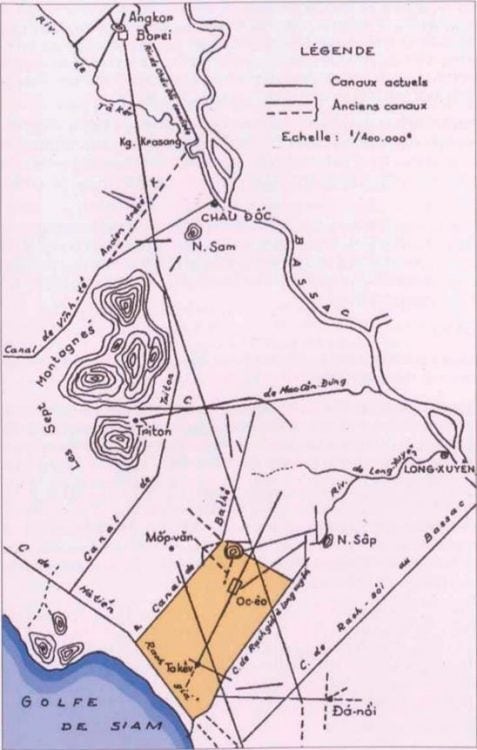
Louis Mallaret’s plan of Oc Eo and Angkor Borei, and the canal network connecting the sites.

Oc Eo is one of the more significant port cities of ancient Southeast Asia. Together with Angkor Borei, situated some 70 km north in present-day Takeo province of Cambodia, these two sites are considered to be part of the ancient kingdom of Funan, a name given by Chinese records to a polity that dominated the Mekong Delta from between the 1st – 7th centuries CE. The two sites were connected by an ancient canal, while other ancient canals traverse the area giving credence to Oc Eo as a major trading port in ancient times. Among the artefacts found in Oc Eo include religous statues of Indic deities like Vishnu, Persian lamps, Roman coins and Chinese mirrors, as well as household items like beads and kitchen tools.

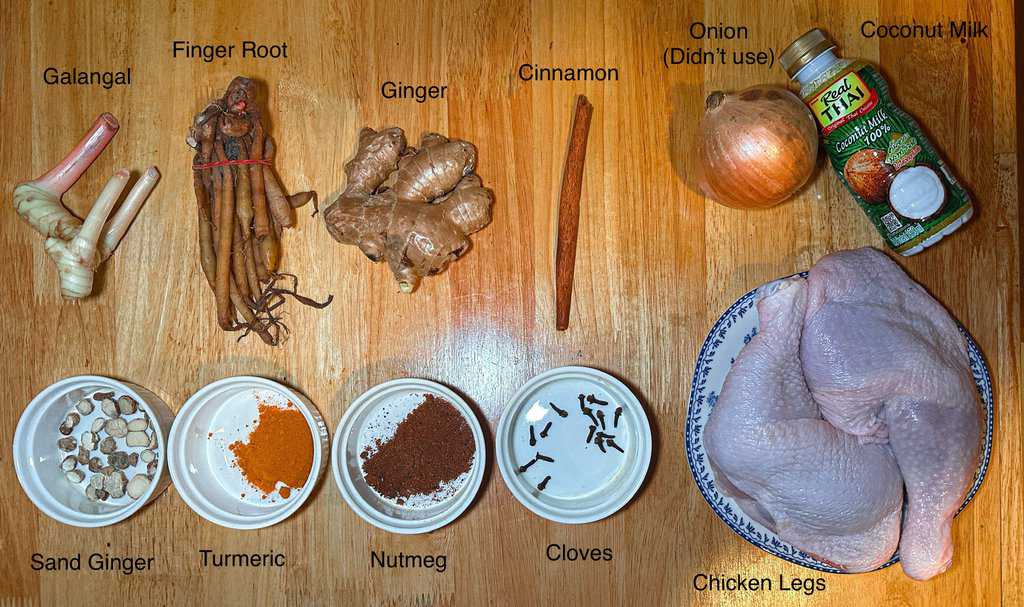
Wang et al’s paper looks at residues from 12 samples of grinding slabs, pestles or fragments thereof. The spices identified were Turmeric, Ginger, Finger Root, Sand Ginger, Galangal, Clove, Cinnamon, and Nutmeg. Additionally, Rice, Banana and possibly Coconut were identified in some of the samples. Interestingly enough, one of the nutmeg samples still retained its nutmeg aroma, after nearly 2,000 years! The following curry recipe is derived from the samples found in mortar J, which contained all the spices mentioned above except for the banana, which also suggests they were processed at the same time for use in one dish.
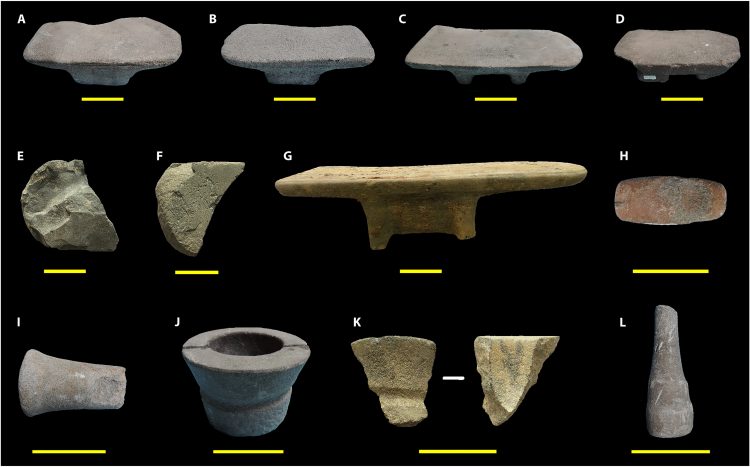
Tools analysed for food residues from Oc Eo and Angkor Borei. Source: Wang et al. 2023

All the spices mentioned in the paper were easily obtainable for me in Thailand – in fact, I had most of them in my pantry already, and it took me less than a few dollars to pick up the rest from the local markets. I took some creative liberties with three ingredients: coconut milk was the main liquid for the curry (coconut was identified as a potential ingredient found in the mortar J); the omission of rice in the curry paste and served on its own instead; and chicken as the main protein for this dish. I considered using eggplant in line with a 4,000-year-old curry recipe from India, but eggplant was never suggested in the paper and chicken is a food source that originated from Southeast Asia itself so I thought it would be more appropriate to this dish. Of course, if you want to replicate this dish on your own you are free to switch this out for something else! Lastly, I originally intended to use an onion to add volume to the curry paste, but I didn’t use it in the end and I don’t think this recipe needed an onion.
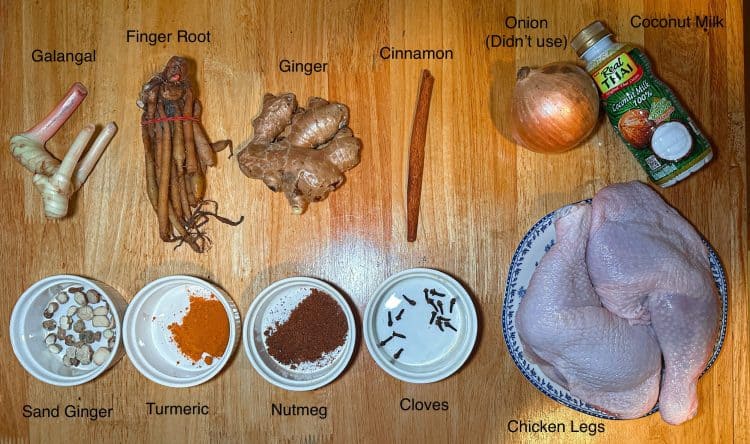
Ingredients list

  • 2 inches of galangal, peeled (in the video I used one inch)
  • 3 stalks of finger root, washed and whole (in the video I used five)
  • 2 inches of ginger, peeled
  • 2 inches of sand ginger, peeled (I only had the dried version so I used 2 tablespoons)
  • 1 tablespoon turmeric
  • 1 tablespoon nutmeg
  • 5 cloves
  • 1 stalk cinnamon
  • 250 ml coconut milk
  • 2 chicken legs, bone in

Procedure

  1. Using a mortar, pound the galangal, finger root, ginger, sand ginger, turmeric and nutmeg with a pinch of salt into a fine paste. You could use a food processor, but the texture won’t quite be the same.
  2. Marinade the chicken with a third of the paste. Continue pounding because you realised that the paste is not pastey enough.
  3. Heat your pan with a little oil and brown the chicken skin side down. The aim is to render some fat from the chicken.
  4. Once the chicken skin has been browned, remove the chicken from the pan and fry the remaining spice paste in the rendered fat. Add oil if necessary.
  5. When the spice paste has changed colour, add the coconut milk, cinnamon and cloves. Season to taste with salt and sugar, or with fish sauce and palm sugar.
  6. Return the chicken to the pan, skin side up. Cover and braise for 20 minutes.
  7. Serve with rice! Sativa strains of rice were found in the residues, so a basmati or a Thai jasmine would be appropriate.

How does it taste?

My overall impression is that this curry tastes very much like a Southeast Asian curry, similar to something you would find in Cambodia or Thailand, and not at all like any Indian curry I’ve had. But of course, I am using a Southeast Asian technique of using a pounded spice paste (now backed by archaeological data!) and simmering in coconut milk. The flavours are quite earthy and complex but most importantly, the curry is not burn-your-tongue spicy due to the lack of the sharper spices like chilli, peppers and even onion and garlic. Also, the chicken released a lot of liquid into the sauce and gave the curry body, which is something that would be lacking if this dish was vegetarian.

The aroma is familiar, something that I have smelled in many a restaurant in this region. The chicken is tender from the braising, covered with the vibrant, aromatic curry and is great with rice. Without the intense heat of chilli, you can taste each spice more distinctly. In the written recipe you’ll see I’ve reduced the finger root and increased the galangal for a better balance of flavour, but really, part of this culinary tradition is going by personal preference and taste.

Another interesting thing from Wang et al.’s paper is the central position of Oc Eo in the spice-production world. Even if the stone tools and the knowledge of curry was brought from South Asia, the curry was definitely supercharged in Southeast Asia!
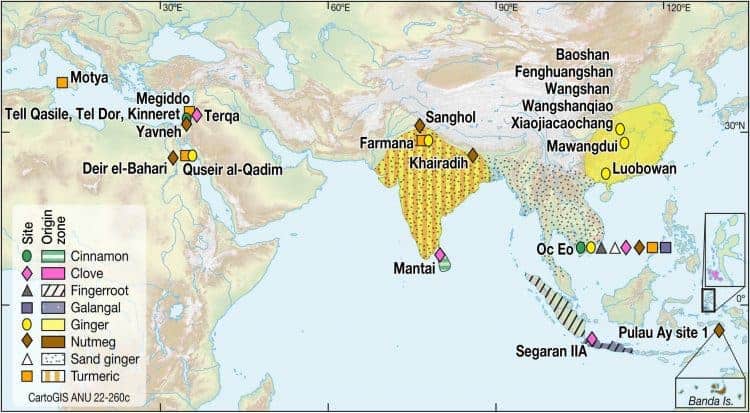
The one thing about recreating this 2000-year-old Funan curry was how easy it was to source the ingredients here in Thailand. It’s a testament to the fascinating culinary traditions that have been passed down through generations and continue to define our food culture today. Hopefully, I did the people of ancient Oc Eo justice, and they would approve of my culinary decisions. I’d also be interested to hear what a professional like Pailin Chongchitnant would make of this ancient recipe.
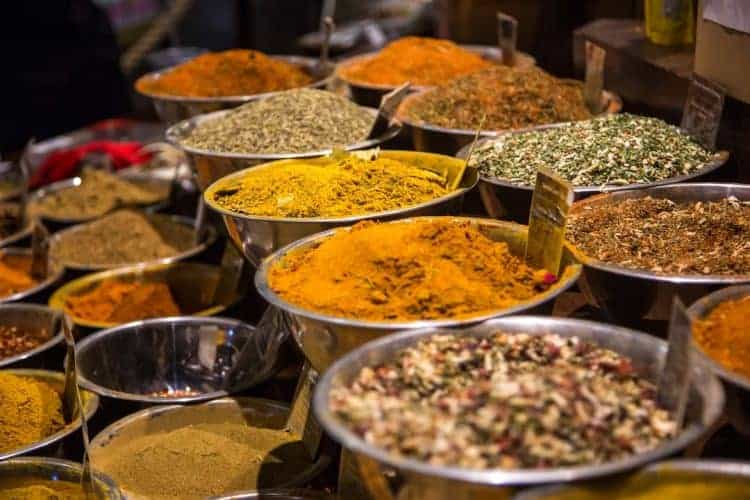
Photo by Jason Leung on Unsplash

If you want to experience this exciting culinary adventure for yourself, gather up the ingredients and give it a go. I’d be interested to hear about your experiences and compare recipe notes!

If you ever need to cite this post:
Tan, Noel Hidalgo. (2023). Recreating a 2000-Year-Old Curry: A Gastronomic Adventure into Oc Eo’s Ancient Culinary Heritage. Available at: https://www.southeastasianarchaeology.com/2023/09/09/recreating-a-2000-year-old-curry-a-gastronomic-adventure-into-oc-eos-ancient-culinary-heritage/

Subscribe to the weekly Southeast Asian Archaeology news digest

Latest Books

The following are affiliate links for which I may earn a commission if you click and make a purchase. Click here for more books about Vietnamese archaeology.
A Maritime Vietnam
A Maritime Vietnam
Amazon Prime
$34.99
Buy on Amazon
Heritage Conservation and Tourism Development at Cham Sacred Sites in Vietnam: Living Heritage Has A Heart (Global Vietnam: Across Time, Space and Community)
Heritage Conservation and Tourism Development at...
Amazon Prime
$59.99
Buy on Amazon
From the Red River to the Mekong Delta: Masterpieces of the History Museum Ho Chi Minh City
From the Red River to the Mekong Delta:...
Amazon Prime
$65.00
Buy on Amazon
Discovering Vietnam’s Ancient Capital: The Archaeology and History of the Imperial Citadel of Thang Long-Hanoi
Discovering Vietnam’s Ancient Capital: The...
Amazon Prime
$28.00
Buy on Amazon
Museum-Making in Vietnam, Laos, and Cambodia: Cultural Institutions and Policies from Colonial to Post-Colonial Times
Museum-Making in Vietnam, Laos, and Cambodia:...
$41.79
Buy on Amazon
A History of Maritime Trade in Northern Vietnam, 12th to 18th Centuries: Archaeological Investigations in Vandon and Phohien (Studies in Economic History)
A History of Maritime Trade in Northern Vietnam,...
$103.88
Buy on Amazon

Leave a Reply

Your email address will not be published. Required fields are marked *

I agree to the Terms & Conditions and Privacy Policy.

This site uses Akismet to reduce spam. Learn how your comment data is processed.

Southeast Asian Archaeology

© 2019

Navigate Site

  • News
  • Resources
  • Countries
  • Topics
  • Visit
  • Jobs
  • Subscribe
  • About

Follow

Never Miss a Discovery
Subscribe for Exclusive Southeast Asian Archaeology News!

Stay connected with the latest breakthroughs, research, and events from across Southeast Asia’s archaeology scene. Sign up today for exclusive weekly updates, trusted by over 2,000 subscribers.

×
No Result
View All Result
  • News
  • Resources
  • Countries
    • Southeast Asia
    • Mainland Southeast Asia
      • Cambodia
      • Laos
      • Malaysia
      • Myanmar
      • Thailand
      • Vietnam
    • Island Southeast Asia
      • Brunei
      • Indonesia
      • Malaysia
      • Philippines
      • Singapore
      • Timor Leste
    • Peripheral Southeast Asia
  • Topics
    • Artifact Type
      • Architecture
      • Bones and Burials
      • Ceramics
      • Intangible Cultural Heritage
      • Lithics
      • Megaliths
      • Rock Art
      • Sculpture
    • Field
      • Anthropology
      • Bioarchaeology
      • Epigraphy
      • General Archaeology
      • Metallurgy and Metalworking
      • Paleontology
      • Underwater Archaeology
      • Visual Art
      • Zooarchaeology
    • Other Themes
      • Animism
      • Buddhism
      • Christianity
      • Disaster Risk Management
      • Hinduism
      • Islam
      • Archaeological Tourism in Southeast Asia
  • Visit
    • Virtual Archaeology
    • Unesco World Heritage
  • Jobs
  • Subscribe
  • About
    • About
    • Supporters
    • Terms of Use
    • Privacy Policy
    • Contact

© 2019

This website uses cookies. By continuing to use this website you are giving consent to cookies being used. Visit our Privacy and Cookie Policy.