• Brunei’s archaeology does not get nearly enough attention.⠀
⠀
For this bonus post, I’m looking at Kota Batu Archaeological Park, the site of Brunei’s old capital. It is not a spectacular ruin in the usual sense — no towering temples, no monumental gateways — but its fragments tell a fascinating story: tombs, ceramics, sandstone pillar bases, river defences, house posts, imported wares, and traces of a working port city.⠀
⠀
Kota Batu shows Brunei not as a quiet corner of Southeast Asian archaeology, but as part of the maritime world that linked Borneo with China, Vietnam, Thailand, the Philippines and beyond.
  • This week’s Southeast Asian Archaeology newsletter is about movement, adaptation, and why archaeology is rarely as tidy as we pretend.⠀
⠀
Inside:⠀
🏹 a new review of bow-and-arrow evidence from India to Oceania⠀
🪙 a study of how Roman materials were filtered and remade in Southeast Asia⠀
🌊 new work on maritime links between Angkor and China during the megadrought period⠀
⠀
Also this week: Angkor palace waterworks, the Cẩm An shipwreck, and the reopening of Phimai National Museum.⠀
⠀
Link in bio / https://bit.ly/4dV88wS ⠀
#SoutheastAsianArchaeology #Archaeology #Heritage #Angkor #Vietnam #Thailand #Cambodia #AncientTrade #MaritimeArchaeology
  • New this week in Southeast Asian Archaeology: the Plain of Jars, trade beads, burial rituals, Philippine obsidian, coastal watchtowers, public archaeology, and a museum rethink of the galleon trade.⠀
⠀
The lead story is a new paper from Laos, where one huge jar at Site 75 contained the remains of at least 37 people and hints at a long, careful mortuary tradition. From there, the issue moves across the region, with a particularly strong run of stories from the Philippines on exchange networks, local histories, and the stories archaeology tells in public.⠀
⠀
Jars, beads, boats, and the occasional inconvenient fact. https://bit.ly/3RqKWyW ⠀
⠀
#SoutheastAsianArchaeology #Archaeology #Heritage #Laos #Philippines #Museums #PublicHistory
  • This week: Đồng Dương, ancient Champa, broken bricks, border temples, Buddhist architecture on the move, and a reminder that archaeology is rarely just about the past.⠀
⠀
Link in bio / read here: https://bit.ly/4ePHSpL ⠀
⠀
#SoutheastAsianArchaeology #DongDuong #Champa #Vietnam #Cambodia #Thailand #Myanmar #Archaeology #Heritage
  • This week in Southeast Asian Archaeology: a remarkable burial find in Phetchaburi, an old perahu under review in Kelantan, and the Po Nagar festival in Vietnam as a case of living heritage in action. ⠀
⠀
https://bit.ly/48PAeI5 ⠀
⠀
#archaeology #southeastAsia #southeastasianarchaeology
  • The Ayala Museum’s Gold of Ancestors exhibition showcases over a thousand gold objects, many originating from Butuan and the Surigao Treasure and generally dated to the 10th–13th centuries CE. These pieces demonstrate the Philippines’ participation in extensive regional trade networks and the high level of craftsmanship achieved before Spanish colonisation.

#southeastasianarchaeology #philippines #ayalamuseum #surigao #butuan
  • A quick visit to the National Museum of the Philippines earlier this week, particularly to the National Museum of Anthropology. Here are my 5 highlights.

Have you been to the National Museum in Manila? What are your favourite pieces?

#manila #philippines #nationalmuseum #archaeology #southeastasianarchaeology
  • From Angkor wall repairs and Óc Eo museum plans to Preah Vihear restoration politics and Sulawesi cliff burials, this week’s newsletter rounds up Southeast Asian archaeology with context. Subscribe for the stories behind the headlines.

https://bit.ly/4w8870M
  • 20 years ago I started Southeast Asian Archaeology with a few blog posts.⠀
It somehow turned into a weekly newsletter read around the world.⠀
Reflections, AMA, and what readers want next: ⠀
https://bit.ly/4cNZVKi⠀
  • New finds lead this week’s Southeast Asian Archaeology newsletter: possible Khmer temple remains in Mondulkiri and Korat, a prehistoric settlement in Lào Cai dating to around 2000–1500 BCE, and wooden stakes in Hoa Lư that may yet reshape how we think about the Trần-era landscape.⠀
⠀
https://bit.ly/3QomnlM
Friday, June 5, 2026
Southeast Asian Archaeology
  • News
  • Resources
  • Countries
    • Southeast Asia
    • Mainland Southeast Asia
      • Cambodia
      • Laos
      • Malaysia
      • Myanmar
      • Thailand
      • Vietnam
    • Island Southeast Asia
      • Brunei
      • Indonesia
      • Malaysia
      • Philippines
      • Singapore
      • Timor Leste
    • Peripheral Southeast Asia
  • Topics
    • Artifact Type
      • Architecture
      • Bones and Burials
      • Ceramics
      • Intangible Cultural Heritage
      • Lithics
      • Megaliths
      • Rock Art
      • Sculpture
    • Field
      • Anthropology
      • Bioarchaeology
      • Epigraphy
      • General Archaeology
      • Metallurgy and Metalworking
      • Paleontology
      • Underwater Archaeology
      • Visual Art
      • Zooarchaeology
    • Other Themes
      • Animism
      • Buddhism
      • Christianity
      • Disaster Risk Management
      • Hinduism
      • Islam
      • Archaeological Tourism in Southeast Asia
  • Visit
    • Virtual Archaeology
    • Unesco World Heritage
  • Jobs
  • Subscribe
  • About
    • About
    • Supporters
    • Terms of Use
    • Privacy Policy
    • Contact
No Result
View All Result
Southeast Asian Archaeology
  • News
  • Resources
  • Countries
    • Southeast Asia
    • Mainland Southeast Asia
      • Cambodia
      • Laos
      • Malaysia
      • Myanmar
      • Thailand
      • Vietnam
    • Island Southeast Asia
      • Brunei
      • Indonesia
      • Malaysia
      • Philippines
      • Singapore
      • Timor Leste
    • Peripheral Southeast Asia
  • Topics
    • Artifact Type
      • Architecture
      • Bones and Burials
      • Ceramics
      • Intangible Cultural Heritage
      • Lithics
      • Megaliths
      • Rock Art
      • Sculpture
    • Field
      • Anthropology
      • Bioarchaeology
      • Epigraphy
      • General Archaeology
      • Metallurgy and Metalworking
      • Paleontology
      • Underwater Archaeology
      • Visual Art
      • Zooarchaeology
    • Other Themes
      • Animism
      • Buddhism
      • Christianity
      • Disaster Risk Management
      • Hinduism
      • Islam
      • Archaeological Tourism in Southeast Asia
  • Visit
    • Virtual Archaeology
    • Unesco World Heritage
  • Jobs
  • Subscribe
  • About
    • About
    • Supporters
    • Terms of Use
    • Privacy Policy
    • Contact
No Result
View All Result
Southeast Asian Archaeology
No Result
View All Result
ADVERTISEMENT

Related Posts

Source: Pattaya Mail 20240729

Thai King and Queen Inaugurate Royal Textile Exhibition

30 July 2024
0
42

...

Source: Bernama 20240713

Perak Museum Hosts Sundang Weaponry Exhibition

19 July 2024
0
26

...

Source: Thmey Thmey 20240710

Six-Month Exhibition of Khmer Gold Jewelry at National Museum

18 July 2024
0
80

...

Source: Phnom Penh Post 20240705

National Museum’s New Exhibit Draws Record Crowds

8 July 2024
0
36

...

Popular This Week

  • Southeast Asian Archaeology from a Rock Art Perspective (with annotations)

    Southeast Asian Archaeology from a Rock Art Perspective (with annotations)

    0 shares
    Share 0 Tweet 0
  • The most influential books on Southeast Asian Archaeology (a crowdsourced list)

    0 shares
    Share 0 Tweet 0
  • Southeast Asian Archaeology memes that will tickle your funny bone and also make you ponder

    68 shares
    Share 68 Tweet 0
  • The mystery of the Vietnamese mummies

    0 shares
    Share 0 Tweet 0
  • Borobudur’s Eco-Friendly Step: Upanat Sandals for Sustainable Tourism

    0 shares
    Share 0 Tweet 0
Buy me a coffeeBuy me a coffee

If you found this site useful, you can help support it by buying me a coffee!

Discover Jakarta's History

30 August 2007
in Indonesia
Tags: architecturecolonial buildingsDutch East India Company (VOC)epigraphyexhibitionsJakarta (city)Jakarta History MuseumNetherlands National Archives
0
SHARES
119
VIEWS
Discover Jakarta's History

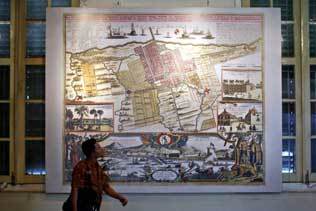
29 August 2007 (Jakarta Post) – If you’re in the Indonesian capital this month, do take a stop over the Jakarta History Museum to discover the history of the city in this month-long exhibition. This article also gives a good overview on the history of Jakarta.

Museum visitors get chance to explore open history book
Mustaqim Adamrah

Most Jakartans have only a sketchy idea of the seminal events of their city’s history, which is why the Jakarta History Museum in Kota, West Jakarta, is presenting an exhibition that helps visitors “fill in the gaps” and rediscover the past.

“Many of the older people living in Jakarta come from places outside the city. They come here to work, looking for money, and go back to where they belong when they get enough,” museum head R. M. Manik said Tuesday after the exhibition opening.

“That’s why so few Jakartans have more than a fleeting impression of the capital’s history,” he said.


The monthlong exhibition, which is being housed in the temporary exhibition space in the south western part of the museum, opens to the public Wednesday.

The display boards, which communicate to the public the significance of the city’s heritage, juxtaposed with other materials of historic interest, will later become part of the museum’s permanent collection, Manik said.

“We are giving those who are interested, including students and tourists, the opportunity to explore the city’s history,” he said.

The exhibition retells the history of Jakarta from the 16th century when it was a traditional seaport city, known as Sunda Kelapa and next Jayakarta, through to the 18th century when it was transformed into a colonial city and renamed Batavia under the Dutch colonial administration, commonly known as the Verenigde Ost-Indische Compagnie (VOC) or the United of East-Indian Company.

For centuries, the Dutch administration’s office was located in the museum building.

The traditional city was born after the prince of the Central Java-based Islamic Kingdom of Demak, Falatehan — also known as Fatahilah — led Muslim troops and conquered Sunda Kelapa, which was ruled by the Bogor-based Kingdom of Sunda, on June 22, 1527.

The Kingdom of Demak also defeated the Portuguese during the battle, who had teamed up with the Kingdom of Sunda against them.

Prince Fatahilah changed the name of Sunda Kelapa to Jayakarta, which means great deed or great victory, while the date — June 22 — has become Jakarta’s birthday.

The office of the Jayakarta government was in Kali Besar, North Jakarta. Part of the old building was transformed into the Omni Batavia Hotel.

Prince Jayakarta, who took over from Prince Fatahilah in 1596, progressively shaped the city similar to those where Islamic kingdoms ruled.

As a result, the city, then called Jayakarta, soon became known as the traditional city.

Prince Jayakarta’s progressive policies, which gave traders from China, India, England, Persia, Saudi Arabia and the Netherlands the chance to open businesses here, eventually resulted in a blow.

Conflicts erupted when the prince allowed Dutch traders to trade and stay in the city to keep their belongings under guard.

Tensions grew between the prince and the VOC when it appointed in 1619 Jan Pieterszoon Coen as its representative in Jayakarta.

The prince’s lost his power to the VOC on May 30, 1619.

Coen had by then changed the city’s name to Batavia, which it was called until 1942.

According to archeologist at the city culture and museums agency Candrian Attahiyat, the then governor general shaped Batavia based on a structural concept back in the Netherlands.

“J.P. Coen placed buildings very close to one another. The building concept he applied was more appropriate for countries with cool climates,” Candrian said.

“Coen’s concept turned out to be ill-suited to the local climate and resulted in epidemics of cholera, dysentery and other contagious diseases that killed a number of local residents ahead of the 19th century.”

As a result, he said, many of the people who lived in Batavia moved south to the area where Lapangan Banteng field and National Monument park are now situated, in search of a healthier lifestyle.

“However, the number of deaths at that time has never been officially reported,” Candrian said.

According to Manik, deaths other than from diseases also occurred in 1740 when the Dutch massacred around 40,000 people of Chinese ethnicity because they protested the trading policies imposed by the VOC.

Some reports say the number of people who died in the massacre reached only 5,000.

Manik said the data used in the exhibition was developed through one year of cooperative research between historians of the University of Indonesia, the Netherlands National Archive in Den Haag and officials at the Netherlands Embassy.

“We got around 80 percent of the history from the Netherlands National Archive and compiled it with ours,” he said.

“Our version (of events) is the same as that in the Netherlands National Archive because all of Jakarta’s history was written by Dutch historians.”

Manik said he was assured the Netherlands’ version had never been engineered as the Dutch historians worked independently and the manuscripts had never been changed.

Candrian said it was hard to trace Jakarta’s history without support from the Netherlands National Archive.

“Our people don’t have a writing habit. So, we have never had Jakarta’s history written from our point of view,” he said.

Subscribe to the weekly Southeast Asian Archaeology news digest

Latest Books

The following are affiliate links for which I may earn a commission if you click and make a purchase. Click here for more books about Indonesian archaeology.
Sale Patterned Splendour: Textiles Presented on Javanese Metal and Stone Sculptures; Eighth to Fifteenth Century
Patterned Splendour: Textiles Presented on...
Amazon Prime
$30.54
Buy on Amazon
Sale Majapahit: Sculptures from a Forgotten Kingdom
Majapahit: Sculptures from a Forgotten Kingdom
$44.08
Buy on Amazon
Sale Little Species, Big Mystery: The Story of Homo Floresiensis
Little Species, Big Mystery: The Story of Homo...
Amazon Prime
$26.53
Buy on Amazon
Sale Majapahit: Intrigue, Betrayal and War in Indonesia’s Greatest Empire
Majapahit: Intrigue, Betrayal and War in...
Amazon Prime
$15.74
Buy on Amazon
Seaways and Gatekeepers: Trade and State in the Eastern Archipelagos of Southeast Asia, c.1600–c.1906
Seaways and Gatekeepers: Trade and State in the...
Amazon Prime
$46.00
Buy on Amazon
Heroes, Gods and Guardians: Hilts and Keris of Indonesia, Huntington Miller Collection
Heroes, Gods and Guardians: Hilts and Keris of...
Buy on Amazon

Leave a Reply

Your email address will not be published. Required fields are marked *

I agree to the Terms & Conditions and Privacy Policy.

This site uses Akismet to reduce spam. Learn how your comment data is processed.

Southeast Asian Archaeology

© 2019

Navigate Site

  • News
  • Resources
  • Countries
  • Topics
  • Visit
  • Jobs
  • Subscribe
  • About

Follow

Never Miss a Discovery
Subscribe for Exclusive Southeast Asian Archaeology News!

Stay connected with the latest breakthroughs, research, and events from across Southeast Asia’s archaeology scene. Sign up today for exclusive weekly updates, trusted by over 2,000 subscribers.

×
No Result
View All Result
  • News
  • Resources
  • Countries
    • Southeast Asia
    • Mainland Southeast Asia
      • Cambodia
      • Laos
      • Malaysia
      • Myanmar
      • Thailand
      • Vietnam
    • Island Southeast Asia
      • Brunei
      • Indonesia
      • Malaysia
      • Philippines
      • Singapore
      • Timor Leste
    • Peripheral Southeast Asia
  • Topics
    • Artifact Type
      • Architecture
      • Bones and Burials
      • Ceramics
      • Intangible Cultural Heritage
      • Lithics
      • Megaliths
      • Rock Art
      • Sculpture
    • Field
      • Anthropology
      • Bioarchaeology
      • Epigraphy
      • General Archaeology
      • Metallurgy and Metalworking
      • Paleontology
      • Underwater Archaeology
      • Visual Art
      • Zooarchaeology
    • Other Themes
      • Animism
      • Buddhism
      • Christianity
      • Disaster Risk Management
      • Hinduism
      • Islam
      • Archaeological Tourism in Southeast Asia
  • Visit
    • Virtual Archaeology
    • Unesco World Heritage
  • Jobs
  • Subscribe
  • About
    • About
    • Supporters
    • Terms of Use
    • Privacy Policy
    • Contact

© 2019

This website uses cookies. By continuing to use this website you are giving consent to cookies being used. Visit our Privacy and Cookie Policy.