
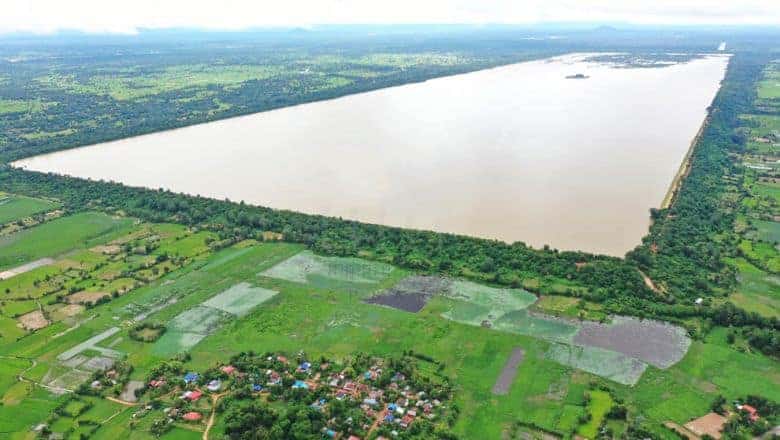
via Phnom Penh Post, 13 October 2020: Besides ritual purposes, the barays of Angkor were likely used as reservoirs then as they are being used now, to store water for the rainy season.
The Apsara National Authority (ANA) has stored millions of cubic metres of water at reservoirs in the Angkor area after Cambodia experienced a series of rainstorms over the last few days.
The storing of the water, besides serving temple conservation, will also be used to supply Siem Reap town and the area’s agriculture sector during the dry season.
ANA’s deputy director of the water management department Phoeun Sokhim told The Post on Monday that his working group has been storing water in the Angkor Wat moat, the Angkor Thom moat, the Northern Baray Reservoir, the Western Baray Reservoir and other areas. Part of the water will serve temple conservation efforts and the rest will be distributed to residents during the dry season.
“The water situation this year is good for specialists to collect at the Baray reservoirs and moats in the Angkor area. This area needs more than 100 million cubic metres of water for sustaining the temples and conservation work during the dry season,” he said.
Source: Angkor provides ‘valuable’ water storagePhnom Penh Post
![This week in Southeast Asian Archaeology: Prambanan gets some renewed attention, Phimai Black pottery surfaces at Mun Bon Dam, and I’m taking a short break next week.⠀
⠀
The featured stories look at the new Indonesia–India conservation project at Prambanan, focusing on the temple complex’s ruined perwara shrines, and a striking Late Prehistoric find in northeast Thailand: a remarkably complete Phimai Black vessel discovered as water levels fell at Mun Bon Dam.⠀
⠀
Temples, pottery, reservoirs, and a little scheduled rest. Back again on 27 July.⠀
⠀
Read this week’s newsletter: [link in bio]⠀
⠀
#SoutheastAsianArchaeology #Archaeology #Heritage #Prambanan #Thailand #Indonesia #Cambodia #Vietnam #CulturalHeritage #Substack This week in Southeast Asian Archaeology: Prambanan gets some renewed attention, Phimai Black pottery surfaces at Mun Bon Dam, and I’m taking a short break next week.⠀
⠀
The featured stories look at the new Indonesia–India conservation project at Prambanan, focusing on the temple complex’s ruined perwara shrines, and a striking Late Prehistoric find in northeast Thailand: a remarkably complete Phimai Black vessel discovered as water levels fell at Mun Bon Dam.⠀
⠀
Temples, pottery, reservoirs, and a little scheduled rest. Back again on 27 July.⠀
⠀
Read this week’s newsletter: [link in bio]⠀
⠀
#SoutheastAsianArchaeology #Archaeology #Heritage #Prambanan #Thailand #Indonesia #Cambodia #Vietnam #CulturalHeritage #Substack](https://scontent-sin6-3.cdninstagram.com/v/t51.82787-15/744214042_18361115071209510_2262608560893170251_n.jpg?stp=dst-jpg_e35_tt6&_nc_cat=110&ccb=7-5&_nc_sid=18de74&efg=eyJlZmdfdGFnIjoiRkVFRC5iZXN0X2ltYWdlX3VybGdlbi5DMyJ9&_nc_ohc=efvF5aVfY5EQ7kNvwHCwB5Y&_nc_oc=Adrhygfs4_3OVhjr2Rgbgpm8FmeWkE2yymjBA2vziLdP9JGysLT5sw8HvP0DyoT9ok0&_nc_zt=23&_nc_ht=scontent-sin6-3.cdninstagram.com&edm=ANo9K5cEAAAA&_nc_gid=E2a971KxU5zWh5nw04VahQ&_nc_tpa=Q5bMBQG3isXxBQ6X2iiWSZMjLP-e67HFOBtkU91-gQ-AKbsKRt5f8E-T4V3vusgBi5f3KhWHhujQj78B&oh=00_AQDe-6UC5alsUH9NnC76ElPMhHOuQqr5Md7rQWU22phWgQ&oe=6A65E271)


