• Gold rings, bronze drums, ancient burials, and better ethics in bioarchaeology — this week’s Southeast Asian Archaeology newsletter is a two-week catch-up edition.⠀
⠀
The lead story comes from Don Yai Thong in Phetchaburi, Thailand, where excavations have revealed gold ornaments, bronze drums, burials, beads, pottery and more. One newly reported gold signet ring bears Brahmi script, raising interesting questions about status, ritual and long-distance connections in the region.⠀
⠀
Also featured: a new paper on ethical collaboration when working with human remains in Southeast Asia — a timely reminder that care, respect, training, authorship and local authority are all part of good archaeological practice.⠀
⠀
Read the latest issue through the link in bio.
  • Cobbles, Caves and Committees 🪨⛰️📜⠀
⠀
This week’s Southeast Asian Archaeology newsletter moves from UNESCO heritage diplomacy to synchrotron science in Malaysia’s Nenggiri Valley, and then back into deep time with Early Palaeolithic cobble tools from Cambodia’s Mekong terraces.⠀
⠀
Cover image: Wat Phra Mahathat, Nakhon Si Thammarat — because temple towers do improve most things.⠀
⠀
Read the latest issue at the link in bio.⠀
⠀
#SoutheastAsianArchaeology #Archaeology #Heritage #Cambodia #Malaysia #UNESCO #WatPhraMahathat #NakhonSiThammarat #CulturalHeritage
  • This week in Southeast Asian Archaeology: broken pots, painted hands, and returning relics.⠀
⠀
The main story is a new paper on Angkorian ceramics from Thala Borivat and Sambor, showing how Angkor’s eastern Mekong provinces were connected through roads, rivers, rapids and local choices — not one neat supply chain.⠀
⠀
Also featured: Tham Pha Mue in Laos opens to visitors, a site I studied and helped document; Cambodia welcomes the return of three sculptures from the US; plus updates from Bujang Valley, Mỹ Sơn and Bagan.⠀
⠀
Read this week’s issue: https://bit.ly/3QjsdVO ⠀
⠀
#SoutheastAsianArchaeology #Angkor #Cambodia #Laos #RockArt #Archaeology #Heritage #Mekong
  • Boats, pots, and prehistoric know-how this week at Southeast Asian Archaeology.⠀
⠀
In the new newsletter:⠀
🛶 outrigger boat motifs in Sulawesi rock art⠀
🏺 new perspectives on pottery in Timor-Leste⠀
👑 the restored Nguyen Dynasty throne⠀
🎟️ falling ticket sales at Angkor⠀
⚖️ a new book on archaeology and Philippine law⠀
⠀
#Archaeology #SoutheastAsia #Heritage #RockArt #TimorLeste #Indonesia
  • Brunei’s archaeology does not get nearly enough attention.⠀
⠀
For this bonus post, I’m looking at Kota Batu Archaeological Park, the site of Brunei’s old capital. It is not a spectacular ruin in the usual sense — no towering temples, no monumental gateways — but its fragments tell a fascinating story: tombs, ceramics, sandstone pillar bases, river defences, house posts, imported wares, and traces of a working port city.⠀
⠀
Kota Batu shows Brunei not as a quiet corner of Southeast Asian archaeology, but as part of the maritime world that linked Borneo with China, Vietnam, Thailand, the Philippines and beyond.
  • This week’s Southeast Asian Archaeology newsletter is about movement, adaptation, and why archaeology is rarely as tidy as we pretend.⠀
⠀
Inside:⠀
🏹 a new review of bow-and-arrow evidence from India to Oceania⠀
🪙 a study of how Roman materials were filtered and remade in Southeast Asia⠀
🌊 new work on maritime links between Angkor and China during the megadrought period⠀
⠀
Also this week: Angkor palace waterworks, the Cẩm An shipwreck, and the reopening of Phimai National Museum.⠀
⠀
Link in bio / https://bit.ly/4dV88wS ⠀
#SoutheastAsianArchaeology #Archaeology #Heritage #Angkor #Vietnam #Thailand #Cambodia #AncientTrade #MaritimeArchaeology
  • New this week in Southeast Asian Archaeology: the Plain of Jars, trade beads, burial rituals, Philippine obsidian, coastal watchtowers, public archaeology, and a museum rethink of the galleon trade.⠀
⠀
The lead story is a new paper from Laos, where one huge jar at Site 75 contained the remains of at least 37 people and hints at a long, careful mortuary tradition. From there, the issue moves across the region, with a particularly strong run of stories from the Philippines on exchange networks, local histories, and the stories archaeology tells in public.⠀
⠀
Jars, beads, boats, and the occasional inconvenient fact. https://bit.ly/3RqKWyW ⠀
⠀
#SoutheastAsianArchaeology #Archaeology #Heritage #Laos #Philippines #Museums #PublicHistory
  • This week: Đồng Dương, ancient Champa, broken bricks, border temples, Buddhist architecture on the move, and a reminder that archaeology is rarely just about the past.⠀
⠀
Link in bio / read here: https://bit.ly/4ePHSpL ⠀
⠀
#SoutheastAsianArchaeology #DongDuong #Champa #Vietnam #Cambodia #Thailand #Myanmar #Archaeology #Heritage
  • This week in Southeast Asian Archaeology: a remarkable burial find in Phetchaburi, an old perahu under review in Kelantan, and the Po Nagar festival in Vietnam as a case of living heritage in action. ⠀
⠀
https://bit.ly/48PAeI5 ⠀
⠀
#archaeology #southeastAsia #southeastasianarchaeology
  • The Ayala Museum’s Gold of Ancestors exhibition showcases over a thousand gold objects, many originating from Butuan and the Surigao Treasure and generally dated to the 10th–13th centuries CE. These pieces demonstrate the Philippines’ participation in extensive regional trade networks and the high level of craftsmanship achieved before Spanish colonisation.

#southeastasianarchaeology #philippines #ayalamuseum #surigao #butuan
Friday, July 10, 2026
Southeast Asian Archaeology
  • News
  • Resources
  • Countries
    • Southeast Asia
    • Mainland Southeast Asia
      • Cambodia
      • Laos
      • Malaysia
      • Myanmar
      • Thailand
      • Vietnam
    • Island Southeast Asia
      • Brunei
      • Indonesia
      • Malaysia
      • Philippines
      • Singapore
      • Timor Leste
    • Peripheral Southeast Asia
  • Topics
    • Artifact Type
      • Architecture
      • Bones and Burials
      • Ceramics
      • Intangible Cultural Heritage
      • Lithics
      • Megaliths
      • Rock Art
      • Sculpture
    • Field
      • Anthropology
      • Bioarchaeology
      • Epigraphy
      • General Archaeology
      • Metallurgy and Metalworking
      • Paleontology
      • Underwater Archaeology
      • Visual Art
      • Zooarchaeology
    • Other Themes
      • Animism
      • Buddhism
      • Christianity
      • Disaster Risk Management
      • Hinduism
      • Islam
      • Archaeological Tourism in Southeast Asia
  • Visit
    • Virtual Archaeology
    • Unesco World Heritage
  • Jobs
  • Subscribe
  • About
    • About
    • Supporters
    • Terms of Use
    • Privacy Policy
    • Contact
No Result
View All Result
Southeast Asian Archaeology
  • News
  • Resources
  • Countries
    • Southeast Asia
    • Mainland Southeast Asia
      • Cambodia
      • Laos
      • Malaysia
      • Myanmar
      • Thailand
      • Vietnam
    • Island Southeast Asia
      • Brunei
      • Indonesia
      • Malaysia
      • Philippines
      • Singapore
      • Timor Leste
    • Peripheral Southeast Asia
  • Topics
    • Artifact Type
      • Architecture
      • Bones and Burials
      • Ceramics
      • Intangible Cultural Heritage
      • Lithics
      • Megaliths
      • Rock Art
      • Sculpture
    • Field
      • Anthropology
      • Bioarchaeology
      • Epigraphy
      • General Archaeology
      • Metallurgy and Metalworking
      • Paleontology
      • Underwater Archaeology
      • Visual Art
      • Zooarchaeology
    • Other Themes
      • Animism
      • Buddhism
      • Christianity
      • Disaster Risk Management
      • Hinduism
      • Islam
      • Archaeological Tourism in Southeast Asia
  • Visit
    • Virtual Archaeology
    • Unesco World Heritage
  • Jobs
  • Subscribe
  • About
    • About
    • Supporters
    • Terms of Use
    • Privacy Policy
    • Contact
No Result
View All Result
Southeast Asian Archaeology
No Result
View All Result
ADVERTISEMENT

Related Posts

Source: The Debrief 20240727

51,200-Year-Old Sulawesi Cave Art: Hominin or Human?

29 July 2024
0
134

...

The Great Cave of Niah in Sarawak

Malaysia’s Niah Caves Added to World Heritage List

28 July 2024 - Updated on 31 July 2024
0
76

...

Source: The Nation 20240727

Phu Prabat Historical Park Joins UNESCO World Heritage List

28 July 2024 - Updated on 29 July 2024
0
120

...

Source: Free Malaysia Today 20240725

Kedah’s 1200-Year-Old Buddha Statue Rewrites History

26 July 2024
0
206

...

Popular This Week

  • The most influential books on Southeast Asian Archaeology (a crowdsourced list)

    The most influential books on Southeast Asian Archaeology (a crowdsourced list)

    0 shares
    Share 0 Tweet 0
  • Southeast Asian Archaeology from a Rock Art Perspective (with annotations)

    0 shares
    Share 0 Tweet 0
  • Southeast Asian Archaeology memes that will tickle your funny bone and also make you ponder

    68 shares
    Share 68 Tweet 0
  • Negritos or Malays: Who are the original inhabitants of the Philippines?

    2 shares
    Share 2 Tweet 0
  • Video: Deciphering an inscription in Northeast Thailand

    0 shares
    Share 0 Tweet 0
Buy me a coffeeBuy me a coffee

If you found this site useful, you can help support it by buying me a coffee!

Cherok Tok Kun – The ancient sanskrit inscription in a church

24 July 2009
in Malaysia
Tags: Bukit Mertajam (city)Cherok Tok Kun Inscription (site)churchepigraphygraffitiinscriptionPenang (state)rock artSanskrit (language)translation
0
SHARES
2.3k
VIEWS
St Anne's Church and the Cherok Tok Kun inscription

St Anne's Church and the Cherok Tok Kun inscription

Every year, thousands of Catholic pilgrims in Malaysia travel to the town of Bukit Mertajam in the mainland side of Penang to send petitions and thanksgiving at the Church of St Anne for her feastday on July 26. Since I live in Penang, the feastday celebrations are a great opportunity to be one of the pilgrims, and also to pay a visit to a lesser-known archaeological site, right in the grounds of the Church of St Anne itself: The Cherok Tok Kun Inscription.
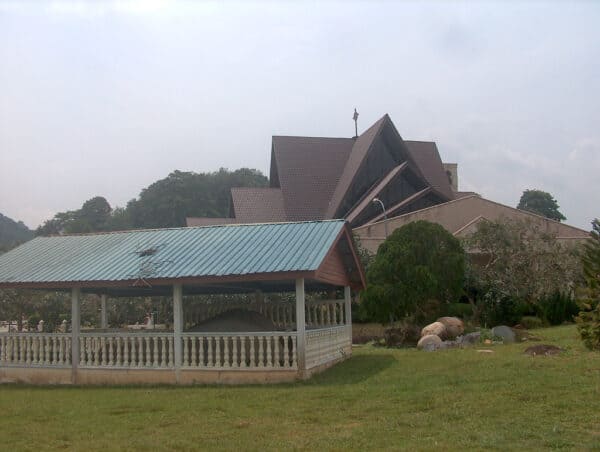
St Anne's Church and the Cherok Tok Kun inscription
St Anne’s Church and the Cherok Tok Kun inscription

All along the roads in mainland Penang, one comes across the brown sign (denoting a tourist attraction) pointing you to the Cherok Tok Kun Relics – but given the popularity of the annual St Anne’s Feastday celebration, I wonder why the signs just don’t point to the church and the relics at the same time. After all, you can’t find the relics without passing through the church – and once you actually get to the church you don’t actually see any signs pointing to the inscription.
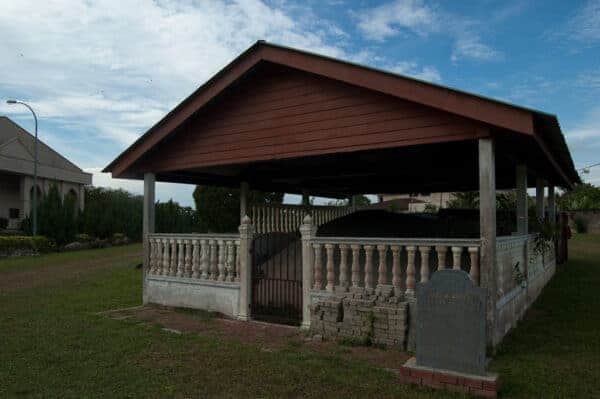
 

The inscribed boulder is under a shed in the far end of the church


The Cherok Tok Kun Relics lie on the quieter corner of the church, as most pilgrims would be drawn to the hillside shrine rather than the well-constructed shed that protects the relic. At this point I must say that ‘relic’ seems to be a bit of a misnomer – it’s really a large granite boulder with carved inscriptions on it. The sanskrit inscriptions are dated to around the 5th century, which is not surprising since we know that an Indianized settlement already have existed north of Cherok Tok Kun, in the Bujang Valley (about an hour’s drive from here), as early as the 2nd or 3rd century.
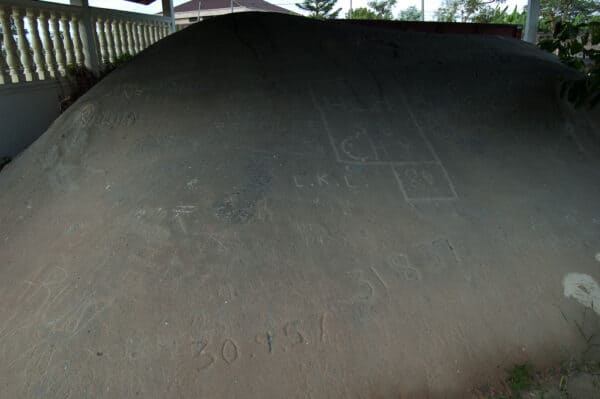
 

The Cherok Tok Kun inscribed boulder


The Cherok Tok Kun is the southernmost inscription found in this region. I found out later that the boulder contains seven distinct inscriptions, although I only managed to find two. And it’s not a particularly big boulder, so I hope they haven’t been since erased. Perhaps if I return next year I’ll try to find the other five. The first inscription translates as prathame vayasi, or ‘in the time of youth’1, but I’ve got nothing on the second one. Any readers in ancient Sanskrit want to try their luck – or point out to me that it’s upside down2?


The boulder was discovered in modern times by an British East India Company officer, Colonel James Low in 1845. Of course, he just had to leave his mark too, along with many other vandals in the last 200 years.
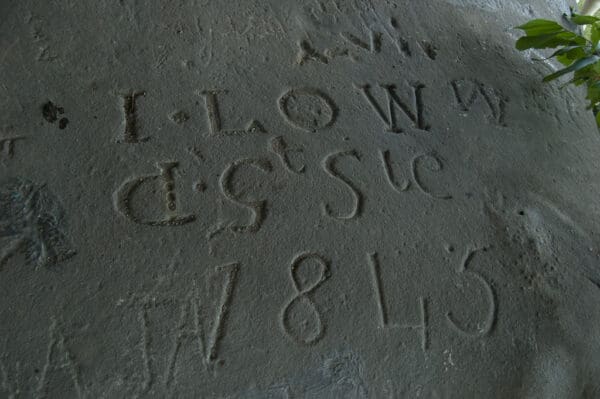
 

Note to future archaeologists: Do NOT do this.


Despite the grafitti, the site is quite well protected from the elements because of the shed. However, there doesn’t seem to be much else written about the relics. The official stone tablet set up by the Malaysian Museums and Antiquities department says it was discovered by James Low and the boulder was gazetted in 1973… but not much else. Amazingly enough, the small museum at the Church of St Anne, and even the book about the church’s history doesn’t even reference the inscription. Incredulous! You would think having a 1,500-year-old relic in your backyard would be worth mentioning.

Update: I am told that there is a translation of the inscription in Michel-Jacq-Hergoualc’h’s “La civilisation de ports-entrepôts du Sud Kedah (Malaysia)”. The French text book can be found here.

Subscribe to the weekly Southeast Asian Archaeology news digest

Latest Books

The following are affiliate links for which I may earn a commission if you click and make a purchase. Click here for more books about Malaysian archaeology.
Sale Malay Silver and Gold: Courtly Splendour from Indonesia, Malaysia, Singapore, Brunei and Thailand
Malay Silver and Gold: Courtly Splendour from...
Amazon Prime
$38.54
Buy on Amazon
Sale Selected Topics on Archaeology, History and Culture in the Malay World
Selected Topics on Archaeology, History and...
Amazon Prime
$117.23
Buy on Amazon
Malay Seals from the Islamic World of Southeast Asia
Malay Seals from the Islamic World of Southeast...
Amazon Prime
$150.00
Buy on Amazon
Traces of the Ramayana and Mahabharata in Javanese and Malay Literature
Traces of the Ramayana and Mahabharata in Javanese...
Amazon Prime
$30.00
Buy on Amazon
The archaeology of the Niah Caves, Sarawak: Volume II
The archaeology of the Niah Caves, Sarawak: Volume...
Amazon Prime
$94.00
Buy on Amazon

Comments 9

  1. arif says:
    17 years ago

    Hey nice pics and info…..Very interesting indeed.
    The first inscription(4th picture) do look like sanskrit(I don know sanskrit)…But the next one is definitely not.Its actually tamil or tamil-brammi.Cos i can partially recognise it.It reads something like “Se…….yar”.
    Btw it could either be an ancient tamil inscription or some vandals recent work

  2. Gopal says:
    17 years ago

    try this…
    http://en.wikipedia.org/wiki/Brāhmī_script

    the script looks like Brahmi, it is from that period

  3. Rahula says:
    16 years ago

    Here’s J.W. Laidlay’s translation:

    a. I acknowledge the enemies of the contented king Ramaunibha and the wicked are ever afflicted.

    b. This is said by Manikatha, the protector of all great Buddhas.

    c. In every form of life, knowledge becomes manifest everywhere and in every way.

    d. Karma, which sports with passion, is the cause of transmigration.

    [Source:
    The Malay Peninsula: Crossroads of the Maritime Silk Road (2001) by Michel Jacq-Hergoualc’h, Translated by Victoria Hobson; Brill Academic Publishers, p.214]

  4. Krishna says:
    16 years ago

    Interesting find. The first inscription is no doubt of Brahmi script. The second one is Tamil script, very close to the modern script.It could be read as che…yar.

  5. Rahula says:
    16 years ago

    Hi,

    1. I think probably only (a) in Jacq-Hergoualc’h (2001) is found on the Cherok Tokun Inscription. (b), (c) and (d) are probably the Buddhagupta Inscription, also found in Province Wellesley.

    2. Arif is probably correct, the second one is probably vandals recent one.

    3. The inscription, actually is a Pallava script, probably early Pallava. According to Laidlay, the language is Pali. I am still investigating, though (whether it is Pali or Sanskrit).

    4. The fascimile of the seven distinct inscriptions are provided by Laidlay in his 1848 paper:

    Laidlay JW (1848)
    Note on the Inscriptions from Singapur and Province Wellesley forwarded by Hon. Col. Butterworth, CB and Col J. Low, JASB, XVII, 2:66-72

    Anyone interested in taking a look at the fascimile or the paper (scanned pages) may contact me at rahula_80@yahoo.com

    Regards,
    Rahula

  6. sathis says:
    15 years ago

    http://www.youtube.com/watch?v=mpYvDY00YIM

  7. selva says:
    11 years ago

    The fifth photo is in Modern Tamil script, perhaps late 19th century.
    reads “selva mutaliyAr”

  8. selva says:
    11 years ago

    It is a name of an individual. It could be also “Sella mutaliyAr.” 3rd and 4th letters are not clear. “Sella” or “selva” is a male personal name. “mutaliyAr” is a title, also denotes a caste.

  9. Pingback: Inskripsi Ceruk Tok Kun | geopractice

Leave a Reply

Your email address will not be published. Required fields are marked *

I agree to the Terms & Conditions and Privacy Policy.

This site uses Akismet to reduce spam. Learn how your comment data is processed.

Southeast Asian Archaeology

© 2019

Navigate Site

  • News
  • Resources
  • Countries
  • Topics
  • Visit
  • Jobs
  • Subscribe
  • About

Follow

Never Miss a Discovery
Subscribe for Exclusive Southeast Asian Archaeology News!

Stay connected with the latest breakthroughs, research, and events from across Southeast Asia’s archaeology scene. Sign up today for exclusive weekly updates, trusted by over 2,000 subscribers.

×
No Result
View All Result
  • News
  • Resources
  • Countries
    • Southeast Asia
    • Mainland Southeast Asia
      • Cambodia
      • Laos
      • Malaysia
      • Myanmar
      • Thailand
      • Vietnam
    • Island Southeast Asia
      • Brunei
      • Indonesia
      • Malaysia
      • Philippines
      • Singapore
      • Timor Leste
    • Peripheral Southeast Asia
  • Topics
    • Artifact Type
      • Architecture
      • Bones and Burials
      • Ceramics
      • Intangible Cultural Heritage
      • Lithics
      • Megaliths
      • Rock Art
      • Sculpture
    • Field
      • Anthropology
      • Bioarchaeology
      • Epigraphy
      • General Archaeology
      • Metallurgy and Metalworking
      • Paleontology
      • Underwater Archaeology
      • Visual Art
      • Zooarchaeology
    • Other Themes
      • Animism
      • Buddhism
      • Christianity
      • Disaster Risk Management
      • Hinduism
      • Islam
      • Archaeological Tourism in Southeast Asia
  • Visit
    • Virtual Archaeology
    • Unesco World Heritage
  • Jobs
  • Subscribe
  • About
    • About
    • Supporters
    • Terms of Use
    • Privacy Policy
    • Contact

© 2019

This website uses cookies. By continuing to use this website you are giving consent to cookies being used. Visit our Privacy and Cookie Policy.