[Paper] Bows and arrows and complex symbolic displays 48,000 years ago in the South Asian tropics
via Science Advances, 12 June 2020: New discoveries from Sri Lanka - evidence for the oldest bow and arrow technology ...



The Pleistocene is a geological period referring to approximately between 2.5 million to 11,700 years ago.
See also: Holocene, Palaeolithic, Neolithic
via Science Advances, 12 June 2020: New discoveries from Sri Lanka - evidence for the oldest bow and arrow technology ...

via The Holocene, 12 May 2020: New paper describing starch residues on mortar and pestle fragments in Papua New Guinea ...
via Nature Communications, 29 April 2020: Analysis of human and animal tooth enamel indicate that while the earliest known humans ...
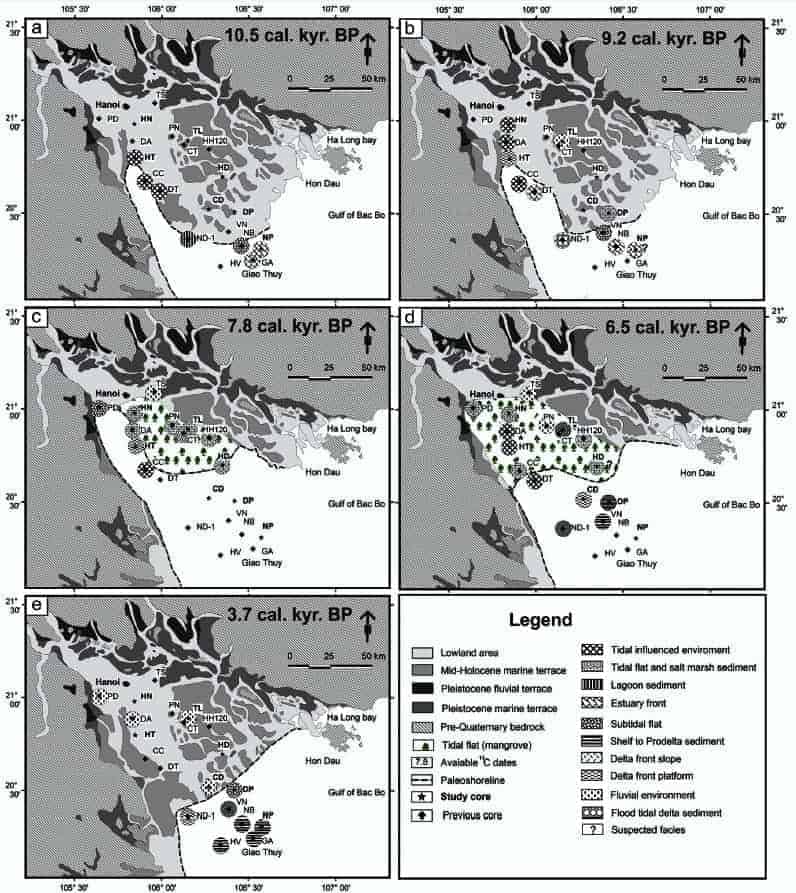
via Review of Palaeobotany and Palynology, July 2020: New paleoshoreline modeling for the Red River Delta dating from 10,000 BP ...

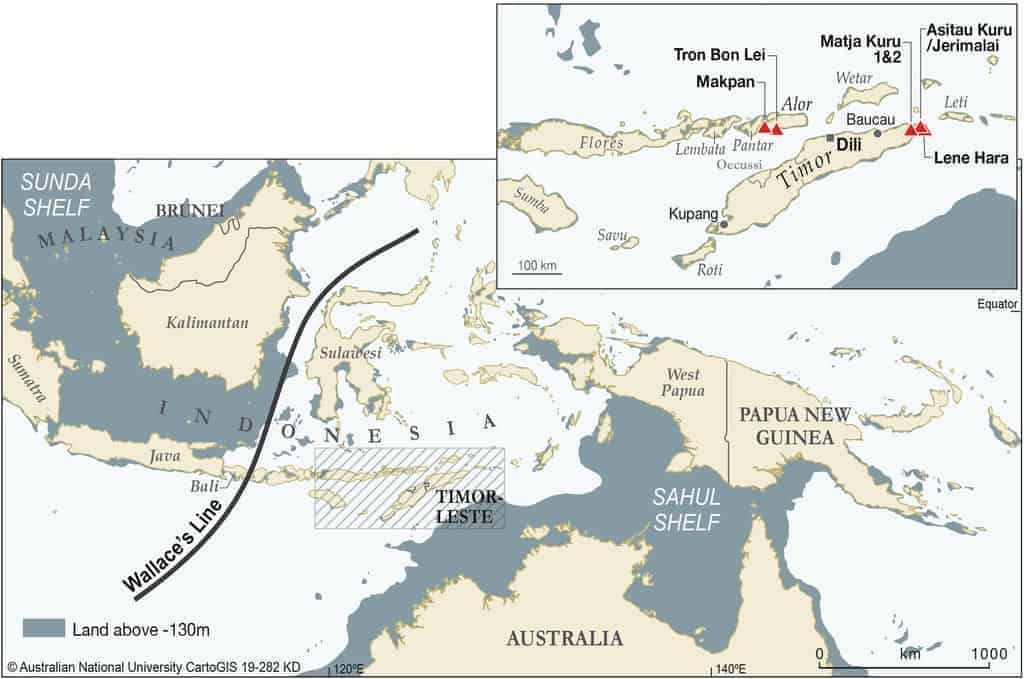
via Archaeological Research in Asia, 18 March 2020: A new paper reports the discovery of hand stencils in East Timor, ...

via Smithsonian Magazine, 20 March 2020: Another story about the recently-discovered portable rock art discovered in Sulawesi. Twenty thousand years ...
via Nature Human Behaviour, 16 March 2020: A new an exciting paper from Langley et al. in Nature Human Behaviour ...

via Science, 10 January 2020: A new paper in Science presents new dates of the volcanic ash in which the ...

via Nature, 07 November 2019: A new paper published in Nature reveals a minimum 40,000 year from rock art sites ...
via PLOS One, 02 October 2019: Microliths found in Sri Lanka dating to 45,000 years may indicate how early humans ...

© 2019