
The Indonesian Island of Sulawesi Is an Evolutionary Puzzle
via Discover Magazine, 19 May 2021: Sulawesi's role in understanding ancient migration routes to Australia.



The Pleistocene is a geological period referring to approximately between 2.5 million to 11,700 years ago.
See also: Holocene, Palaeolithic, Neolithic
via Discover Magazine, 19 May 2021: Sulawesi's role in understanding ancient migration routes to Australia.

via Quaternary Science Reviews, 15 May 2021: A landscape reconstruction of Pleistocene Trinil, providing a new environmental context to Homo ...

A special issue of Quaternary International edited by Demeter and Bae, based on a panel session at the last IPPA ...

via Cambridge Archaeological Journal, 29 September 2020: New rock engraving sites discovered in East Timor.

via Quartenary International, 20 July 2020: A new paper discusses archaeological research in Topogaro cave in central Sulawesi and contextualises ...

via Journal of Archaeological Research, 14 September 2020: Interesting paper reviewing water crossings of hominids during the Pleistocene, with a ...

via Nature, 07 October 2020: A study of ancient environments by Louys and Roberts showw how the expansion and contraction ...
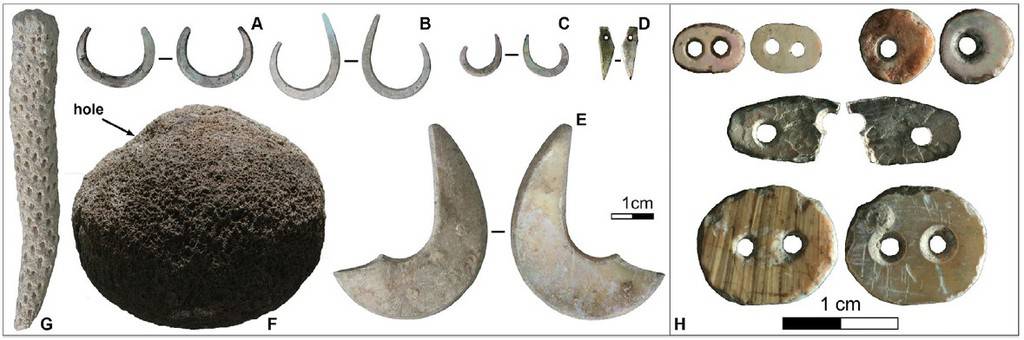
via Quarternary Science Reviews, Sep 2020: A new paper by Kealy et al. reveals a new oldest Pleistocene cave site ...

via PLoSOne: A new Open Access paper by Shipton et al. about the archaeology of Obi Island in northern Maluku, ...

via Nature Scientific Reports, 06 July 2020: For those interested in taphonomy, a closer look at the context from the ...

© 2019
