
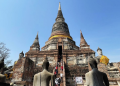
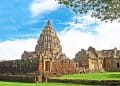
Of anthropological interest. Evidence for Brahmanism is found in ancient Southeast Asia, inferred from texts and inscriptions, and in Thailand Brahmins still play a role in the royal court.

The new Brahmins
Bangkok Post, 12 October 2015
Brahmins have been serving in the Thai royal court as officials and performing royal ceremonies since the Ayutthaya period. The involvement of Brahmins continued to the Rattanakosin period. During the reign of King Prajadhipok (Rama VII), due to the government’s budgeting reasons, many officials were laid off. Some Brahmins were affected. They returned to their native provinces to take up other professions. Back then, they were not allowed to performed rituals for commoners.
A great change came during the start of King Bhumibol Adulyadej’s reign. By royal decree, Brahmins were allowed to conduct ceremonies for the people. Families of Brahmins who relocated during King Rama VII’s reign could now revert to their old profession.
The centre of Brahmin activity in Thailand is at Devasathan, a Hindu temple in Bangkok’s inner city, which was built more than 200 years ago.
In Thailand, Komkrit said there are three types of Brahmins. One is brahm luang or royal Brahmins who mainly perform royal ceremonies like the annual ploughing ceremony. They come from a long family line of Brahmins in Thailand. The recent reopening of the Erawan Shrine was also presided over by the chief of Brahmins from the Devasathan.
Full story here.
![This week in Southeast Asian Archaeology: Prambanan gets some renewed attention, Phimai Black pottery surfaces at Mun Bon Dam, and I’m taking a short break next week.⠀
⠀
The featured stories look at the new Indonesia–India conservation project at Prambanan, focusing on the temple complex’s ruined perwara shrines, and a striking Late Prehistoric find in northeast Thailand: a remarkably complete Phimai Black vessel discovered as water levels fell at Mun Bon Dam.⠀
⠀
Temples, pottery, reservoirs, and a little scheduled rest. Back again on 27 July.⠀
⠀
Read this week’s newsletter: [link in bio]⠀
⠀
#SoutheastAsianArchaeology #Archaeology #Heritage #Prambanan #Thailand #Indonesia #Cambodia #Vietnam #CulturalHeritage #Substack This week in Southeast Asian Archaeology: Prambanan gets some renewed attention, Phimai Black pottery surfaces at Mun Bon Dam, and I’m taking a short break next week.⠀
⠀
The featured stories look at the new Indonesia–India conservation project at Prambanan, focusing on the temple complex’s ruined perwara shrines, and a striking Late Prehistoric find in northeast Thailand: a remarkably complete Phimai Black vessel discovered as water levels fell at Mun Bon Dam.⠀
⠀
Temples, pottery, reservoirs, and a little scheduled rest. Back again on 27 July.⠀
⠀
Read this week’s newsletter: [link in bio]⠀
⠀
#SoutheastAsianArchaeology #Archaeology #Heritage #Prambanan #Thailand #Indonesia #Cambodia #Vietnam #CulturalHeritage #Substack](https://scontent-sin6-3.cdninstagram.com/v/t51.82787-15/744214042_18361115071209510_2262608560893170251_n.jpg?stp=dst-jpg_e35_tt6&_nc_cat=110&ccb=7-5&_nc_sid=18de74&efg=eyJlZmdfdGFnIjoiRkVFRC5iZXN0X2ltYWdlX3VybGdlbi5DMyJ9&_nc_ohc=xWgcEbcGABIQ7kNvwFx63N6&_nc_oc=Adoe3NBLPcXYeu2Q4WRCzWnJf1ph4tRSl-ndybF0lr1wsJa0WKbjmjX6eHkay-SU5Dk&_nc_zt=23&_nc_ht=scontent-sin6-3.cdninstagram.com&edm=ANo9K5cEAAAA&_nc_gid=dMcRRCmLrU8vIjIWuykhnw&_nc_tpa=Q5bMBQG5vqf4e5fIO0chtZGhHMc0t4iJSvRKIjH0mUwQ4mAL0XnRhUWCa3QyBVw826n_vqBqmRNCfsRP&oh=00_AQDPeFDmCshofY_1cjAQWqyOU02u0lMfxO-CyI0CXLzMFw&oe=6A6490F1)


