
• This week in Southeast Asian Archaeology: Prambanan gets some renewed attention, Phimai Black pottery surfaces at Mun Bon Dam, and I’m taking a short break next week.⠀
⠀
The featured stories look at the new Indonesia–India conservation project at Prambanan, focusing on the temple complex’s ruined perwara shrines, and a striking Late Prehistoric find in northeast Thailand: a remarkably complete Phimai Black vessel discovered as water levels fell at Mun Bon Dam.⠀
⠀
Temples, pottery, reservoirs, and a little scheduled rest. Back again on 27 July.⠀
⠀
Read this week’s newsletter: [link in bio]⠀
⠀
#SoutheastAsianArchaeology #Archaeology #Heritage #Prambanan #Thailand #Indonesia #Cambodia #Vietnam #CulturalHeritage #Substack
  • Gold rings, bronze drums, ancient burials, and better ethics in bioarchaeology — this week’s Southeast Asian Archaeology newsletter is a two-week catch-up edition.⠀
⠀
The lead story comes from Don Yai Thong in Phetchaburi, Thailand, where excavations have revealed gold ornaments, bronze drums, burials, beads, pottery and more. One newly reported gold signet ring bears Brahmi script, raising interesting questions about status, ritual and long-distance connections in the region.⠀
⠀
Also featured: a new paper on ethical collaboration when working with human remains in Southeast Asia — a timely reminder that care, respect, training, authorship and local authority are all part of good archaeological practice.⠀
⠀
Read the latest issue through the link in bio.
  • Cobbles, Caves and Committees 🪨⛰️📜⠀
⠀
This week’s Southeast Asian Archaeology newsletter moves from UNESCO heritage diplomacy to synchrotron science in Malaysia’s Nenggiri Valley, and then back into deep time with Early Palaeolithic cobble tools from Cambodia’s Mekong terraces.⠀
⠀
Cover image: Wat Phra Mahathat, Nakhon Si Thammarat — because temple towers do improve most things.⠀
⠀
Read the latest issue at the link in bio.⠀
⠀
#SoutheastAsianArchaeology #Archaeology #Heritage #Cambodia #Malaysia #UNESCO #WatPhraMahathat #NakhonSiThammarat #CulturalHeritage
  • This week in Southeast Asian Archaeology: broken pots, painted hands, and returning relics.⠀
⠀
The main story is a new paper on Angkorian ceramics from Thala Borivat and Sambor, showing how Angkor’s eastern Mekong provinces were connected through roads, rivers, rapids and local choices — not one neat supply chain.⠀
⠀
Also featured: Tham Pha Mue in Laos opens to visitors, a site I studied and helped document; Cambodia welcomes the return of three sculptures from the US; plus updates from Bujang Valley, Mỹ Sơn and Bagan.⠀
⠀
Read this week’s issue: https://bit.ly/3QjsdVO ⠀
⠀
#SoutheastAsianArchaeology #Angkor #Cambodia #Laos #RockArt #Archaeology #Heritage #Mekong
  • Boats, pots, and prehistoric know-how this week at Southeast Asian Archaeology.⠀
⠀
In the new newsletter:⠀
🛶 outrigger boat motifs in Sulawesi rock art⠀
🏺 new perspectives on pottery in Timor-Leste⠀
👑 the restored Nguyen Dynasty throne⠀
🎟️ falling ticket sales at Angkor⠀
⚖️ a new book on archaeology and Philippine law⠀
⠀
#Archaeology #SoutheastAsia #Heritage #RockArt #TimorLeste #Indonesia
  • Brunei’s archaeology does not get nearly enough attention.⠀
⠀
For this bonus post, I’m looking at Kota Batu Archaeological Park, the site of Brunei’s old capital. It is not a spectacular ruin in the usual sense — no towering temples, no monumental gateways — but its fragments tell a fascinating story: tombs, ceramics, sandstone pillar bases, river defences, house posts, imported wares, and traces of a working port city.⠀
⠀
Kota Batu shows Brunei not as a quiet corner of Southeast Asian archaeology, but as part of the maritime world that linked Borneo with China, Vietnam, Thailand, the Philippines and beyond.
  • This week’s Southeast Asian Archaeology newsletter is about movement, adaptation, and why archaeology is rarely as tidy as we pretend.⠀
⠀
Inside:⠀
🏹 a new review of bow-and-arrow evidence from India to Oceania⠀
🪙 a study of how Roman materials were filtered and remade in Southeast Asia⠀
🌊 new work on maritime links between Angkor and China during the megadrought period⠀
⠀
Also this week: Angkor palace waterworks, the Cẩm An shipwreck, and the reopening of Phimai National Museum.⠀
⠀
Link in bio / https://bit.ly/4dV88wS ⠀
#SoutheastAsianArchaeology #Archaeology #Heritage #Angkor #Vietnam #Thailand #Cambodia #AncientTrade #MaritimeArchaeology
  • New this week in Southeast Asian Archaeology: the Plain of Jars, trade beads, burial rituals, Philippine obsidian, coastal watchtowers, public archaeology, and a museum rethink of the galleon trade.⠀
⠀
The lead story is a new paper from Laos, where one huge jar at Site 75 contained the remains of at least 37 people and hints at a long, careful mortuary tradition. From there, the issue moves across the region, with a particularly strong run of stories from the Philippines on exchange networks, local histories, and the stories archaeology tells in public.⠀
⠀
Jars, beads, boats, and the occasional inconvenient fact. https://bit.ly/3RqKWyW ⠀
⠀
#SoutheastAsianArchaeology #Archaeology #Heritage #Laos #Philippines #Museums #PublicHistory
  • This week: Đồng Dương, ancient Champa, broken bricks, border temples, Buddhist architecture on the move, and a reminder that archaeology is rarely just about the past.⠀
⠀
Link in bio / read here: https://bit.ly/4ePHSpL ⠀
⠀
#SoutheastAsianArchaeology #DongDuong #Champa #Vietnam #Cambodia #Thailand #Myanmar #Archaeology #Heritage
  • This week in Southeast Asian Archaeology: a remarkable burial find in Phetchaburi, an old perahu under review in Kelantan, and the Po Nagar festival in Vietnam as a case of living heritage in action. ⠀
⠀
https://bit.ly/48PAeI5 ⠀
⠀
#archaeology #southeastAsia #southeastasianarchaeology
Wednesday, July 22, 2026
Southeast Asian Archaeology
  • News
  • Resources
  • Countries
    • Southeast Asia
    • Mainland Southeast Asia
      • Cambodia
      • Laos
      • Malaysia
      • Myanmar
      • Thailand
      • Vietnam
    • Island Southeast Asia
      • Brunei
      • Indonesia
      • Malaysia
      • Philippines
      • Singapore
      • Timor Leste
    • Peripheral Southeast Asia
  • Topics
    • Artifact Type
      • Architecture
      • Bones and Burials
      • Ceramics
      • Intangible Cultural Heritage
      • Lithics
      • Megaliths
      • Rock Art
      • Sculpture
    • Field
      • Anthropology
      • Bioarchaeology
      • Epigraphy
      • General Archaeology
      • Metallurgy and Metalworking
      • Paleontology
      • Underwater Archaeology
      • Visual Art
      • Zooarchaeology
    • Other Themes
      • Animism
      • Buddhism
      • Christianity
      • Disaster Risk Management
      • Hinduism
      • Islam
      • Archaeological Tourism in Southeast Asia
  • Visit
    • Virtual Archaeology
    • Unesco World Heritage
  • Jobs
  • Subscribe
  • About
    • About
    • Supporters
    • Terms of Use
    • Privacy Policy
    • Contact
No Result
View All Result
Southeast Asian Archaeology
  • News
  • Resources
  • Countries
    • Southeast Asia
    • Mainland Southeast Asia
      • Cambodia
      • Laos
      • Malaysia
      • Myanmar
      • Thailand
      • Vietnam
    • Island Southeast Asia
      • Brunei
      • Indonesia
      • Malaysia
      • Philippines
      • Singapore
      • Timor Leste
    • Peripheral Southeast Asia
  • Topics
    • Artifact Type
      • Architecture
      • Bones and Burials
      • Ceramics
      • Intangible Cultural Heritage
      • Lithics
      • Megaliths
      • Rock Art
      • Sculpture
    • Field
      • Anthropology
      • Bioarchaeology
      • Epigraphy
      • General Archaeology
      • Metallurgy and Metalworking
      • Paleontology
      • Underwater Archaeology
      • Visual Art
      • Zooarchaeology
    • Other Themes
      • Animism
      • Buddhism
      • Christianity
      • Disaster Risk Management
      • Hinduism
      • Islam
      • Archaeological Tourism in Southeast Asia
  • Visit
    • Virtual Archaeology
    • Unesco World Heritage
  • Jobs
  • Subscribe
  • About
    • About
    • Supporters
    • Terms of Use
    • Privacy Policy
    • Contact
No Result
View All Result
Southeast Asian Archaeology
No Result
View All Result
ADVERTISEMENT

Related Posts

[Paper] Reconstructing the environmental conditions experienced by early modern humans at Tam Pà Ling (northeast Laos) using higher plant wax biomarkers

13 February 2024
0
44

...

Source: Anderson et al. 2024

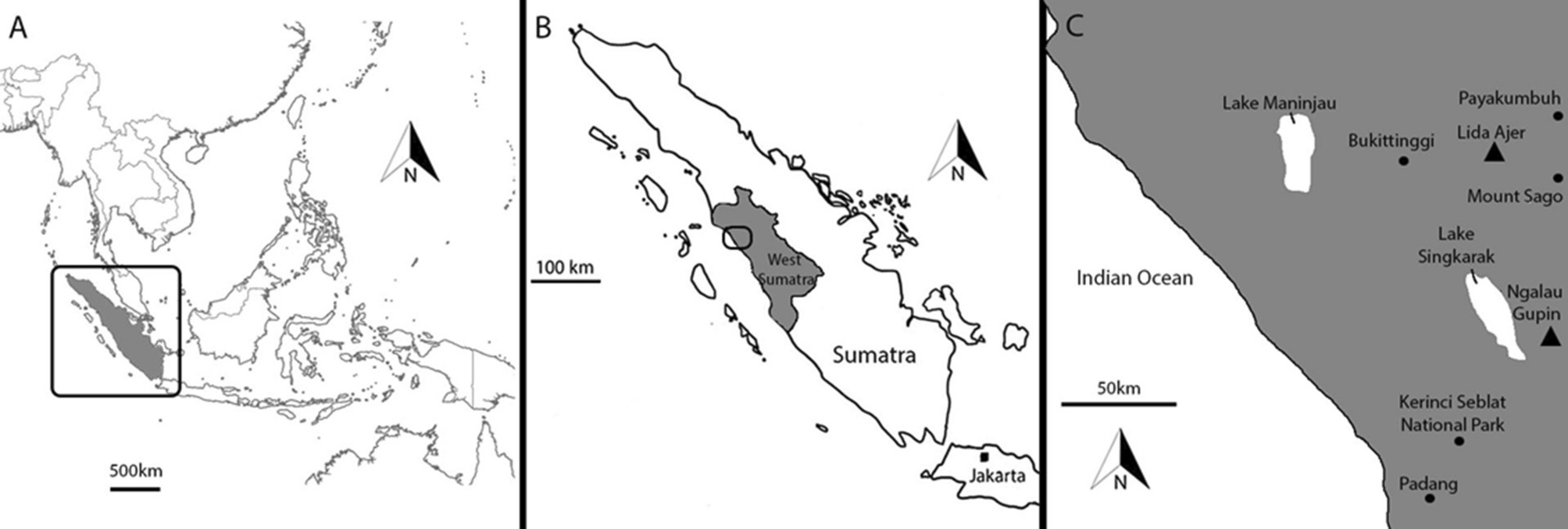
[Paper] The microstratigraphy and depositional environments of Lida Ajer and Ngalau Gupin, two fossil-bearing tropical limestone caves of west Sumatra

5 January 2024
0
31

...

Source: Boulanger 2023

[Paper] Homo sapiens in Island Southeast Asia: Toward a Maritime Specialization?

4 December 2023
0
120

...

Source: Grun and Stringer 2023

[Paper] Direct dating of human fossils and the ever-changing story of human evolution

24 November 2023
0
244

...

Popular This Week

  • Source: Rappler 20240616

    Yamashita Gold: Myth vs. Archaeological Reality

    0 shares
    Share 0 Tweet 0
  • Southeast Asian Archaeology memes that will tickle your funny bone and also make you ponder

    68 shares
    Share 68 Tweet 0
  • The most influential books on Southeast Asian Archaeology (a crowdsourced list)

    0 shares
    Share 0 Tweet 0
  • Southeast Asian Archaeology from a Rock Art Perspective (with annotations)

    0 shares
    Share 0 Tweet 0
  • Negritos or Malays: Who are the original inhabitants of the Philippines?

    2 shares
    Share 2 Tweet 0
Buy me a coffeeBuy me a coffee

If you found this site useful, you can help support it by buying me a coffee!

News of the week: Yet another Hobbit tale

7 March 2008
in Indonesia
Tags: Homo floresiensisHomo sapiens
0
SHARES
16
VIEWS

This week’s been abuzz with another Hobbit story again, this time saying that the diminutive bones belong to malnourished humans rather than a new species. The paper, written by two Australian researchers in the Proceedings of the Royal Society, B: Biological Sciences, posits a new theory that the hobbits were sufferers of dwarf cretinism.


photo credit: Rosino

Are the small human-like fossils found on Flores human endemic cretins?
Peter J. Obendorf, Charles E. Oxnard, Ben J. Kefford

Fossils from Liang Bua (LB) on Flores, Indonesia, including a nearly complete skeleton (LB1) dated to 18kyr BP, were assigned to a new species, Homo floresiensis. We hypothesize that these individuals are myxoedematous endemic (ME) cretins, part of an inland population of (mostly unaffected) Homo sapiens. ME cretins are born without a functioning thyroid; their congenital hypothyroidism leads to severe dwarfism and reduced brain size, but less severe mental retardation and motor disability than neurological endemic cretins. We show that the fossils display many signs of congenital hypothyroidism, including enlarged pituitary fossa, and that distinctive primitive features of LB1 such as the double rooted lower premolar and the primitive wrist morphology are consistent with the hypothesis. We find that the null hypothesis (that LB1 is not a cretin) is rejected by the pituitary fossa size of LB1, and by multivariate analyses of cranial measures. We show that critical environmental factors were potentially present on Flores, how remains of cretins but not of unaffected individuals could be preserved in caves, and that extant oral traditions may provide a record of cretinism.


Here’s an overview of the news stories that have come out this week:

  • Are the small human-like fossils found on Flores human endemic cretins (Original article)
  • Is the hobbit just a dwarf cretin? (ABC News in Scienc, 05 March 2008)
  • Hobbit humanoids were ‘dwarf cretins’ (Melbourne Herald Sun, 05 March 2008)
  • UWA Academics claims hobbits not a new species (News.com.au, 05 March 2008)
  • “Hobbit” Humans Were Diseased Cretins, Study Suggests (National Geographic News, 06 March 2008)
  • Hobbits may be malnourished humans (Science Alert, 06 March 2008)
  • ‘Hobbit’ humanoids were dwarf cretins, say Scientists (Sydney Morning Herald, 06 March 2008)

If you read closely, a common criticism with the paper is that the study based its results on second-hand data, without actual examination of the fossils remains themselves. This has led to quite a bit of comments from other researcher-bloggers, (who, I might add are far more competent than me to do so) on the speculative nature of the theory:

  • Afarensis weighed in early on the paper in Homo floresiensis: The Argument Continues, with a lot of good comments in the post
  • … and later makes his thoughts known in Homo floresiensis: How Did This Dreck Get Published?
  • Were Homo floresiensis just a population of myxoedematous endemic cretin Homo sapiens? (Anthropology.net)


Related books:
– A New Human: The Startling Discovery and Strange Story of the “Hobbits” of Flores, Indonesia by M. Morwood and P. van Oosterzee
– Little People And a Lost World: An Anthropological Mystery by L. Goldenberg

Subscribe to the weekly Southeast Asian Archaeology news digest

Latest Books

The following are affiliate links for which I may earn a commission if you click and make a purchase. Click here for more books about Southeast Asian archaeology.
Sale Malay Silver and Gold: Courtly Splendour from Indonesia, Malaysia, Singapore, Brunei and Thailand
Malay Silver and Gold: Courtly Splendour from...
Amazon Prime
$38.54
Buy on Amazon
Sale The Oxford Guide to the Malayo-Polynesian Languages of Southeast Asia (Oxford Guides to the World's Languages)
The Oxford Guide to the Malayo-Polynesian...
Amazon Prime
$165.87
Buy on Amazon
Sale Majapahit: Sculptures from a Forgotten Kingdom
Majapahit: Sculptures from a Forgotten Kingdom
$44.08
Buy on Amazon
Sale Majapahit: Intrigue, Betrayal and War in Indonesia’s Greatest Empire
Majapahit: Intrigue, Betrayal and War in...
Amazon Prime
$15.74
Buy on Amazon
Sale The Story of Southeast Asia
The Story of Southeast Asia
$24.11
Buy on Amazon
Buddhist Landscapes: Art and Archaeology of the Khorat Plateau, 7th to 11th Centuries
Buddhist Landscapes: Art and Archaeology of the...
Amazon Prime
$56.00
Buy on Amazon

Leave a Reply

Your email address will not be published. Required fields are marked *

I agree to the Terms & Conditions and Privacy Policy.

This site uses Akismet to reduce spam. Learn how your comment data is processed.

Southeast Asian Archaeology

© 2019

Navigate Site

  • News
  • Resources
  • Countries
  • Topics
  • Visit
  • Jobs
  • Subscribe
  • About

Follow

Never Miss a Discovery
Subscribe for Exclusive Southeast Asian Archaeology News!

Stay connected with the latest breakthroughs, research, and events from across Southeast Asia’s archaeology scene. Sign up today for exclusive weekly updates, trusted by over 2,000 subscribers.

×
No Result
View All Result
  • News
  • Resources
  • Countries
    • Southeast Asia
    • Mainland Southeast Asia
      • Cambodia
      • Laos
      • Malaysia
      • Myanmar
      • Thailand
      • Vietnam
    • Island Southeast Asia
      • Brunei
      • Indonesia
      • Malaysia
      • Philippines
      • Singapore
      • Timor Leste
    • Peripheral Southeast Asia
  • Topics
    • Artifact Type
      • Architecture
      • Bones and Burials
      • Ceramics
      • Intangible Cultural Heritage
      • Lithics
      • Megaliths
      • Rock Art
      • Sculpture
    • Field
      • Anthropology
      • Bioarchaeology
      • Epigraphy
      • General Archaeology
      • Metallurgy and Metalworking
      • Paleontology
      • Underwater Archaeology
      • Visual Art
      • Zooarchaeology
    • Other Themes
      • Animism
      • Buddhism
      • Christianity
      • Disaster Risk Management
      • Hinduism
      • Islam
      • Archaeological Tourism in Southeast Asia
  • Visit
    • Virtual Archaeology
    • Unesco World Heritage
  • Jobs
  • Subscribe
  • About
    • About
    • Supporters
    • Terms of Use
    • Privacy Policy
    • Contact

© 2019

This website uses cookies. By continuing to use this website you are giving consent to cookies being used. Visit our Privacy and Cookie Policy.