
• Brunei’s archaeology does not get nearly enough attention.⠀
⠀
For this bonus post, I’m looking at Kota Batu Archaeological Park, the site of Brunei’s old capital. It is not a spectacular ruin in the usual sense — no towering temples, no monumental gateways — but its fragments tell a fascinating story: tombs, ceramics, sandstone pillar bases, river defences, house posts, imported wares, and traces of a working port city.⠀
⠀
Kota Batu shows Brunei not as a quiet corner of Southeast Asian archaeology, but as part of the maritime world that linked Borneo with China, Vietnam, Thailand, the Philippines and beyond.
  • This week’s Southeast Asian Archaeology newsletter is about movement, adaptation, and why archaeology is rarely as tidy as we pretend.⠀
⠀
Inside:⠀
🏹 a new review of bow-and-arrow evidence from India to Oceania⠀
🪙 a study of how Roman materials were filtered and remade in Southeast Asia⠀
🌊 new work on maritime links between Angkor and China during the megadrought period⠀
⠀
Also this week: Angkor palace waterworks, the Cẩm An shipwreck, and the reopening of Phimai National Museum.⠀
⠀
Link in bio / https://bit.ly/4dV88wS ⠀
#SoutheastAsianArchaeology #Archaeology #Heritage #Angkor #Vietnam #Thailand #Cambodia #AncientTrade #MaritimeArchaeology
  • New this week in Southeast Asian Archaeology: the Plain of Jars, trade beads, burial rituals, Philippine obsidian, coastal watchtowers, public archaeology, and a museum rethink of the galleon trade.⠀
⠀
The lead story is a new paper from Laos, where one huge jar at Site 75 contained the remains of at least 37 people and hints at a long, careful mortuary tradition. From there, the issue moves across the region, with a particularly strong run of stories from the Philippines on exchange networks, local histories, and the stories archaeology tells in public.⠀
⠀
Jars, beads, boats, and the occasional inconvenient fact. https://bit.ly/3RqKWyW ⠀
⠀
#SoutheastAsianArchaeology #Archaeology #Heritage #Laos #Philippines #Museums #PublicHistory
  • This week: Đồng Dương, ancient Champa, broken bricks, border temples, Buddhist architecture on the move, and a reminder that archaeology is rarely just about the past.⠀
⠀
Link in bio / read here: https://bit.ly/4ePHSpL ⠀
⠀
#SoutheastAsianArchaeology #DongDuong #Champa #Vietnam #Cambodia #Thailand #Myanmar #Archaeology #Heritage
  • This week in Southeast Asian Archaeology: a remarkable burial find in Phetchaburi, an old perahu under review in Kelantan, and the Po Nagar festival in Vietnam as a case of living heritage in action. ⠀
⠀
https://bit.ly/48PAeI5 ⠀
⠀
#archaeology #southeastAsia #southeastasianarchaeology
  • The Ayala Museum’s Gold of Ancestors exhibition showcases over a thousand gold objects, many originating from Butuan and the Surigao Treasure and generally dated to the 10th–13th centuries CE. These pieces demonstrate the Philippines’ participation in extensive regional trade networks and the high level of craftsmanship achieved before Spanish colonisation.

#southeastasianarchaeology #philippines #ayalamuseum #surigao #butuan
  • A quick visit to the National Museum of the Philippines earlier this week, particularly to the National Museum of Anthropology. Here are my 5 highlights.

Have you been to the National Museum in Manila? What are your favourite pieces?

#manila #philippines #nationalmuseum #archaeology #southeastasianarchaeology
  • From Angkor wall repairs and Óc Eo museum plans to Preah Vihear restoration politics and Sulawesi cliff burials, this week’s newsletter rounds up Southeast Asian archaeology with context. Subscribe for the stories behind the headlines.

https://bit.ly/4w8870M
  • 20 years ago I started Southeast Asian Archaeology with a few blog posts.⠀
It somehow turned into a weekly newsletter read around the world.⠀
Reflections, AMA, and what readers want next: ⠀
https://bit.ly/4cNZVKi⠀
  • New finds lead this week’s Southeast Asian Archaeology newsletter: possible Khmer temple remains in Mondulkiri and Korat, a prehistoric settlement in Lào Cai dating to around 2000–1500 BCE, and wooden stakes in Hoa Lư that may yet reshape how we think about the Trần-era landscape.⠀
⠀
https://bit.ly/3QomnlM
Friday, June 5, 2026
Southeast Asian Archaeology
  • News
  • Resources
  • Countries
    • Southeast Asia
    • Mainland Southeast Asia
      • Cambodia
      • Laos
      • Malaysia
      • Myanmar
      • Thailand
      • Vietnam
    • Island Southeast Asia
      • Brunei
      • Indonesia
      • Malaysia
      • Philippines
      • Singapore
      • Timor Leste
    • Peripheral Southeast Asia
  • Topics
    • Artifact Type
      • Architecture
      • Bones and Burials
      • Ceramics
      • Intangible Cultural Heritage
      • Lithics
      • Megaliths
      • Rock Art
      • Sculpture
    • Field
      • Anthropology
      • Bioarchaeology
      • Epigraphy
      • General Archaeology
      • Metallurgy and Metalworking
      • Paleontology
      • Underwater Archaeology
      • Visual Art
      • Zooarchaeology
    • Other Themes
      • Animism
      • Buddhism
      • Christianity
      • Disaster Risk Management
      • Hinduism
      • Islam
      • Archaeological Tourism in Southeast Asia
  • Visit
    • Virtual Archaeology
    • Unesco World Heritage
  • Jobs
  • Subscribe
  • About
    • About
    • Supporters
    • Terms of Use
    • Privacy Policy
    • Contact
No Result
View All Result
Southeast Asian Archaeology
  • News
  • Resources
  • Countries
    • Southeast Asia
    • Mainland Southeast Asia
      • Cambodia
      • Laos
      • Malaysia
      • Myanmar
      • Thailand
      • Vietnam
    • Island Southeast Asia
      • Brunei
      • Indonesia
      • Malaysia
      • Philippines
      • Singapore
      • Timor Leste
    • Peripheral Southeast Asia
  • Topics
    • Artifact Type
      • Architecture
      • Bones and Burials
      • Ceramics
      • Intangible Cultural Heritage
      • Lithics
      • Megaliths
      • Rock Art
      • Sculpture
    • Field
      • Anthropology
      • Bioarchaeology
      • Epigraphy
      • General Archaeology
      • Metallurgy and Metalworking
      • Paleontology
      • Underwater Archaeology
      • Visual Art
      • Zooarchaeology
    • Other Themes
      • Animism
      • Buddhism
      • Christianity
      • Disaster Risk Management
      • Hinduism
      • Islam
      • Archaeological Tourism in Southeast Asia
  • Visit
    • Virtual Archaeology
    • Unesco World Heritage
  • Jobs
  • Subscribe
  • About
    • About
    • Supporters
    • Terms of Use
    • Privacy Policy
    • Contact
No Result
View All Result
Southeast Asian Archaeology
No Result
View All Result
ADVERTISEMENT

Related Posts

Source: Australian Geographic 20240725

Conserving Kabayan Mummies: Aussie Experts Unite with Ibaloi

31 July 2024
0
27

...

Source: The Conversation 20240708

[Paper] Ancient genomes reveal over two thousand years of dingo population structure

23 July 2024
0
19

...

Source: The Lowy Institute 20240719

Preserving the Heritage of Southeast Asia’s Sea Nomads

22 July 2024
0
41

...

Source: Antara 20240706

Semen Indonesia’s Heritage Efforts Highlighted at SPAFACON 2024

8 July 2024
0
42

...

Popular This Week

  • Southeast Asian Archaeology from a Rock Art Perspective (with annotations)

    Southeast Asian Archaeology from a Rock Art Perspective (with annotations)

    0 shares
    Share 0 Tweet 0
  • The most influential books on Southeast Asian Archaeology (a crowdsourced list)

    0 shares
    Share 0 Tweet 0
  • Southeast Asian Archaeology memes that will tickle your funny bone and also make you ponder

    68 shares
    Share 68 Tweet 0
  • The mystery of the Vietnamese mummies

    0 shares
    Share 0 Tweet 0
  • Unique 17th-Century Monk Relics at Dau Pagoda

    0 shares
    Share 0 Tweet 0
Buy me a coffeeBuy me a coffee

If you found this site useful, you can help support it by buying me a coffee!

Revenge of the Stupa

6 June 2007
in Laos
Tags: Australiaconservation/preservationLan Xang (kingdom)stupaVientiane (city)
0
SHARES
22
VIEWS
Revenge of the Stupa

05 June 2007 (Webdiary) – Pardon the dramatic title, but this story has all the elements of a juicy drama – the unheeded warning, botched-up work and revenge of a supernatural nature. The mismanaged construction of the Australian embassy in Vientiene beside a 17th century That, or stupa, said to contain the relics of a Laotian prince is now returning bad karma in kind. Melody Kemp wrote about the background of the Vientiene That in November of 2006; since the start of construction works, the That has suffered some damage and now she posits the Australian community in Laos is suffering bad luck in kind.

Tumbling That
(November 2006)

It’s probably older than European settlement in Australia, but a new Australian settlement next door threatens to destroy it.

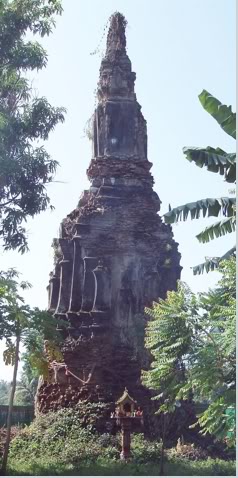
One of Vientiane’s oldest relics, an ancient That (stupa) which reputedly contains the remains of a wayward prince, is being threatened by earthworks on the site for the new Australian embassy in Lao.

The That which sits adjacent to the site, is thought to have been built around the 16th or 17 century and is one of the few remaining structures from the ancient Laotian Lang Xang Kingdom. The Abbot of the neighbouring Wat (temple) Nak Yai and keeper of the That, is concerned that the rumbling bulldozers excavating the foundations for the embassy, may cause the already leaning top of this ancient structure to topple. It would, he said, be a very inauspicious beginning for the embassy and spell bad luck for all Australians living in Vientiane. Indeed.

…

Tumbled That; The Price Falls
(June 2007)

Several months ago I wrote about a 17th Century That (stupa, in this case containing the bones of a sexually profligate prince) threatened by the construction of the new Australian Embassy in Vientiane. The risk to this ancient structure made of low fired friable bricks, was a matter of great concern to the guardian, Buddhist Abbot Bounyed, whose Wat (temple) adjoins the site. He told me then that if the That fell, it would spell perpetual bad luck for the Embassy and all Australians in Lao.

Well, due to Australian incompetence and lack of diligence, it looks like I am sentenced to a few years more bad luck than what I would get from a broken mirror.

I met an erudite archaeologist working in Lao. A man of great humour and curiosity, he told me that not only had the That cracked as I had been advised the week before, but parts had indeed fallen, a victim of pile driving. An Australian environmental consultant resident in Lao had been assured earlier by Embassy staff that piles were not going to be used.

…

Cosmic karma? Read the stories Tumbling That and Tumbled That; The Price Falls

Books about Laos and the Lang Xang kingdom:
– Breaking New Ground in Lao History: Essays on the Seventh to Twentieth Centuries by M. Ngaosivat
– The Kingdoms of Laos by S. Simms and P. Simms
– The Lao Kingdom of Lan-Xang: Rise and Decline by M. Stuart-Fox
– Kingdom of Laos: The land of the million elephants and of the white parasol by R. de Berval

Subscribe for Southeast Asian Archaeology news updates

Latest Books

The following are affiliate links for which I may earn a commission if you click and make a purchase. Click here for more books about Lao archaeology.
Museum-Making in Vietnam, Laos, and Cambodia: Cultural Institutions and Policies from Colonial to Post-Colonial Times
Museum-Making in Vietnam, Laos, and Cambodia:...
$41.79
Buy on Amazon
Chasing the Emerald Buddha: An Alternative Journey Through Thailand, Laos & Angkor
Chasing the Emerald Buddha: An Alternative Journey...
Amazon Prime
$34.99
Buy on Amazon
Mégalithes du Haut-Laos : Hua Pan, Tran Ninh. Tome 1 par Mlle Madeleine Colani,... Volume 1 1935 [Leather Bound]
Mégalithes du Haut-Laos : Hua Pan, Tran Ninh....
$64.98
Buy on Amazon
Travels in the Central Parts of Indo-China (Siam), Cambodia, and Laos: During the Years 1858, 1859, and 1860 (Cambridge Library Collection - East and South-East Asian History) (Volume 1)
Travels in the Central Parts of Indo-China (Siam),...
Amazon Prime
$44.99
Buy on Amazon
Travels in the Central Parts of Indo-China (Siam), Cambodia, and Laos During the Years 1858, 1859, and 1860 (Complete)
Travels in the Central Parts of Indo-China (Siam),...
$5.99
Buy on Amazon

Leave a Reply

Your email address will not be published. Required fields are marked *

I agree to the Terms & Conditions and Privacy Policy.

This site uses Akismet to reduce spam. Learn how your comment data is processed.

Southeast Asian Archaeology

© 2019

Navigate Site

  • News
  • Resources
  • Countries
  • Topics
  • Visit
  • Jobs
  • Subscribe
  • About

Follow

Never Miss a Discovery
Subscribe for Exclusive Southeast Asian Archaeology News!

Stay connected with the latest breakthroughs, research, and events from across Southeast Asia’s archaeology scene. Sign up today for exclusive weekly updates, trusted by over 2,000 subscribers.

×
No Result
View All Result
  • News
  • Resources
  • Countries
    • Southeast Asia
    • Mainland Southeast Asia
      • Cambodia
      • Laos
      • Malaysia
      • Myanmar
      • Thailand
      • Vietnam
    • Island Southeast Asia
      • Brunei
      • Indonesia
      • Malaysia
      • Philippines
      • Singapore
      • Timor Leste
    • Peripheral Southeast Asia
  • Topics
    • Artifact Type
      • Architecture
      • Bones and Burials
      • Ceramics
      • Intangible Cultural Heritage
      • Lithics
      • Megaliths
      • Rock Art
      • Sculpture
    • Field
      • Anthropology
      • Bioarchaeology
      • Epigraphy
      • General Archaeology
      • Metallurgy and Metalworking
      • Paleontology
      • Underwater Archaeology
      • Visual Art
      • Zooarchaeology
    • Other Themes
      • Animism
      • Buddhism
      • Christianity
      • Disaster Risk Management
      • Hinduism
      • Islam
      • Archaeological Tourism in Southeast Asia
  • Visit
    • Virtual Archaeology
    • Unesco World Heritage
  • Jobs
  • Subscribe
  • About
    • About
    • Supporters
    • Terms of Use
    • Privacy Policy
    • Contact

© 2019

This website uses cookies. By continuing to use this website you are giving consent to cookies being used. Visit our Privacy and Cookie Policy.