• Boats, pots, and prehistoric know-how this week at Southeast Asian Archaeology.⠀
⠀
In the new newsletter:⠀
🛶 outrigger boat motifs in Sulawesi rock art⠀
🏺 new perspectives on pottery in Timor-Leste⠀
👑 the restored Nguyen Dynasty throne⠀
🎟️ falling ticket sales at Angkor⠀
⚖️ a new book on archaeology and Philippine law⠀
⠀
#Archaeology #SoutheastAsia #Heritage #RockArt #TimorLeste #Indonesia
  • Brunei’s archaeology does not get nearly enough attention.⠀
⠀
For this bonus post, I’m looking at Kota Batu Archaeological Park, the site of Brunei’s old capital. It is not a spectacular ruin in the usual sense — no towering temples, no monumental gateways — but its fragments tell a fascinating story: tombs, ceramics, sandstone pillar bases, river defences, house posts, imported wares, and traces of a working port city.⠀
⠀
Kota Batu shows Brunei not as a quiet corner of Southeast Asian archaeology, but as part of the maritime world that linked Borneo with China, Vietnam, Thailand, the Philippines and beyond.
  • This week’s Southeast Asian Archaeology newsletter is about movement, adaptation, and why archaeology is rarely as tidy as we pretend.⠀
⠀
Inside:⠀
🏹 a new review of bow-and-arrow evidence from India to Oceania⠀
🪙 a study of how Roman materials were filtered and remade in Southeast Asia⠀
🌊 new work on maritime links between Angkor and China during the megadrought period⠀
⠀
Also this week: Angkor palace waterworks, the Cẩm An shipwreck, and the reopening of Phimai National Museum.⠀
⠀
Link in bio / https://bit.ly/4dV88wS ⠀
#SoutheastAsianArchaeology #Archaeology #Heritage #Angkor #Vietnam #Thailand #Cambodia #AncientTrade #MaritimeArchaeology
  • New this week in Southeast Asian Archaeology: the Plain of Jars, trade beads, burial rituals, Philippine obsidian, coastal watchtowers, public archaeology, and a museum rethink of the galleon trade.⠀
⠀
The lead story is a new paper from Laos, where one huge jar at Site 75 contained the remains of at least 37 people and hints at a long, careful mortuary tradition. From there, the issue moves across the region, with a particularly strong run of stories from the Philippines on exchange networks, local histories, and the stories archaeology tells in public.⠀
⠀
Jars, beads, boats, and the occasional inconvenient fact. https://bit.ly/3RqKWyW ⠀
⠀
#SoutheastAsianArchaeology #Archaeology #Heritage #Laos #Philippines #Museums #PublicHistory
  • This week: Đồng Dương, ancient Champa, broken bricks, border temples, Buddhist architecture on the move, and a reminder that archaeology is rarely just about the past.⠀
⠀
Link in bio / read here: https://bit.ly/4ePHSpL ⠀
⠀
#SoutheastAsianArchaeology #DongDuong #Champa #Vietnam #Cambodia #Thailand #Myanmar #Archaeology #Heritage
  • This week in Southeast Asian Archaeology: a remarkable burial find in Phetchaburi, an old perahu under review in Kelantan, and the Po Nagar festival in Vietnam as a case of living heritage in action. ⠀
⠀
https://bit.ly/48PAeI5 ⠀
⠀
#archaeology #southeastAsia #southeastasianarchaeology
  • The Ayala Museum’s Gold of Ancestors exhibition showcases over a thousand gold objects, many originating from Butuan and the Surigao Treasure and generally dated to the 10th–13th centuries CE. These pieces demonstrate the Philippines’ participation in extensive regional trade networks and the high level of craftsmanship achieved before Spanish colonisation.

#southeastasianarchaeology #philippines #ayalamuseum #surigao #butuan
  • A quick visit to the National Museum of the Philippines earlier this week, particularly to the National Museum of Anthropology. Here are my 5 highlights.

Have you been to the National Museum in Manila? What are your favourite pieces?

#manila #philippines #nationalmuseum #archaeology #southeastasianarchaeology
  • From Angkor wall repairs and Óc Eo museum plans to Preah Vihear restoration politics and Sulawesi cliff burials, this week’s newsletter rounds up Southeast Asian archaeology with context. Subscribe for the stories behind the headlines.

https://bit.ly/4w8870M
  • 20 years ago I started Southeast Asian Archaeology with a few blog posts.⠀
It somehow turned into a weekly newsletter read around the world.⠀
Reflections, AMA, and what readers want next: ⠀
https://bit.ly/4cNZVKi⠀
Tuesday, June 9, 2026
Southeast Asian Archaeology
  • News
  • Resources
  • Countries
    • Southeast Asia
    • Mainland Southeast Asia
      • Cambodia
      • Laos
      • Malaysia
      • Myanmar
      • Thailand
      • Vietnam
    • Island Southeast Asia
      • Brunei
      • Indonesia
      • Malaysia
      • Philippines
      • Singapore
      • Timor Leste
    • Peripheral Southeast Asia
  • Topics
    • Artifact Type
      • Architecture
      • Bones and Burials
      • Ceramics
      • Intangible Cultural Heritage
      • Lithics
      • Megaliths
      • Rock Art
      • Sculpture
    • Field
      • Anthropology
      • Bioarchaeology
      • Epigraphy
      • General Archaeology
      • Metallurgy and Metalworking
      • Paleontology
      • Underwater Archaeology
      • Visual Art
      • Zooarchaeology
    • Other Themes
      • Animism
      • Buddhism
      • Christianity
      • Disaster Risk Management
      • Hinduism
      • Islam
      • Archaeological Tourism in Southeast Asia
  • Visit
    • Virtual Archaeology
    • Unesco World Heritage
  • Jobs
  • Subscribe
  • About
    • About
    • Supporters
    • Terms of Use
    • Privacy Policy
    • Contact
No Result
View All Result
Southeast Asian Archaeology
  • News
  • Resources
  • Countries
    • Southeast Asia
    • Mainland Southeast Asia
      • Cambodia
      • Laos
      • Malaysia
      • Myanmar
      • Thailand
      • Vietnam
    • Island Southeast Asia
      • Brunei
      • Indonesia
      • Malaysia
      • Philippines
      • Singapore
      • Timor Leste
    • Peripheral Southeast Asia
  • Topics
    • Artifact Type
      • Architecture
      • Bones and Burials
      • Ceramics
      • Intangible Cultural Heritage
      • Lithics
      • Megaliths
      • Rock Art
      • Sculpture
    • Field
      • Anthropology
      • Bioarchaeology
      • Epigraphy
      • General Archaeology
      • Metallurgy and Metalworking
      • Paleontology
      • Underwater Archaeology
      • Visual Art
      • Zooarchaeology
    • Other Themes
      • Animism
      • Buddhism
      • Christianity
      • Disaster Risk Management
      • Hinduism
      • Islam
      • Archaeological Tourism in Southeast Asia
  • Visit
    • Virtual Archaeology
    • Unesco World Heritage
  • Jobs
  • Subscribe
  • About
    • About
    • Supporters
    • Terms of Use
    • Privacy Policy
    • Contact
No Result
View All Result
Southeast Asian Archaeology
No Result
View All Result
ADVERTISEMENT

Related Posts

Source: Pattaya Mail 20240729

Thai King and Queen Inaugurate Royal Textile Exhibition

30 July 2024
0
42

...

Source: Malay Mail 20240728

Vandalism at Johor Royal Museum Leads to Deportation of Singaporean

29 July 2024
0
24

...

Source: Free Malaysia Today 20240725

Kedah’s 1200-Year-Old Buddha Statue Rewrites History

26 July 2024
0
190

...

Source: Khmer Times 20240719

Construction Begins on Siem Reap’s Historical Museum

25 July 2024
0
32

...

Popular This Week

  • Southeast Asian Archaeology from a Rock Art Perspective (with annotations)

    Southeast Asian Archaeology from a Rock Art Perspective (with annotations)

    0 shares
    Share 0 Tweet 0
  • Southeast Asian Archaeology memes that will tickle your funny bone and also make you ponder

    68 shares
    Share 68 Tweet 0
  • The most influential books on Southeast Asian Archaeology (a crowdsourced list)

    0 shares
    Share 0 Tweet 0
  • Yamashita Gold: Myth vs. Archaeological Reality

    0 shares
    Share 0 Tweet 0
  • Negritos or Malays: Who are the original inhabitants of the Philippines?

    2 shares
    Share 2 Tweet 0
Buy me a coffeeBuy me a coffee

If you found this site useful, you can help support it by buying me a coffee!

Bujang Valley Archaeological Museum

26 October 2007
in Malaysia
Tags: Buddhagupta inscriptionBujang ValleyBujang Valley Archaeological Museumcandi (temple)Candi Bukit Batu Pahat (temple)epigraphyGanesh (deity)Kedah (state)Malay Peninsula (region)museums
2
SHARES
402
VIEWS
Bujang Valley Archaeological Museum

Last week, I featured the reconstructed temples (‘candi’) that populate Kedah’s Bujang Valley in Malaysia, an area rich in archaeological finds dating as far back as the 5th century. Today, we’ll explore the Bujang Valley Archaeological Museum, which sits at the entrance of the archaeological park.
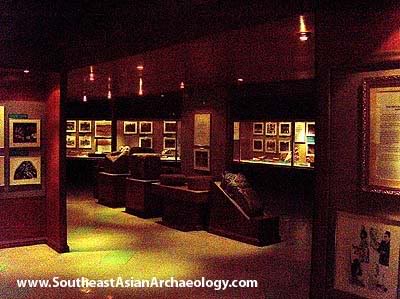
To be honest, I was a little apprehensive about visiting the museum. I had heard reports that due to the growing influence of Islam in the country, the Bujang Valley Archaeological Archaeological Museum was somewhat muted in mentioning that the port settlement that once resided in Bujang Valley was Buddhist and Hindu (see comments to this post). Fortunately, I can gladly say that there was no such attempt to gloss the past, and the museum was very frank to point out the ancient Buddhist and Hindu influences on the civilisation that once flourished here.

The museum itself showcases the highlights of the finds from the approximately 50 candi that were discovered in the area in surveys held during the 1930s and 1960s. It makes sense to consolidate everything under one roof as the candi are spread out over a wide area; plus the number of small finds like the ones highlighted in this post need a display platform. The museum houses architectural models and blueprints of each candi:
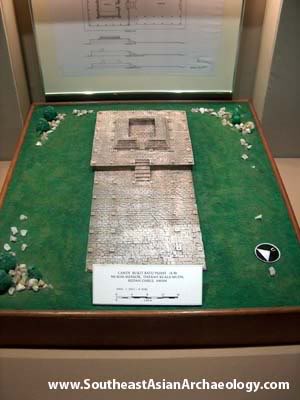
I feel something needs to be said about the reconstructions here, which I left out in my last post. There is some discussion among archaeology theorists about the validity of such attempts at reconstructions, since we have no way of actually verifying the accuracy of such reconstructions. From a lot of the photos that were taken during the excavation of the candi -and you can see them when you visit the museum – you’ll see that many of these candis, when originally found were little more than mounds of collapsed brick.

That’s not to say that the reconstructed models that you see are entirely inaccurate, rather, they need to be looked at with a degree of caution. To the archaeologists’ credit, they’ve made a number a reasonable assumptions, such as basing the structures on Hindu architectural models and kept to just reconstructing the base rather than the entire structure, which was likely to have been made of wood and would not have survived the test of time.

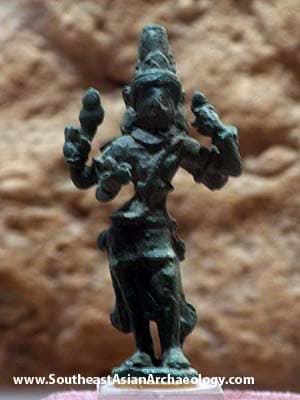
So far, I’ve only mentioned the Hindu influences rather than the Buddhist. While the former is recognisable from the architectural remains, the latter can be seen from the various artefacts that have been excavated from the candi. These two Buddha statues were recovered from Candi Pengkalan Bujang:
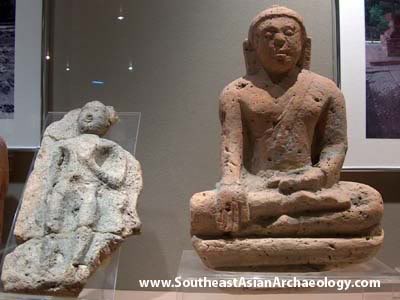
I don’t recognise the style of the art. Does anybody have an idea? This bronze Bodhisattva was also associated with the same site:
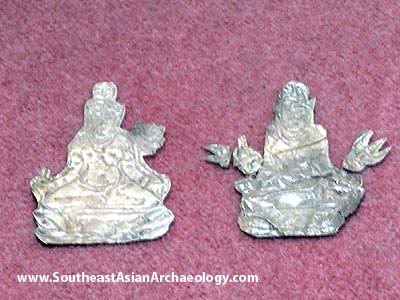
A number of small artefacts – precious material such as gems, bronze statues and stamped sheets of gold such as these were found in reliquaries that were placed into the foundation of the candi:
This inscription, called the Buddhagupta inscription is one of the older inscriptions found in the region, in nearby Seberang Perai, which is on the mainland side of Penang. Dated to the 5th century, the inscription was made by a ship captain named Buddhagupta in thanksgiving to Buddha for a successful voyage. Buddhagupta hails from a land called Raktamrttika, identified as Rajbadidanga in the Bay of Bengal, hinting the kind of international maritime connection that Bujang Valley must have played in the ancient maritime trade. Also note the stupa image inscribed:

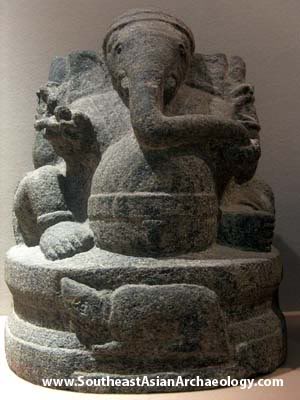
Does this statue look familiar to you? It’s a statue of Ganesha, a popular god in the Hindu pantheon. But he’s a frequent guest on SEAArch – just scroll up! That’s right, Ganesha is the orange tile on this site’s header!
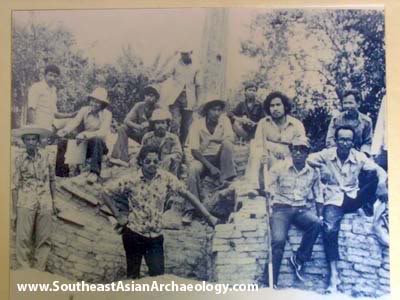
I couldn’t resist including this picture which must have been the archaeological team that excavated the valley in the 1960s – you can tell it’s the 60s from the fashion! We seldom get to see the archaeologists and the crew who did the back-breaking work to unearth these artefacts. This picture, hanging in one of the walls of the museum, doesn’t even carry a caption – but it stands in quiet testimony to these men.
I’ve said it before: the Bujang Valley is one of the most underrated archaeological sites in Malaysia and is well worth the visit. I haven’t even touched on many of the other exhibits in the museum and in the site – it’s worth the half-day trip from Penang, so come over if you have the chance.

The Bujang Valley Archaeological Site is about an hour’s drive away from Penang, which is about four hours away from Kuala Lumpur. To get there, take the North-South Highway and exit via the Sungei Patani (North) turnoff. The GPS coordinates for the Bujang Valley Archaeological Museum is 5°44′15.51″N 100°24′49.68″E.

Related Books:
– Early Kingdoms of the Indonesian Archipelago and the Malay Peninsula by P. M. Munoz
– Early History (The Encyclopedia of Malaysia) by Nik Hassan Shuhaimi Nik Abdul Rahman (Ed)

Subscribe to the weekly Southeast Asian Archaeology news digest

Latest Books

The following are affiliate links for which I may earn a commission if you click and make a purchase. Click here for more books about Malaysian archaeology.
Sale Malay Silver and Gold: Courtly Splendour from Indonesia, Malaysia, Singapore, Brunei and Thailand
Malay Silver and Gold: Courtly Splendour from...
Amazon Prime
$38.54
Buy on Amazon
Sale Selected Topics on Archaeology, History and Culture in the Malay World
Selected Topics on Archaeology, History and...
Amazon Prime
$117.23
Buy on Amazon
Malay Seals from the Islamic World of Southeast Asia
Malay Seals from the Islamic World of Southeast...
Amazon Prime
$150.00
Buy on Amazon
Traces of the Ramayana and Mahabharata in Javanese and Malay Literature
Traces of the Ramayana and Mahabharata in Javanese...
Amazon Prime
$30.00
Buy on Amazon
The archaeology of the Niah Caves, Sarawak: Volume II
The archaeology of the Niah Caves, Sarawak: Volume...
Amazon Prime
$94.00
Buy on Amazon

Comments 3

  1. Jambunathan says:
    18 years ago

    Why don`t you kindly offer a detailed route map for simple people like me to make a pilgrimageto that site in Bujang. Thank you.

  2. noelbynature says:
    18 years ago

    Hi Jambunathan,

    I’m sorry I’m not able to provide a detailed map; there’s no easy way to travel there except by car, and you’ll have to follow the brown road signs after the Sungei Patani turnoff.

    You can refer to this map:
    http://maps.google.com/maps?f=q&hl=en&geocode=&q=bujang+valley&sll=37.0625,-95.677068&sspn=27.423305,59.765625&ie=UTF8&ll=5.735944,100.417657&spn=0.008391,0.014591&t=h&z=16

    The museum and archaeological complex is at the end of route K631.

  3. Swan says:
    15 years ago

    The Indians had written about Kadaram Temple. Is Kadaram temple the name of a specific temple (candi) or does it represent the whole complex?

Leave a Reply

Your email address will not be published. Required fields are marked *

I agree to the Terms & Conditions and Privacy Policy.

This site uses Akismet to reduce spam. Learn how your comment data is processed.

Southeast Asian Archaeology

© 2019

Navigate Site

  • News
  • Resources
  • Countries
  • Topics
  • Visit
  • Jobs
  • Subscribe
  • About

Follow

Never Miss a Discovery
Subscribe for Exclusive Southeast Asian Archaeology News!

Stay connected with the latest breakthroughs, research, and events from across Southeast Asia’s archaeology scene. Sign up today for exclusive weekly updates, trusted by over 2,000 subscribers.

×
No Result
View All Result
  • News
  • Resources
  • Countries
    • Southeast Asia
    • Mainland Southeast Asia
      • Cambodia
      • Laos
      • Malaysia
      • Myanmar
      • Thailand
      • Vietnam
    • Island Southeast Asia
      • Brunei
      • Indonesia
      • Malaysia
      • Philippines
      • Singapore
      • Timor Leste
    • Peripheral Southeast Asia
  • Topics
    • Artifact Type
      • Architecture
      • Bones and Burials
      • Ceramics
      • Intangible Cultural Heritage
      • Lithics
      • Megaliths
      • Rock Art
      • Sculpture
    • Field
      • Anthropology
      • Bioarchaeology
      • Epigraphy
      • General Archaeology
      • Metallurgy and Metalworking
      • Paleontology
      • Underwater Archaeology
      • Visual Art
      • Zooarchaeology
    • Other Themes
      • Animism
      • Buddhism
      • Christianity
      • Disaster Risk Management
      • Hinduism
      • Islam
      • Archaeological Tourism in Southeast Asia
  • Visit
    • Virtual Archaeology
    • Unesco World Heritage
  • Jobs
  • Subscribe
  • About
    • About
    • Supporters
    • Terms of Use
    • Privacy Policy
    • Contact

© 2019

This website uses cookies. By continuing to use this website you are giving consent to cookies being used. Visit our Privacy and Cookie Policy.