
• Boats, pots, and prehistoric know-how this week at Southeast Asian Archaeology.⠀
⠀
In the new newsletter:⠀
🛶 outrigger boat motifs in Sulawesi rock art⠀
🏺 new perspectives on pottery in Timor-Leste⠀
👑 the restored Nguyen Dynasty throne⠀
🎟️ falling ticket sales at Angkor⠀
⚖️ a new book on archaeology and Philippine law⠀
⠀
#Archaeology #SoutheastAsia #Heritage #RockArt #TimorLeste #Indonesia
  • Brunei’s archaeology does not get nearly enough attention.⠀
⠀
For this bonus post, I’m looking at Kota Batu Archaeological Park, the site of Brunei’s old capital. It is not a spectacular ruin in the usual sense — no towering temples, no monumental gateways — but its fragments tell a fascinating story: tombs, ceramics, sandstone pillar bases, river defences, house posts, imported wares, and traces of a working port city.⠀
⠀
Kota Batu shows Brunei not as a quiet corner of Southeast Asian archaeology, but as part of the maritime world that linked Borneo with China, Vietnam, Thailand, the Philippines and beyond.
  • This week’s Southeast Asian Archaeology newsletter is about movement, adaptation, and why archaeology is rarely as tidy as we pretend.⠀
⠀
Inside:⠀
🏹 a new review of bow-and-arrow evidence from India to Oceania⠀
🪙 a study of how Roman materials were filtered and remade in Southeast Asia⠀
🌊 new work on maritime links between Angkor and China during the megadrought period⠀
⠀
Also this week: Angkor palace waterworks, the Cẩm An shipwreck, and the reopening of Phimai National Museum.⠀
⠀
Link in bio / https://bit.ly/4dV88wS ⠀
#SoutheastAsianArchaeology #Archaeology #Heritage #Angkor #Vietnam #Thailand #Cambodia #AncientTrade #MaritimeArchaeology
  • New this week in Southeast Asian Archaeology: the Plain of Jars, trade beads, burial rituals, Philippine obsidian, coastal watchtowers, public archaeology, and a museum rethink of the galleon trade.⠀
⠀
The lead story is a new paper from Laos, where one huge jar at Site 75 contained the remains of at least 37 people and hints at a long, careful mortuary tradition. From there, the issue moves across the region, with a particularly strong run of stories from the Philippines on exchange networks, local histories, and the stories archaeology tells in public.⠀
⠀
Jars, beads, boats, and the occasional inconvenient fact. https://bit.ly/3RqKWyW ⠀
⠀
#SoutheastAsianArchaeology #Archaeology #Heritage #Laos #Philippines #Museums #PublicHistory
  • This week: Đồng Dương, ancient Champa, broken bricks, border temples, Buddhist architecture on the move, and a reminder that archaeology is rarely just about the past.⠀
⠀
Link in bio / read here: https://bit.ly/4ePHSpL ⠀
⠀
#SoutheastAsianArchaeology #DongDuong #Champa #Vietnam #Cambodia #Thailand #Myanmar #Archaeology #Heritage
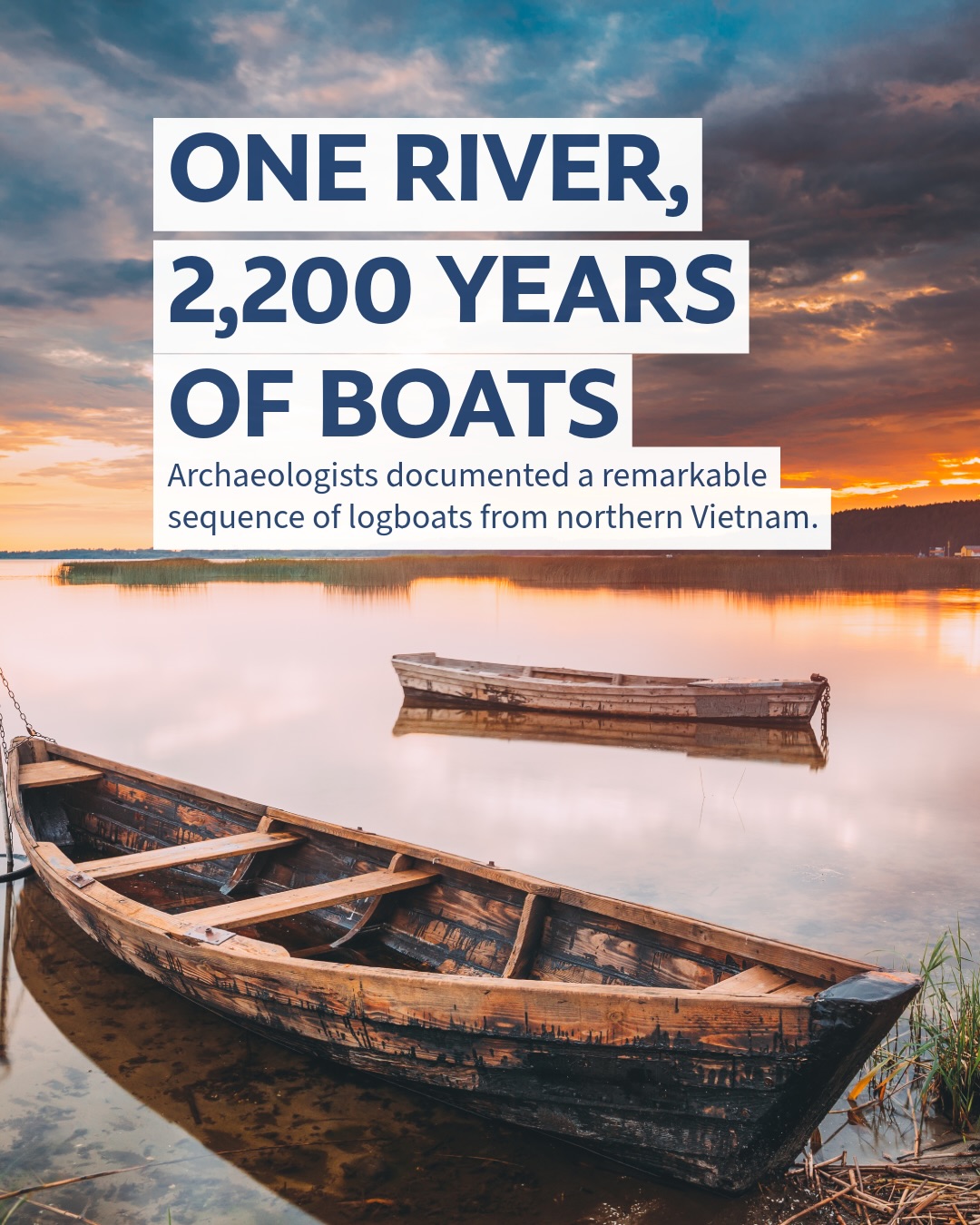
  • This week in Southeast Asian Archaeology: a remarkable burial find in Phetchaburi, an old perahu under review in Kelantan, and the Po Nagar festival in Vietnam as a case of living heritage in action. ⠀
⠀
https://bit.ly/48PAeI5 ⠀
⠀
#archaeology #southeastAsia #southeastasianarchaeology
  • The Ayala Museum’s Gold of Ancestors exhibition showcases over a thousand gold objects, many originating from Butuan and the Surigao Treasure and generally dated to the 10th–13th centuries CE. These pieces demonstrate the Philippines’ participation in extensive regional trade networks and the high level of craftsmanship achieved before Spanish colonisation.

#southeastasianarchaeology #philippines #ayalamuseum #surigao #butuan
  • A quick visit to the National Museum of the Philippines earlier this week, particularly to the National Museum of Anthropology. Here are my 5 highlights.

Have you been to the National Museum in Manila? What are your favourite pieces?

#manila #philippines #nationalmuseum #archaeology #southeastasianarchaeology
  • From Angkor wall repairs and Óc Eo museum plans to Preah Vihear restoration politics and Sulawesi cliff burials, this week’s newsletter rounds up Southeast Asian archaeology with context. Subscribe for the stories behind the headlines.

https://bit.ly/4w8870M
  • 20 years ago I started Southeast Asian Archaeology with a few blog posts.⠀
It somehow turned into a weekly newsletter read around the world.⠀
Reflections, AMA, and what readers want next: ⠀
https://bit.ly/4cNZVKi⠀
Wednesday, June 10, 2026
Southeast Asian Archaeology
  • News
  • Resources
  • Countries
    • Southeast Asia
    • Mainland Southeast Asia
      • Cambodia
      • Laos
      • Malaysia
      • Myanmar
      • Thailand
      • Vietnam
    • Island Southeast Asia
      • Brunei
      • Indonesia
      • Malaysia
      • Philippines
      • Singapore
      • Timor Leste
    • Peripheral Southeast Asia
  • Topics
    • Artifact Type
      • Architecture
      • Bones and Burials
      • Ceramics
      • Intangible Cultural Heritage
      • Lithics
      • Megaliths
      • Rock Art
      • Sculpture
    • Field
      • Anthropology
      • Bioarchaeology
      • Epigraphy
      • General Archaeology
      • Metallurgy and Metalworking
      • Paleontology
      • Underwater Archaeology
      • Visual Art
      • Zooarchaeology
    • Other Themes
      • Animism
      • Buddhism
      • Christianity
      • Disaster Risk Management
      • Hinduism
      • Islam
      • Archaeological Tourism in Southeast Asia
  • Visit
    • Virtual Archaeology
    • Unesco World Heritage
  • Jobs
  • Subscribe
  • About
    • About
    • Supporters
    • Terms of Use
    • Privacy Policy
    • Contact
No Result
View All Result
Southeast Asian Archaeology
  • News
  • Resources
  • Countries
    • Southeast Asia
    • Mainland Southeast Asia
      • Cambodia
      • Laos
      • Malaysia
      • Myanmar
      • Thailand
      • Vietnam
    • Island Southeast Asia
      • Brunei
      • Indonesia
      • Malaysia
      • Philippines
      • Singapore
      • Timor Leste
    • Peripheral Southeast Asia
  • Topics
    • Artifact Type
      • Architecture
      • Bones and Burials
      • Ceramics
      • Intangible Cultural Heritage
      • Lithics
      • Megaliths
      • Rock Art
      • Sculpture
    • Field
      • Anthropology
      • Bioarchaeology
      • Epigraphy
      • General Archaeology
      • Metallurgy and Metalworking
      • Paleontology
      • Underwater Archaeology
      • Visual Art
      • Zooarchaeology
    • Other Themes
      • Animism
      • Buddhism
      • Christianity
      • Disaster Risk Management
      • Hinduism
      • Islam
      • Archaeological Tourism in Southeast Asia
  • Visit
    • Virtual Archaeology
    • Unesco World Heritage
  • Jobs
  • Subscribe
  • About
    • About
    • Supporters
    • Terms of Use
    • Privacy Policy
    • Contact
No Result
View All Result
Southeast Asian Archaeology
No Result
View All Result
ADVERTISEMENT

Related Posts

Source: The Collector 20240726

Debunking the Myth: Angkor Was Never a Lost City

29 July 2024
0
109

...

Source: DAP News 20240723

APSARA Authority Uncovers Angkorian Iron Smelting Site on Phnom Bok

26 July 2024
0
25

...

Source: The Conversation 20240708

[Paper] Ancient genomes reveal over two thousand years of dingo population structure

23 July 2024
0
19

...

Source: Fletcher et al. 2024

[Paper] Risk and low-density dispersed urbanism

17 June 2024
0
55

...

Popular This Week

  • Southeast Asian Archaeology from a Rock Art Perspective (with annotations)

    Southeast Asian Archaeology from a Rock Art Perspective (with annotations)

    0 shares
    Share 0 Tweet 0
  • Southeast Asian Archaeology memes that will tickle your funny bone and also make you ponder

    68 shares
    Share 68 Tweet 0
  • The most influential books on Southeast Asian Archaeology (a crowdsourced list)

    0 shares
    Share 0 Tweet 0
  • Negritos or Malays: Who are the original inhabitants of the Philippines?

    2 shares
    Share 2 Tweet 0
  • Yamashita Gold: Myth vs. Archaeological Reality

    0 shares
    Share 0 Tweet 0
Buy me a coffeeBuy me a coffee

If you found this site useful, you can help support it by buying me a coffee!

Groslier's thesis on Angkor's fall gains credence

6 September 2007
in Cambodia
Tags: Angkor (kingdom)Bernard-Philippe Groslier (person)collapse and decline of civilisationsdisastersNASAPNAS (journal)University of New South Wales
0
SHARES
91
VIEWS

04 September 2007 (University of New South Wales) – 50 years ago, French archaeologist Bernard-Philippe Groslier’s theorised that Angkor’s sudden abandonment was due to a massive failure in the city’s water management system. The theory was not widely accepted due to lack of empirical evidence, but the map of Angkor’s spawl that broke two weeks ago has made it timely to give Groslier’s theory another relook.

Architects of Angkor’s downfall

The architects of Cambodia’s famed Angkor – the world’s most extensive medieval “hydraulic city” – unwittingly engineered its environmental collapse, says research by UNSW scientists and a team of international scholars.

This revelation, published in the Proceedings of the National Academy of Science, supports a disputed hypothesis by French archaeologist Bernard-Philippe Groslier, who 50 years ago suggested that the vast medieval settlement of Angkor was defined, sustained, and ultimately overwhelmed by over-exploitation and the environmental impacts of a complex water-management network.

A succession of monarchs ruled the Angkor area from about 800 AD, producing the architectural masterpieces and sculpture now preserved as a World Heritage site. By the 13th century the civilisation was in decline, and most of Angkor was abandoned by the early 15th century, apart from Angkor Wat, the main temple, which remained a Buddhist shrine.

Groslier surmised that a network of roads, canals and irrigation ponds established between the 9th and 16th centuries proved too vast to manage. He argued that extensive land clearing for rice fields supporting up to a million people living beyond Angkor’s walled city produced serious ecological problems, including deforestation, topsoil degradation and erosion.

Latter-day archaeologists disputed Groslier’s view because he was unable to support his hypothesis with empirical data about the landscape beyond Angkor’s central temple complex.

Using modern day aerial photography and high-resolution ground-sensing radar, the international research team, including UNSW’s Professor Tony Milne, studied an area of nearly 3000 square kilometres, confirming Groslier’s hypothesis by correlating their images to existing maps, topographic data sets and supporting information from extensive ground-based archaeological investigations.

The team discovered more than 1000 man-made ponds and at least 74 more temple sites in the Angkor region, revealing ruins covering an area of 1000 square kilometres.

The study’s radar images were acquired from NASA via an airborne imaging radar (AIRSAR) data instrument capable of accurately reconstructing surface structures through cloud cover.

“The instrument can produce high-resolution images detecting surface structures as small as 20 cms in height and distinguish very subtle differences in surface vegetation and soil moisture,” says Professor Milne from the School of Biological, Earth and Environmental Sciences.

“This was of particular use in uncovering the archaeological landscape at Angkor. The distinctive spatial patterning of features manifests itself primarily in slight variations in topographic relief. This also influences the amplitude or ‘brightness’ of the radar signal returned to the sensor.”

“Both the topographic relief and the surface brightness can be helpful in identifying the possible location of former roads, canals and rice fields,” says Professor Milne. “When excavations were carried out, they prove to be the site of a canal or temple moat”.

Subscribe to the weekly Southeast Asian Archaeology news digest

Latest Books

The following are affiliate links for which I may earn a commission if you click and make a purchase. Click here for more books about Southeast Asian archaeology.
Sale Malay Silver and Gold: Courtly Splendour from Indonesia, Malaysia, Singapore, Brunei and Thailand
Malay Silver and Gold: Courtly Splendour from...
Amazon Prime
$38.54
Buy on Amazon
Sale The Oxford Guide to the Malayo-Polynesian Languages of Southeast Asia (Oxford Guides to the World's Languages)
The Oxford Guide to the Malayo-Polynesian...
Amazon Prime
$165.87
Buy on Amazon
Sale Majapahit: Sculptures from a Forgotten Kingdom
Majapahit: Sculptures from a Forgotten Kingdom
$44.08
Buy on Amazon
Sale Majapahit: Intrigue, Betrayal and War in Indonesia’s Greatest Empire
Majapahit: Intrigue, Betrayal and War in...
Amazon Prime
$15.74
Buy on Amazon
Sale The Story of Southeast Asia
The Story of Southeast Asia
$24.11
Buy on Amazon
Buddhist Landscapes: Art and Archaeology of the Khorat Plateau, 7th to 11th Centuries
Buddhist Landscapes: Art and Archaeology of the...
Amazon Prime
$56.00
Buy on Amazon

Leave a Reply

Your email address will not be published. Required fields are marked *

I agree to the Terms & Conditions and Privacy Policy.

This site uses Akismet to reduce spam. Learn how your comment data is processed.

Southeast Asian Archaeology

© 2019

Navigate Site

  • News
  • Resources
  • Countries
  • Topics
  • Visit
  • Jobs
  • Subscribe
  • About

Follow

Never Miss a Discovery
Subscribe for Exclusive Southeast Asian Archaeology News!

Stay connected with the latest breakthroughs, research, and events from across Southeast Asia’s archaeology scene. Sign up today for exclusive weekly updates, trusted by over 2,000 subscribers.

×
No Result
View All Result
  • News
  • Resources
  • Countries
    • Southeast Asia
    • Mainland Southeast Asia
      • Cambodia
      • Laos
      • Malaysia
      • Myanmar
      • Thailand
      • Vietnam
    • Island Southeast Asia
      • Brunei
      • Indonesia
      • Malaysia
      • Philippines
      • Singapore
      • Timor Leste
    • Peripheral Southeast Asia
  • Topics
    • Artifact Type
      • Architecture
      • Bones and Burials
      • Ceramics
      • Intangible Cultural Heritage
      • Lithics
      • Megaliths
      • Rock Art
      • Sculpture
    • Field
      • Anthropology
      • Bioarchaeology
      • Epigraphy
      • General Archaeology
      • Metallurgy and Metalworking
      • Paleontology
      • Underwater Archaeology
      • Visual Art
      • Zooarchaeology
    • Other Themes
      • Animism
      • Buddhism
      • Christianity
      • Disaster Risk Management
      • Hinduism
      • Islam
      • Archaeological Tourism in Southeast Asia
  • Visit
    • Virtual Archaeology
    • Unesco World Heritage
  • Jobs
  • Subscribe
  • About
    • About
    • Supporters
    • Terms of Use
    • Privacy Policy
    • Contact

© 2019

This website uses cookies. By continuing to use this website you are giving consent to cookies being used. Visit our Privacy and Cookie Policy.