• Brunei’s archaeology does not get nearly enough attention.⠀
⠀
For this bonus post, I’m looking at Kota Batu Archaeological Park, the site of Brunei’s old capital. It is not a spectacular ruin in the usual sense — no towering temples, no monumental gateways — but its fragments tell a fascinating story: tombs, ceramics, sandstone pillar bases, river defences, house posts, imported wares, and traces of a working port city.⠀
⠀
Kota Batu shows Brunei not as a quiet corner of Southeast Asian archaeology, but as part of the maritime world that linked Borneo with China, Vietnam, Thailand, the Philippines and beyond.
  • This week’s Southeast Asian Archaeology newsletter is about movement, adaptation, and why archaeology is rarely as tidy as we pretend.⠀
⠀
Inside:⠀
🏹 a new review of bow-and-arrow evidence from India to Oceania⠀
🪙 a study of how Roman materials were filtered and remade in Southeast Asia⠀
🌊 new work on maritime links between Angkor and China during the megadrought period⠀
⠀
Also this week: Angkor palace waterworks, the Cẩm An shipwreck, and the reopening of Phimai National Museum.⠀
⠀
Link in bio / https://bit.ly/4dV88wS ⠀
#SoutheastAsianArchaeology #Archaeology #Heritage #Angkor #Vietnam #Thailand #Cambodia #AncientTrade #MaritimeArchaeology
  • New this week in Southeast Asian Archaeology: the Plain of Jars, trade beads, burial rituals, Philippine obsidian, coastal watchtowers, public archaeology, and a museum rethink of the galleon trade.⠀
⠀
The lead story is a new paper from Laos, where one huge jar at Site 75 contained the remains of at least 37 people and hints at a long, careful mortuary tradition. From there, the issue moves across the region, with a particularly strong run of stories from the Philippines on exchange networks, local histories, and the stories archaeology tells in public.⠀
⠀
Jars, beads, boats, and the occasional inconvenient fact. https://bit.ly/3RqKWyW ⠀
⠀
#SoutheastAsianArchaeology #Archaeology #Heritage #Laos #Philippines #Museums #PublicHistory
  • This week: Đồng Dương, ancient Champa, broken bricks, border temples, Buddhist architecture on the move, and a reminder that archaeology is rarely just about the past.⠀
⠀
Link in bio / read here: https://bit.ly/4ePHSpL ⠀
⠀
#SoutheastAsianArchaeology #DongDuong #Champa #Vietnam #Cambodia #Thailand #Myanmar #Archaeology #Heritage
  • This week in Southeast Asian Archaeology: a remarkable burial find in Phetchaburi, an old perahu under review in Kelantan, and the Po Nagar festival in Vietnam as a case of living heritage in action. ⠀
⠀
https://bit.ly/48PAeI5 ⠀
⠀
#archaeology #southeastAsia #southeastasianarchaeology
  • The Ayala Museum’s Gold of Ancestors exhibition showcases over a thousand gold objects, many originating from Butuan and the Surigao Treasure and generally dated to the 10th–13th centuries CE. These pieces demonstrate the Philippines’ participation in extensive regional trade networks and the high level of craftsmanship achieved before Spanish colonisation.

#southeastasianarchaeology #philippines #ayalamuseum #surigao #butuan
  • A quick visit to the National Museum of the Philippines earlier this week, particularly to the National Museum of Anthropology. Here are my 5 highlights.

Have you been to the National Museum in Manila? What are your favourite pieces?

#manila #philippines #nationalmuseum #archaeology #southeastasianarchaeology
  • From Angkor wall repairs and Óc Eo museum plans to Preah Vihear restoration politics and Sulawesi cliff burials, this week’s newsletter rounds up Southeast Asian archaeology with context. Subscribe for the stories behind the headlines.

https://bit.ly/4w8870M
  • 20 years ago I started Southeast Asian Archaeology with a few blog posts.⠀
It somehow turned into a weekly newsletter read around the world.⠀
Reflections, AMA, and what readers want next: ⠀
https://bit.ly/4cNZVKi⠀
  • New finds lead this week’s Southeast Asian Archaeology newsletter: possible Khmer temple remains in Mondulkiri and Korat, a prehistoric settlement in Lào Cai dating to around 2000–1500 BCE, and wooden stakes in Hoa Lư that may yet reshape how we think about the Trần-era landscape.⠀
⠀
https://bit.ly/3QomnlM
Friday, June 5, 2026
Southeast Asian Archaeology
  • News
  • Resources
  • Countries
    • Southeast Asia
    • Mainland Southeast Asia
      • Cambodia
      • Laos
      • Malaysia
      • Myanmar
      • Thailand
      • Vietnam
    • Island Southeast Asia
      • Brunei
      • Indonesia
      • Malaysia
      • Philippines
      • Singapore
      • Timor Leste
    • Peripheral Southeast Asia
  • Topics
    • Artifact Type
      • Architecture
      • Bones and Burials
      • Ceramics
      • Intangible Cultural Heritage
      • Lithics
      • Megaliths
      • Rock Art
      • Sculpture
    • Field
      • Anthropology
      • Bioarchaeology
      • Epigraphy
      • General Archaeology
      • Metallurgy and Metalworking
      • Paleontology
      • Underwater Archaeology
      • Visual Art
      • Zooarchaeology
    • Other Themes
      • Animism
      • Buddhism
      • Christianity
      • Disaster Risk Management
      • Hinduism
      • Islam
      • Archaeological Tourism in Southeast Asia
  • Visit
    • Virtual Archaeology
    • Unesco World Heritage
  • Jobs
  • Subscribe
  • About
    • About
    • Supporters
    • Terms of Use
    • Privacy Policy
    • Contact
No Result
View All Result
Southeast Asian Archaeology
  • News
  • Resources
  • Countries
    • Southeast Asia
    • Mainland Southeast Asia
      • Cambodia
      • Laos
      • Malaysia
      • Myanmar
      • Thailand
      • Vietnam
    • Island Southeast Asia
      • Brunei
      • Indonesia
      • Malaysia
      • Philippines
      • Singapore
      • Timor Leste
    • Peripheral Southeast Asia
  • Topics
    • Artifact Type
      • Architecture
      • Bones and Burials
      • Ceramics
      • Intangible Cultural Heritage
      • Lithics
      • Megaliths
      • Rock Art
      • Sculpture
    • Field
      • Anthropology
      • Bioarchaeology
      • Epigraphy
      • General Archaeology
      • Metallurgy and Metalworking
      • Paleontology
      • Underwater Archaeology
      • Visual Art
      • Zooarchaeology
    • Other Themes
      • Animism
      • Buddhism
      • Christianity
      • Disaster Risk Management
      • Hinduism
      • Islam
      • Archaeological Tourism in Southeast Asia
  • Visit
    • Virtual Archaeology
    • Unesco World Heritage
  • Jobs
  • Subscribe
  • About
    • About
    • Supporters
    • Terms of Use
    • Privacy Policy
    • Contact
No Result
View All Result
Southeast Asian Archaeology
No Result
View All Result
ADVERTISEMENT

Related Posts

Source: Vietnam Net 20240608

Vintage Photos Capture Early 20th Century Vietnamese Culture

11 June 2024
0
74

...

Source: Harvard Gazette 20240529

Archivist Highlights Philippine Heritage at Peabody

30 May 2024
0
16

...

[Paper] Interpersonal violence in colonial era in Papua, Indonesia: A case study of trauma patterns of a Biak individual

2 January 2024
0
25

...

Source: Khmer Times 20231124

30 Years of Angkor’s Splendor in Photos

27 November 2023
0
29

...

Popular This Week

  • Southeast Asian Archaeology from a Rock Art Perspective (with annotations)

    Southeast Asian Archaeology from a Rock Art Perspective (with annotations)

    0 shares
    Share 0 Tweet 0
  • The most influential books on Southeast Asian Archaeology (a crowdsourced list)

    0 shares
    Share 0 Tweet 0
  • Southeast Asian Archaeology memes that will tickle your funny bone and also make you ponder

    68 shares
    Share 68 Tweet 0
  • The mystery of the Vietnamese mummies

    0 shares
    Share 0 Tweet 0
  • Unique 17th-Century Monk Relics at Dau Pagoda

    0 shares
    Share 0 Tweet 0
Buy me a coffeeBuy me a coffee

If you found this site useful, you can help support it by buying me a coffee!

What’s in my Archaeology Field Kit? (June 2022, Light Survey Edition)

4 July 2022
in Personal
Tags: Notes from the Fieldphotography
0
SHARES
342
VIEWS
What’s in my Archaeology Field Kit? (June 2022, Light Survey Edition)

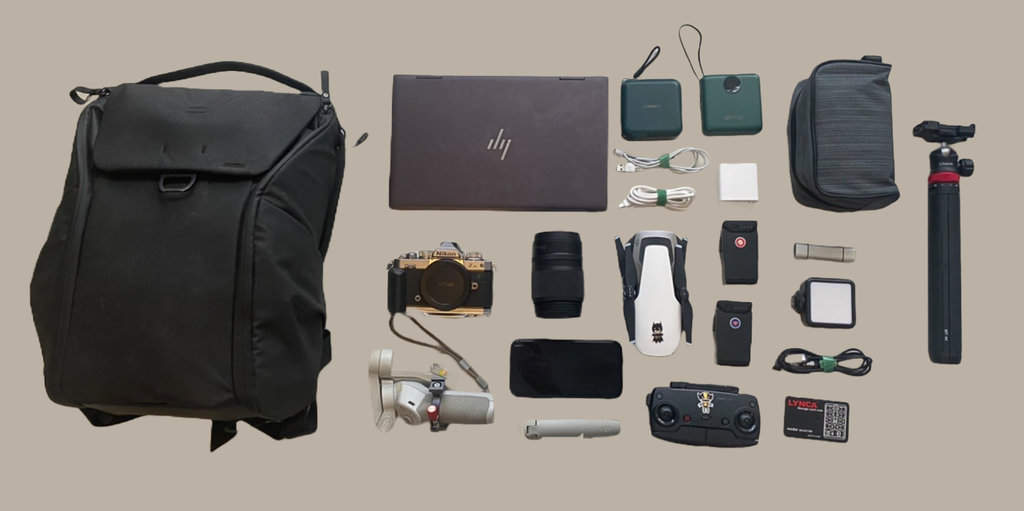
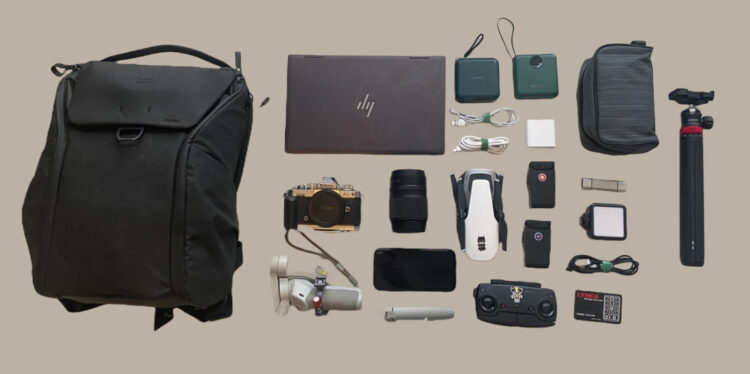
I finally embarked on my first field mission for the year, and last week I ran a poll in one of my Instagram stories asking if there was interest in seeing what went into field bag. The unanimous answer was ‘yes’ – so here is (almost) everything in my backpack that I used in the field in my most recent mission in Indonesia. Take this post as a packing list guide and inspiration for you to adapt to your needs, bearing in mind that your needs may be different to mine. Some of these links in this post are affiliate links – which means I may get a commission if you click on them and make a purchase, but at no extra cost to you.

This recent mission was a light survey – we spent several few day trips looking at already-discovered rock art sites and were not doing any detailed recordings or excavations. Photography and videography were the primary means of data collection; I have used digital photography extensively for all my rock art work, but in more recent years I have come to use videos as another way to record sites, particularly because it is so easy to capture video on cameras and mobile phones these days.

Backpack: Peak Design Everyday Backpack v2 20L
I like using photography backpacks because I’m always bringing a camera to the field. Peak Design has a great reputation for camera bags, and true to its name I use this backpack every day even when not in the field. The backpack can be accessed from the top or sides, and adjustable shelves can be configured according to your loadout. There are plenty of inside pockets, and sleeves for both a laptop and tablet . This bag also comes in a larger 30L version, but a smaller pack forces me to be more efficient with space, and more importantly it keeps everything lighter in the long run.

Cameras: Nikon Z fc + iPhone 11 + DJI Mavic Air
I used a Nikon DSLR for the last 15 years and recently made the switch to the mirrorless Nikon Z fc. Without a mechanical shutter mechanism, mirrorless cameras tend to be smaller and lighter than DSLRs but still offer the advantage of using interchangeable lenses. Sticking to Nikon means I can still use some of my old lenses but in this case I used a 18-140 zoom lens designed for the Z system which gives me flexibility and more importantly the need to carry only one lens to keeps things light. This camera uses an APS-C sensor, which photography purists will say is of poorer quality than a full-frame sensor. This is true, but the gap between full-frame and APS-C is narrowing, and because size and weight are my main considerations, the image quality with this setup is good enough – definitely more than adequate for recording rock art and for publications.

Until a few years ago, I also carried a second compact camera (a Nikon P7200) as a backup but I find that modern mobile phones are up to the task. I was recently convinced about the viability of my phone as a backup camera when a colleague who shot photos for National Geographic told me that he rarely took his camera with him because his mobile phone did a decent enough job (He was using an iPhone 10). Of course, newer phones will likely take better-quality photos than a phone with a few years on it. On the phone, I prefer to use the Adobe Lightroom app to take photographs as it allows me to adjust the settings as needed. However, the phone is used more to record videos and video documentation is increasingly becoming an important part of the fieldwork process.

The last camera is the drone, which is useful for aerial and landscape photography and in my case, for photographing rock art on cliff faces and other inaccessible areas. The DJI Mavic Air drone is a few years old now, but it folds up and doesn’t take up much space, even with the radio transmitter and spare batteries. That said, drones are specialised pieces of equipment and require some training to use. If you haven’t flown a drone before, be prepared expect to crash several times!

Camera Accessories: DJI Osmo OM 4 and Ulanzi MT-44 Tripod
Recording videos on my phone has become such a big part of my documentation process that I now always keep a gimbal in my bag. A gimbal stabilizes the phone and makes videos less jerky, while taking photos in low light conditions becomes much easier by hand. The Osmo OM 4 was the first version of their mobile phone gimbals which folded up into a smaller form, and the magnetic clamp makes it easy to attach and remove the phone without the hassle of setting up.

The tripod is another example of a device that folds into a smaller form, in this case a thin cylinder. The Ulanzi MT-44 is technically a monopod with a tripod base that extends to just over a metre. The innovative head has an integrated mobile phone clip, but it is also strong enough to hold the gimbal and the (now-lighter) camera.

Laptop: HP Envy x360
The HP Envy x360 is just slightly heavier than an iPad at 1.3 kg, but it can store all the photos (I usually shoot in RAW) and videos that I take, and also run the heavier applications like Lightroom, Photoshop and Premiere. While functionally a powerful laptop, the x360 also converts into a tablet so I have the best of both worlds. The only downside is that Windows 11 doesn’t have a dedicated tablet mode and so the interface is still clunky especially compared to iOS.

Power: Remax Powerbank 10,000 mA (wireless), Remax Powerbank 20,000 ma, Basike 65W USB C adapter + cords
The phone is the one device that gets used all the time, so I have two power banks within easy reach to keep it topped up. The smaller-capacity one has an added advantage of wireless (magnetic) charging. I probably have too many power banks at this stage since the Osmo can also function as a powerbank. Except for the drone, all the devices in the kit can be charged using USB-C or Lightning Cables. The Basike 65W adapter has a USB-C and a USB-A outlet so I can simultaneously charge the laptop/camera and phone at the same time. I’ll be glad that Apple is finally being forced to adopt USB-C which means one less cable to carry in the future.

Miscellaneous Items in the Tech Bag
I reused an airline toiletry bag to keep small miscellaneous items such as a travel adapter, a memory card holder, a memory card reader and a multi-headed USB charging cable. The most surprisingly useful device in this pouch is the Ulanzi mini LED light, which can be connected to the hotshoe of a camera . The small light is really bright and very useful for dark cave interiors and other low-light conditions. More light translate to less grainy videos and photos. If I only had one tool to recommend from this bag, it would be this mini LED light.

Other items (not pictured)
A few other items of note are not pictured. I always carry one or two archaeological scales, but they are usually in my wallet. There is also the wallet ninja, a card-size multitool that can be used as a bottle opener, a wrench or a screwdriver. Just make sure to get a non-bladed version if you plan to bring it on a plane. I also forgot to put in the picture my water bottle – I used something like this one that can be rolled up and doesn’t take space. In fact I forgot to put it in the picture because it was rolled up in one of the side pockets and hidden so well! And finally, a pen. It’s always handy to have one, trust me.

What do you think?
Now more so than ever, I’m focusing on keeping my backpack light(er) and favouring devices that can play multiple roles or fold into compact forms. Of course, this loadout is personalised to myself and how I use my gear in the field. What about you? If you conduct fieldwork, how does your kit differ to mine? Is there something in my kit that you think you would use, or do you think I’m missing something? Or maybe you have a question about a particular choice of device. I’d like to hear from you – leave a comment below. Perhaps this will be the first in a series of posts, since the kit changes according to mission requirements.

Subscribe to the weekly Southeast Asian Archaeology news digest

Latest Books

The following are affiliate links for which I may earn a commission if you click and make a purchase. Click here for more books about Southeast Asian archaeology.
Sale Malay Silver and Gold: Courtly Splendour from Indonesia, Malaysia, Singapore, Brunei and Thailand
Malay Silver and Gold: Courtly Splendour from...
Amazon Prime
$38.54
Buy on Amazon
Sale The Oxford Guide to the Malayo-Polynesian Languages of Southeast Asia (Oxford Guides to the World's Languages)
The Oxford Guide to the Malayo-Polynesian...
Amazon Prime
$165.87
Buy on Amazon
Sale Majapahit: Sculptures from a Forgotten Kingdom
Majapahit: Sculptures from a Forgotten Kingdom
$44.08
Buy on Amazon
Sale Majapahit: Intrigue, Betrayal and War in Indonesia’s Greatest Empire
Majapahit: Intrigue, Betrayal and War in...
Amazon Prime
$15.74
Buy on Amazon
Sale The Story of Southeast Asia
The Story of Southeast Asia
$24.11
Buy on Amazon
Buddhist Landscapes: Art and Archaeology of the Khorat Plateau, 7th to 11th Centuries
Buddhist Landscapes: Art and Archaeology of the...
Amazon Prime
$56.00
Buy on Amazon

Leave a Reply

Your email address will not be published. Required fields are marked *

I agree to the Terms & Conditions and Privacy Policy.

This site uses Akismet to reduce spam. Learn how your comment data is processed.

Southeast Asian Archaeology

© 2019

Navigate Site

  • News
  • Resources
  • Countries
  • Topics
  • Visit
  • Jobs
  • Subscribe
  • About

Follow

Never Miss a Discovery
Subscribe for Exclusive Southeast Asian Archaeology News!

Stay connected with the latest breakthroughs, research, and events from across Southeast Asia’s archaeology scene. Sign up today for exclusive weekly updates, trusted by over 2,000 subscribers.

×
No Result
View All Result
  • News
  • Resources
  • Countries
    • Southeast Asia
    • Mainland Southeast Asia
      • Cambodia
      • Laos
      • Malaysia
      • Myanmar
      • Thailand
      • Vietnam
    • Island Southeast Asia
      • Brunei
      • Indonesia
      • Malaysia
      • Philippines
      • Singapore
      • Timor Leste
    • Peripheral Southeast Asia
  • Topics
    • Artifact Type
      • Architecture
      • Bones and Burials
      • Ceramics
      • Intangible Cultural Heritage
      • Lithics
      • Megaliths
      • Rock Art
      • Sculpture
    • Field
      • Anthropology
      • Bioarchaeology
      • Epigraphy
      • General Archaeology
      • Metallurgy and Metalworking
      • Paleontology
      • Underwater Archaeology
      • Visual Art
      • Zooarchaeology
    • Other Themes
      • Animism
      • Buddhism
      • Christianity
      • Disaster Risk Management
      • Hinduism
      • Islam
      • Archaeological Tourism in Southeast Asia
  • Visit
    • Virtual Archaeology
    • Unesco World Heritage
  • Jobs
  • Subscribe
  • About
    • About
    • Supporters
    • Terms of Use
    • Privacy Policy
    • Contact

© 2019

This website uses cookies. By continuing to use this website you are giving consent to cookies being used. Visit our Privacy and Cookie Policy.