


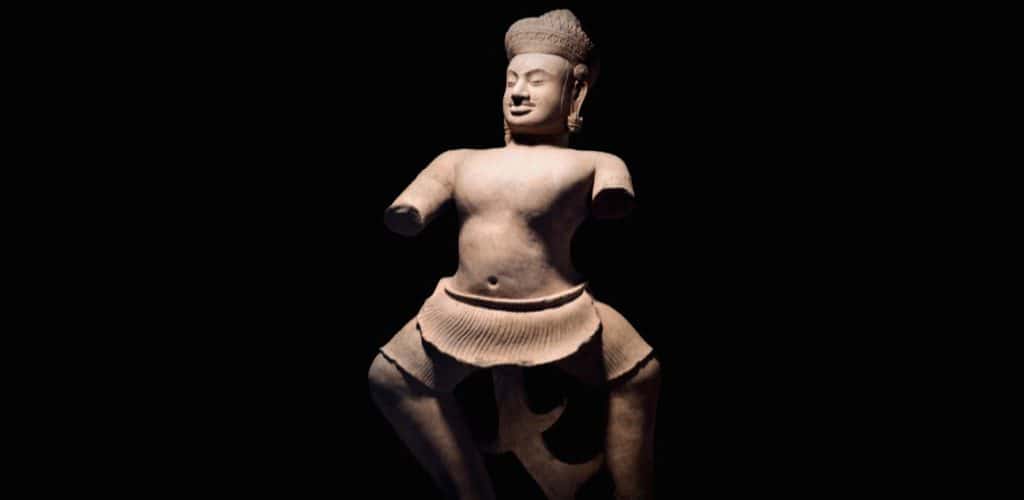
via ArtReview, 14 September 2021: A great article reviewing some of the major developments of antiquities trafficking and repatriation, including the cases of Douglas Latchford and the lintels from Thailand.
But while such cases hail from a time when Western imperial powers and their citizenry didn’t know better (or so the fading excuse goes), any last traces of Old World romanticism and derring-do have been dispelled by the Douglas Latchford case. Born in Bombay to English parents, this self-styled ‘adventurer scholar’ – who died in Bangkok, aged eighty-eight, in August 2020 – was, in recent years, accused of being the conduit in a major antiquities looting and smuggling network that flowed from Cambodia’s sylvan Khmer temples through rural Thailand and Bangkok, then on through the moneyed capillaries of the artworld. He is said to have done this as civil wars, rebel groups and genocidal Khmer Rouge-rule ravaged the country – and to have thrived on this conflict, not in spite of it.
In the eyes of his critics, a veil of respectability and a veneer of scholarship allowed him to operate in plain sight. A successful businessman and bodybuilding impresario who made his fortune in pharmaceuticals and property, he had dual Thai-British citizenship and friends in high places. In Cambodia, he donated money and the occasional item to the national museum, and even accepted an award for his ‘unique contribution to scholarship and understanding of Khmer culture’. He also self-published three quasi-academic books, among them 2004’s Adoration and Glory, a lavish compendium of Khmer stone treasures ‘dedicated to the Khmer people’. Containing sumptuous images, essays and admiring testimonials from Cambodia’s culture and museum ministries, its high production values now stand accused of masking a calculated goal: to launder anonymous private collections (his, we can assume) of suspect origins. With many of the beguiling stone figures shorn of arms, legs or heads, it is also a glossy catalogue of the horrors meted out by looters.
Source: Property and Theft: A History of Looting in Southeast Asia – ArtReview