• This week in Southeast Asian Archaeology: Prambanan gets some renewed attention, Phimai Black pottery surfaces at Mun Bon Dam, and I’m taking a short break next week.⠀
⠀
The featured stories look at the new Indonesia–India conservation project at Prambanan, focusing on the temple complex’s ruined perwara shrines, and a striking Late Prehistoric find in northeast Thailand: a remarkably complete Phimai Black vessel discovered as water levels fell at Mun Bon Dam.⠀
⠀
Temples, pottery, reservoirs, and a little scheduled rest. Back again on 27 July.⠀
⠀
Read this week’s newsletter: [link in bio]⠀
⠀
#SoutheastAsianArchaeology #Archaeology #Heritage #Prambanan #Thailand #Indonesia #Cambodia #Vietnam #CulturalHeritage #Substack
  • Gold rings, bronze drums, ancient burials, and better ethics in bioarchaeology — this week’s Southeast Asian Archaeology newsletter is a two-week catch-up edition.⠀
⠀
The lead story comes from Don Yai Thong in Phetchaburi, Thailand, where excavations have revealed gold ornaments, bronze drums, burials, beads, pottery and more. One newly reported gold signet ring bears Brahmi script, raising interesting questions about status, ritual and long-distance connections in the region.⠀
⠀
Also featured: a new paper on ethical collaboration when working with human remains in Southeast Asia — a timely reminder that care, respect, training, authorship and local authority are all part of good archaeological practice.⠀
⠀
Read the latest issue through the link in bio.
  • Cobbles, Caves and Committees 🪨⛰️📜⠀
⠀
This week’s Southeast Asian Archaeology newsletter moves from UNESCO heritage diplomacy to synchrotron science in Malaysia’s Nenggiri Valley, and then back into deep time with Early Palaeolithic cobble tools from Cambodia’s Mekong terraces.⠀
⠀
Cover image: Wat Phra Mahathat, Nakhon Si Thammarat — because temple towers do improve most things.⠀
⠀
Read the latest issue at the link in bio.⠀
⠀
#SoutheastAsianArchaeology #Archaeology #Heritage #Cambodia #Malaysia #UNESCO #WatPhraMahathat #NakhonSiThammarat #CulturalHeritage
  • This week in Southeast Asian Archaeology: broken pots, painted hands, and returning relics.⠀
⠀
The main story is a new paper on Angkorian ceramics from Thala Borivat and Sambor, showing how Angkor’s eastern Mekong provinces were connected through roads, rivers, rapids and local choices — not one neat supply chain.⠀
⠀
Also featured: Tham Pha Mue in Laos opens to visitors, a site I studied and helped document; Cambodia welcomes the return of three sculptures from the US; plus updates from Bujang Valley, Mỹ Sơn and Bagan.⠀
⠀
Read this week’s issue: https://bit.ly/3QjsdVO ⠀
⠀
#SoutheastAsianArchaeology #Angkor #Cambodia #Laos #RockArt #Archaeology #Heritage #Mekong
  • Boats, pots, and prehistoric know-how this week at Southeast Asian Archaeology.⠀
⠀
In the new newsletter:⠀
🛶 outrigger boat motifs in Sulawesi rock art⠀
🏺 new perspectives on pottery in Timor-Leste⠀
👑 the restored Nguyen Dynasty throne⠀
🎟️ falling ticket sales at Angkor⠀
⚖️ a new book on archaeology and Philippine law⠀
⠀
#Archaeology #SoutheastAsia #Heritage #RockArt #TimorLeste #Indonesia
  • Brunei’s archaeology does not get nearly enough attention.⠀
⠀
For this bonus post, I’m looking at Kota Batu Archaeological Park, the site of Brunei’s old capital. It is not a spectacular ruin in the usual sense — no towering temples, no monumental gateways — but its fragments tell a fascinating story: tombs, ceramics, sandstone pillar bases, river defences, house posts, imported wares, and traces of a working port city.⠀
⠀
Kota Batu shows Brunei not as a quiet corner of Southeast Asian archaeology, but as part of the maritime world that linked Borneo with China, Vietnam, Thailand, the Philippines and beyond.
  • This week’s Southeast Asian Archaeology newsletter is about movement, adaptation, and why archaeology is rarely as tidy as we pretend.⠀
⠀
Inside:⠀
🏹 a new review of bow-and-arrow evidence from India to Oceania⠀
🪙 a study of how Roman materials were filtered and remade in Southeast Asia⠀
🌊 new work on maritime links between Angkor and China during the megadrought period⠀
⠀
Also this week: Angkor palace waterworks, the Cẩm An shipwreck, and the reopening of Phimai National Museum.⠀
⠀
Link in bio / https://bit.ly/4dV88wS ⠀
#SoutheastAsianArchaeology #Archaeology #Heritage #Angkor #Vietnam #Thailand #Cambodia #AncientTrade #MaritimeArchaeology
  • New this week in Southeast Asian Archaeology: the Plain of Jars, trade beads, burial rituals, Philippine obsidian, coastal watchtowers, public archaeology, and a museum rethink of the galleon trade.⠀
⠀
The lead story is a new paper from Laos, where one huge jar at Site 75 contained the remains of at least 37 people and hints at a long, careful mortuary tradition. From there, the issue moves across the region, with a particularly strong run of stories from the Philippines on exchange networks, local histories, and the stories archaeology tells in public.⠀
⠀
Jars, beads, boats, and the occasional inconvenient fact. https://bit.ly/3RqKWyW ⠀
⠀
#SoutheastAsianArchaeology #Archaeology #Heritage #Laos #Philippines #Museums #PublicHistory
  • This week: Đồng Dương, ancient Champa, broken bricks, border temples, Buddhist architecture on the move, and a reminder that archaeology is rarely just about the past.⠀
⠀
Link in bio / read here: https://bit.ly/4ePHSpL ⠀
⠀
#SoutheastAsianArchaeology #DongDuong #Champa #Vietnam #Cambodia #Thailand #Myanmar #Archaeology #Heritage
  • This week in Southeast Asian Archaeology: a remarkable burial find in Phetchaburi, an old perahu under review in Kelantan, and the Po Nagar festival in Vietnam as a case of living heritage in action. ⠀
⠀
https://bit.ly/48PAeI5 ⠀
⠀
#archaeology #southeastAsia #southeastasianarchaeology
Wednesday, July 22, 2026
Southeast Asian Archaeology
  • News
  • Resources
  • Countries
    • Southeast Asia
    • Mainland Southeast Asia
      • Cambodia
      • Laos
      • Malaysia
      • Myanmar
      • Thailand
      • Vietnam
    • Island Southeast Asia
      • Brunei
      • Indonesia
      • Malaysia
      • Philippines
      • Singapore
      • Timor Leste
    • Peripheral Southeast Asia
  • Topics
    • Artifact Type
      • Architecture
      • Bones and Burials
      • Ceramics
      • Intangible Cultural Heritage
      • Lithics
      • Megaliths
      • Rock Art
      • Sculpture
    • Field
      • Anthropology
      • Bioarchaeology
      • Epigraphy
      • General Archaeology
      • Metallurgy and Metalworking
      • Paleontology
      • Underwater Archaeology
      • Visual Art
      • Zooarchaeology
    • Other Themes
      • Animism
      • Buddhism
      • Christianity
      • Disaster Risk Management
      • Hinduism
      • Islam
      • Archaeological Tourism in Southeast Asia
  • Visit
    • Virtual Archaeology
    • Unesco World Heritage
  • Jobs
  • Subscribe
  • About
    • About
    • Supporters
    • Terms of Use
    • Privacy Policy
    • Contact
No Result
View All Result
Southeast Asian Archaeology
  • News
  • Resources
  • Countries
    • Southeast Asia
    • Mainland Southeast Asia
      • Cambodia
      • Laos
      • Malaysia
      • Myanmar
      • Thailand
      • Vietnam
    • Island Southeast Asia
      • Brunei
      • Indonesia
      • Malaysia
      • Philippines
      • Singapore
      • Timor Leste
    • Peripheral Southeast Asia
  • Topics
    • Artifact Type
      • Architecture
      • Bones and Burials
      • Ceramics
      • Intangible Cultural Heritage
      • Lithics
      • Megaliths
      • Rock Art
      • Sculpture
    • Field
      • Anthropology
      • Bioarchaeology
      • Epigraphy
      • General Archaeology
      • Metallurgy and Metalworking
      • Paleontology
      • Underwater Archaeology
      • Visual Art
      • Zooarchaeology
    • Other Themes
      • Animism
      • Buddhism
      • Christianity
      • Disaster Risk Management
      • Hinduism
      • Islam
      • Archaeological Tourism in Southeast Asia
  • Visit
    • Virtual Archaeology
    • Unesco World Heritage
  • Jobs
  • Subscribe
  • About
    • About
    • Supporters
    • Terms of Use
    • Privacy Policy
    • Contact
No Result
View All Result
Southeast Asian Archaeology
No Result
View All Result
ADVERTISEMENT

Related Posts

[Paper] Investigating the Risk of Violence During the Neolithic to the Late Iron Age in Northeast Thailand (c. 1400 B.C. – A.D. 800)

31 July 2024
0
56

...

[Paper] Intangible maritime heritage protection in Malaysia: The need for a revision of the National Heritage Act of 2005

26 July 2024
0
37

...

Source: Malay Mail 20240722

New Book Chronicles Kelabit Village History in Borneo

25 July 2024
0
41

...

Source Taninai 2024

[Paper] International Coordinating Committee for Angkor (ICC-Angkor): Reflections from Diplomatic Perspectives

24 July 2024
0
32

...

Popular This Week

  • Source: Rappler 20240616

    Yamashita Gold: Myth vs. Archaeological Reality

    0 shares
    Share 0 Tweet 0
  • Southeast Asian Archaeology memes that will tickle your funny bone and also make you ponder

    68 shares
    Share 68 Tweet 0
  • The most influential books on Southeast Asian Archaeology (a crowdsourced list)

    0 shares
    Share 0 Tweet 0
  • Southeast Asian Archaeology from a Rock Art Perspective (with annotations)

    0 shares
    Share 0 Tweet 0
  • Negritos or Malays: Who are the original inhabitants of the Philippines?

    2 shares
    Share 2 Tweet 0
Buy me a coffeeBuy me a coffee

If you found this site useful, you can help support it by buying me a coffee!

[Paper] First fossil-leaf floras from Brunei Darussalam show dipterocarp dominance in Borneo by the Pliocene

9 May 2022
in Brunei
Tags: Borneo (island)environmental archaeologyresearch papers
0
SHARES
35
VIEWS
Source: Phys.org 20220428

Source: Phys.org 20220428

via PeerJ, 24 March 2022: Not archaeology, but it relates to Brunei in (very) ancient times. Fossil leaves from Brunei indicate that coastal rainforests from 4-5 million years ago are still very similar to what we have today.

The Malay Archipelago is one of the most biodiverse regions on Earth, but it suffers high extinction risks due to severe anthropogenic pressures. Paleobotanical knowledge provides baselines for the conservation of living analogs and improved understanding of vegetation, biogeography, and paleoenvironments through time. The Malesian bioregion is well studied palynologically, but there have been very few investigations of Cenozoic paleobotany (plant macrofossils) in a century or more. We report the first paleobotanical survey of Brunei Darussalam, a sultanate on the north coast of Borneo that still preserves the majority of its extraordinarily diverse, old-growth tropical rainforests. We discovered abundant compression floras dominated by angiosperm leaves at two sites of probable Pliocene age: Berakas Beach, in the Liang Formation, and Kampong Lugu, in an undescribed stratigraphic unit. Both sites also yielded rich palynofloral assemblages from the macrofossil-bearing beds, indicating lowland fern-dominated swamp (Berakas Beach) and mangrove swamp (Kampong Lugu) depositional environments. Fern spores from at least nine families dominate both palynological assemblages, along with abundant fungal and freshwater algal remains, rare marine microplankton, at least four mangrove genera, and a diverse rainforest tree and liana contribution (at least 19 families) with scarce pollen of Dipterocarpaceae, today’s dominant regional life form. Compressed leaves and rare reproductive material represent influx to the depocenters from the adjacent coastal rainforests. Although only about 40% of specimens preserve informative details, we can distinguish 23 leaf and two reproductive morphotypes among the two sites. Dipterocarps are by far the most abundant group in both compression assemblages, providing rare, localized evidence for dipterocarp-dominated lowland rainforests in the Malay Archipelago before the Pleistocene. The dipterocarp fossils include winged Shorea fruits, at least two species of plicate Dipterocarpus leaves, and very common Dryobalanops leaves. We attribute additional leaf taxa to Rhamnaceae (Ziziphus), Melastomataceae, and Araceae (Rhaphidophora), all rare or new fossil records for the region. The dipterocarp leaf dominance contrasts sharply with the family’s <1% representation in the palynofloras from the same strata. This result directly demonstrates that dipterocarp pollen is prone to strong taphonomic filtering and underscores the importance of macrofossils for quantifying the timing of the dipterocarps’ rise to dominance in the region. Our work shows that complex coastal rainforests dominated by dipterocarps, adjacent to swamps and mangroves and otherwise similar to modern ecosystems, have existed in Borneo for at least 4–5 million years. Our findings add historical impetus for the conservation of these gravely imperiled and extremely biodiverse ecosystems.

Source: First fossil-leaf floras from Brunei Darussalam show dipterocarp dominance in Borneo by the Pliocene [PeerJ]

See also:

  • First leaf fossil study of Borneo’s rainforest reveals current ecosystem is ancient | Phys.org, 28 April 2022

Subscribe to the weekly Southeast Asian Archaeology news digest

Latest Books

The following are affiliate links for which I may earn a commission if you click and make a purchase. Click here for more books about Bruneian archaeology.
Sale Malay Silver and Gold: Courtly Splendour from Indonesia, Malaysia, Singapore, Brunei and Thailand
Malay Silver and Gold: Courtly Splendour from...
Amazon Prime
$38.54
Buy on Amazon
Sale Brunei – History, Islam, Society and Contemporary Issues (Routledge Contemporary Southeast Asia Series)
Brunei – History, Islam, Society and...
Amazon Prime
$49.59
Buy on Amazon
Origins, History and Social Structure in Brunei Darussalam (The Modern Anthropology of Southeast Asia)
Origins, History and Social Structure in Brunei...
$41.79
Buy on Amazon
Historical Dictionary of Brunei Darussalam (Historical Dictionaries of Asia, Oceania, and the Middle East)
Historical Dictionary of Brunei Darussalam...
$115.56
Buy on Amazon
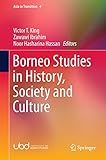
Borneo Studies in History, Society and Culture (Asia in Transition Book 4)
Borneo Studies in History, Society and Culture...
$145.86
Buy on Amazon

Leave a Reply

Your email address will not be published. Required fields are marked *

I agree to the Terms & Conditions and Privacy Policy.

This site uses Akismet to reduce spam. Learn how your comment data is processed.

Southeast Asian Archaeology

© 2019

Navigate Site

  • News
  • Resources
  • Countries
  • Topics
  • Visit
  • Jobs
  • Subscribe
  • About

Follow

Never Miss a Discovery
Subscribe for Exclusive Southeast Asian Archaeology News!

Stay connected with the latest breakthroughs, research, and events from across Southeast Asia’s archaeology scene. Sign up today for exclusive weekly updates, trusted by over 2,000 subscribers.

×
No Result
View All Result
  • News
  • Resources
  • Countries
    • Southeast Asia
    • Mainland Southeast Asia
      • Cambodia
      • Laos
      • Malaysia
      • Myanmar
      • Thailand
      • Vietnam
    • Island Southeast Asia
      • Brunei
      • Indonesia
      • Malaysia
      • Philippines
      • Singapore
      • Timor Leste
    • Peripheral Southeast Asia
  • Topics
    • Artifact Type
      • Architecture
      • Bones and Burials
      • Ceramics
      • Intangible Cultural Heritage
      • Lithics
      • Megaliths
      • Rock Art
      • Sculpture
    • Field
      • Anthropology
      • Bioarchaeology
      • Epigraphy
      • General Archaeology
      • Metallurgy and Metalworking
      • Paleontology
      • Underwater Archaeology
      • Visual Art
      • Zooarchaeology
    • Other Themes
      • Animism
      • Buddhism
      • Christianity
      • Disaster Risk Management
      • Hinduism
      • Islam
      • Archaeological Tourism in Southeast Asia
  • Visit
    • Virtual Archaeology
    • Unesco World Heritage
  • Jobs
  • Subscribe
  • About
    • About
    • Supporters
    • Terms of Use
    • Privacy Policy
    • Contact

© 2019

This website uses cookies. By continuing to use this website you are giving consent to cookies being used. Visit our Privacy and Cookie Policy.