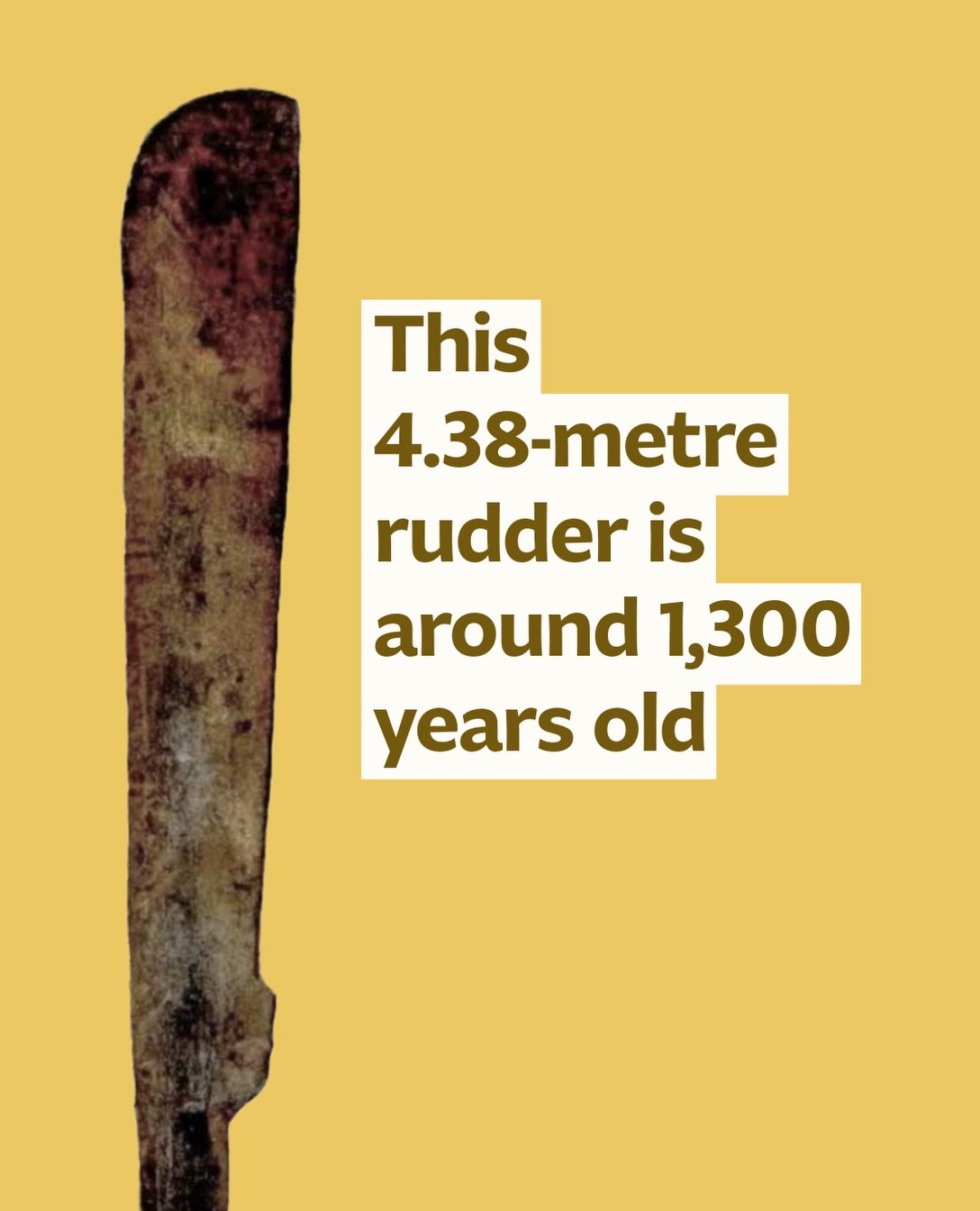

• A 4.38-metre-long wooden rudder from the west coast of Sumatra is providing a rare glimpse of Southeast Asian seafaring around 1,300 years ago.

The rudder was recovered at the Bongal Site in Central Tapanuli, North Sumatra. Today the site lies inland, but geomorphological research suggests that in the 7th–8th centuries CE it was part of a shallow bay or estuarine environment.

The quarter rudder was carved from a single log and measures 4.38 metres long. Radiocarbon dating of the wood produced a calibrated date of 656–687 CE, making it the earliest securely dated rudder currently known from Southeast Asia.

Researchers also documented hull planks with raised wooden lugs, dowels and surviving palm-fibre ropes. These suggest that parts of these boats were pegged and tied together—a construction method archaeologists call the Southeast Asian lashed-lug tradition. Differences between the surviving planks even suggest that several vessels may have been present. 

Bongal also produced ceramics, glass, beads and coins pointing to connections with much wider exchange networks. The researchers do not argue that the Bongal boats themselves were making long-distance voyages across the Indian Ocean, but propose that locally constructed vessels formed part of a regional maritime network, moving through rivers and along Sumatra’s coast and connecting communities there to broader systems of exchange.

Reference
Mochtar et al. 2026. “Lashed-Lug Boats from the Bongal Site: New Evidence for Early Maritime Networks on the West Coast of Sumatra.” International Journal of Nautical Archaeology.
10.1080/10572414.2026.2714901

#SoutheastAsianArchaeology #Indonesia #Sumatra #MaritimeArchaeology #NauticalArchaeology
  • Betel, Boats and Border Stones is this week’s Southeast Asian Archaeology Newsletter.⠀
⠀
This issue starts with a fascinating new paper on ancient teeth from South Sulawesi, where unusual dental wear may point to the habitual sucking of whole areca nuts by pre-agricultural foragers.⠀
⠀
Then we move from teeth to timbers: lashed-lug boat remains from Bongal on Sumatra’s west coast, including a 7th-century quarter rudder, add new detail to Southeast Asia’s early maritime networks.⠀
⠀
And yes, there are more boats: Phanom Surin in Thailand and the Butuan boat sites in the Philippines both make appearances this week.⠀
⠀
Plus: Preah Vihear, Koh Ker, Prambanan, Đông Sơn drums, repatriation, digital heritage, and more.⠀
⠀
Read the full issue at the link in bio.⠀
⠀
#SoutheastAsianArchaeology #Archaeology #MaritimeArchaeology
  • People in Sulawesi may have been habitually using a neuroactive plant as far back as 25,000–16,000 years ago.

A new study in Science Advances examines two preagricultural foragers from South Sulawesi, Indonesia, separated by thousands of years but sharing an unusual dental pattern: deep, rounded, circumferential wear that does not match ordinary chewing. The researchers argue that the wear formed through repeatedly holding, sucking or gently gnawing a small, hard object in different parts of the mouth. 

Using LC-MS, the team detected arecoline—a characteristic alkaloid of areca, or “betel”, nut—in dental samples from both individuals. One came from Leang Bulu Bettue and dates to 25–16 ka; the other, from Leang Cappalombo 1, is associated with deposits dating to around 7.6–6.3 ka. 

This was probably not betel chewing in the form familiar today. Modern betel quid typically combines processed areca nut with slaked lime and other ingredients. To test whether a simpler practice was plausible, the researchers soaked intact areca nuts and applied the resulting solutions to cells expressing human receptors. The experiments showed that intact nuts could release physiologically active arecoline without slaked lime. Combined with the dental wear, chemical residues and experiments support the authors’ interpretation that these foragers habitually sucked whole areca nuts.

For now, the sample is just two individuals, and psuggestions that the nuts were used for stimulation, pain relief or medicinal purposes remain hypotheses. What the study does show is that habitual neuroactive plant use may reach far deeper into the hunter-gatherer past than the archaeological record had previously demonstrated. 

Reference
Brumm et al. 2026. “Betel nut sucking is the earliest recorded evidence for the habitual use of a neuroactive plant drug.” Science Advances.
10.1126/sciadv.aei1901

#SoutheastAsianArchaeology #Sulawesi #IndonesiaArchaeology #Prehistory #BetelNut
  • Twenty-two small beads can preserve the traces of a much larger world of movement and exchange.

A new archaeometric study examines beads excavated in 2023 at Khok Phithak, within the ancient city of Khu Bua in Ratchaburi, central Thailand. Khu Bua was an important urban centre associated with the Dvaravatī cultural sphere, enclosed by earthen ramparts and moats and situated within the Mae Klong river system. 

The researchers analysed 21 glass beads and one chalcedony/agate bead, combining microscopic observations with VP-SEM-EDS, LA-ICP-MS and micro-Raman spectroscopy. Manufacturing traces—including axial colour streaks and elongated bubbles—indicate that most of the glass beads were made by drawing glass into tubes or canes before cutting them into individual beads. 

Their chemistry indicates that nineteen beads belong to the m-Na-Al-1 glass subgroup, consistent with glassmaking traditions documented in South Asia, particularly the wider technological sphere of southern India and Sri Lanka. Together with their manufacturing technique, the authors associate these beads with the large-scale Indo-Pacific beadmaking tradition. 

However, one blue bead, B014, is made from plant-ash soda–lime glass with a broad western Asian affinity—although the study cannot identify a specific production centre. Another remarkable bead, B007, appears to have been wound from recycled iron-smelting slag, suggesting an entirely different production history.

Rather than evidence for primary glassmaking at Khu Bua itself, the authors interpret the assemblage as reflecting an inland centre of consumption and possibly redistribution, connected through maritime and riverine networks to much wider systems of Indian Ocean exchange. 

Reference
Risteka et al. 2026. “Production Technology and Provenance of Dvaravatī Glass Beads from Khu Bua, Central Thailand: An Archaeometric Study.” Heritage 9, 347.
10.3390/heritage9090347

#SoutheastAsianArchaeology #ThailandArchaeology #Dvaravati #KhuBua #ancienttrade
  • Small finds, big stories this week.⠀
⠀
The latest Southeast Asian Archaeology newsletter focuses on Thailand, with newly reported rock art, worrying news of looting, and two new papers showing what archaeological science can reveal from humble materials.⠀
⠀
One study looks at prehistoric pottery from Don Up Mung in Nong Bua Lamphu, tracing differences in clay composition, firing and production choices. Another follows glass beads from Khu Bua in Ratchaburi into the wider world of South Asian glassmaking and Indian Ocean exchange.⠀
⠀
Also: a LOT of opportunities this week — jobs, scholarships, courses and calls for papers.⠀
⠀
Link in bio⠀
⠀
#SoutheastAsianArchaeology #Archaeology #CulturalHeritage #ArchaeologicalScience
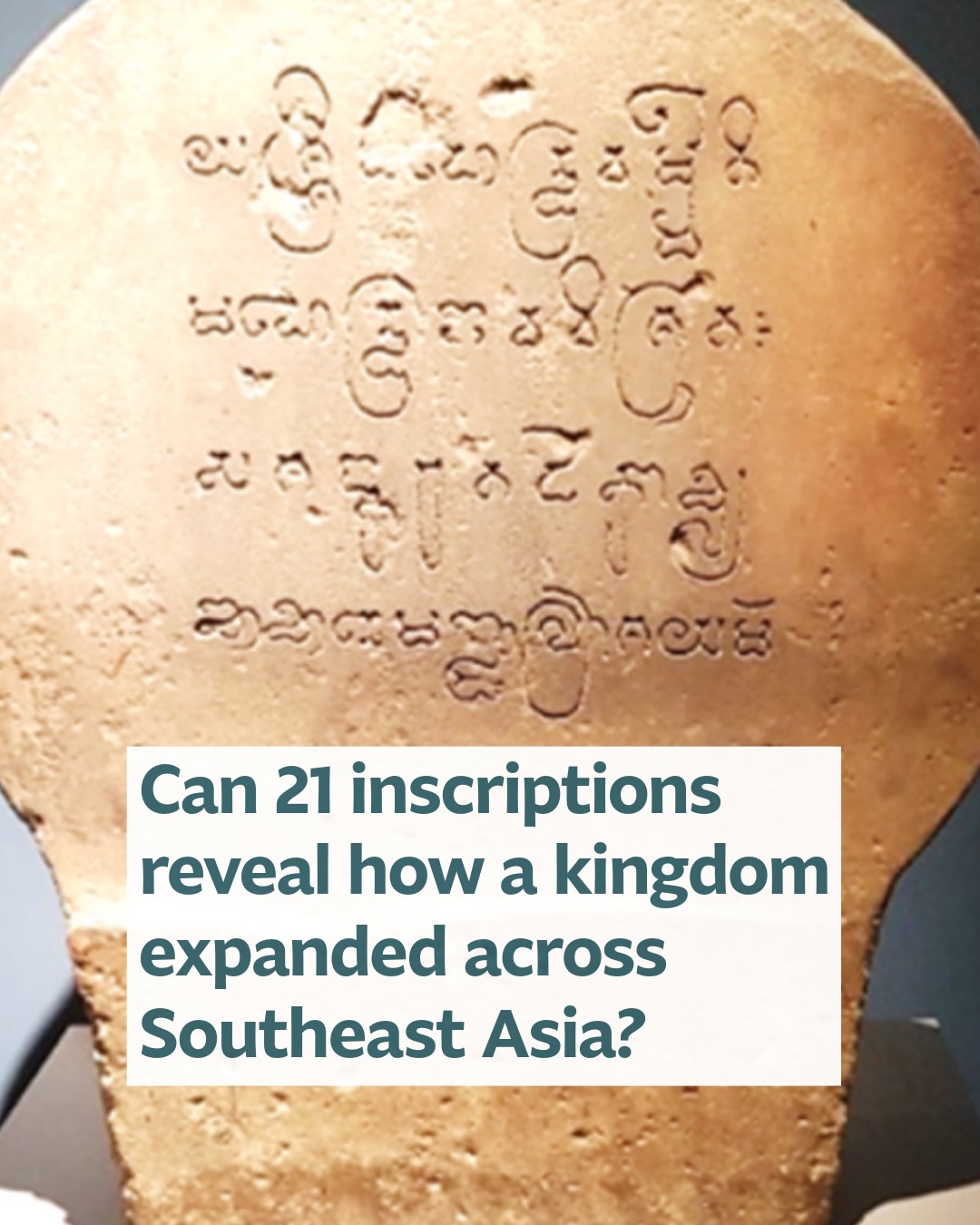
  • Can inscriptions help reconstruct how a kingdom expanded across a landscape?

King Citrasena (Chitrasen, later known as Mahendravarman) ruled Chenla in the late 6th to early 7th centuries, during a period when Chenla’s influence was extending across parts of what are now Cambodia, Laos and northeastern Thailand. His reign is known partly through inscriptions recording religious foundations, royal achievements and other acts of authority. 

Pailoplee and Khatshima map 21 inscriptions from at least 19 locations associated with Citrasena, and asked if people were moving between these places, which routes would they have taken? To explore this, they use Least Cost Path (LCP) modelling in a GIS. LCP calculates routes that minimise the “cost” of movement across terrain.

In archaeology, this can help identify plausible corridors shaped by features such as slopes, river valleys and mountain barriers. These models show how movement could have been structured by the landscape under the assumptions of the model.

Across several scenarios, the reconstructed paths repeatedly concentrate around major river systems—especially the Mun River—and particular passes through the Phnom Dong Rek (Dangrek) mountain range. The authors also compare the modelled network with archaeological sites attributed to Citrasena’s period, many of which fall along these reconstructed corridors.

Where river navigation would have been difficult (such as the Khone Phapheng Falls), the authors propose that Citrasena’s forces may instead have moved overland along riverbanks, using waterways as natural guides through the landscape.

The placement of several inscriptions near river confluences also suggests that these locations may have been important for controlling movement, communication and exchange, not simply access to water.

Reference
Pailoplee, S. & Khatshima, K. 2026. “The role of King Chitrasen (Mahendravarman) in the expansion of the Chenla Kingdom: A study of inscriptions and historical geography.” Social Sciences & Humanities Open 14, 103503.
10.1016/j.ssaho.2026.103503

#SoutheastAsianArchaeology #Cambodia #Thailand #Laos #Chenla
  • Sometimes the biggest archaeological questions depend on evidence we cannot see during excavation.

Microarchaeology investigates archaeological deposits at microscopic and microstratigraphic scales. In Southeast Asia, this can be especially valuable because monsoonal wetness, tropical weathering, intensive land use and complex depositional histories can affect how archaeological evidence survives. 

Researchers can examine the surrounding sediment for traces of past activity and later disturbance. Methods discussed in this new paper include sediment micromorphology, laboratory micro-excavation, high-resolution imaging, FTIR microscopy and SEM-EDS. Depending on the context, microscopic evidence can help identify burning, trampling, plant processing, sediment movement and environmental change. 

The importance of that context is illustrated by work in northern Laos. At Tam Ngu Hao 2, microstratigraphy was used alongside lithological observations and dating to establish the stratigraphic context of Denisovan fossil evidence. At Tam Pà Ling, it has shown potential for investigating environmental seasonality and possible patterns of early modern human presence. These methods help archaeologists understand what happened to a deposit before drawing conclusions from what it contains.
 
The paper also introduces the Australian Microarchaeology and Palaeosciences Facility (AusMAP) and argues for greater collaboration, training and locally based microarchaeological expertise across Southeast Asia. 

Reference:
Hernandez et al. 2026. Scaling down to look further back: Southeast Asia, deep-time science and microarchaeology. SPAFA Journal 10.
10.26721/spafajournal.651369a4y8 

#SoutheastAsianArchaeology #Archaeology #Microarchaeology #Geoarchaeology #ArchaeologicalScience
  • This week on Southeast Asian Archaeology: claims, contexts and careful reading.⠀
⠀
With Malaysia’s National Day, Vietnam’s National Day, Timor-Leste’s Popular Consultation Day, and International Literacy Day all close together, I’m thinking about literacy not just as reading words, but reading evidence: museum labels, old spellings, dates, maps, artefacts, archives, and the occasional viral post with a raised eyebrow.⠀
⠀
The catalyst this week is the recent controversy over historical claims in Malaysia, alongside a timely RSIS piece on how historians, archaeologists, archivists, librarians and curators can help push back against disinformation. Not by attacking people, but by helping everyone ask better questions of the past.⠀
⠀
Also in this week’s issue: Penang’s historical Malay spellings, Cambodia’s new artefact database grant, Singapore’s revised History Gallery, UNESCO’s maritime museum project, new research on Sundadonty, Roti Island, Chenla inscriptions, ancient Myanmar, and more.⠀
⠀
Link in bio.⠀
⠀
#SoutheastAsianArchaeology #Archaeology #Heritage #InformationLiteracy
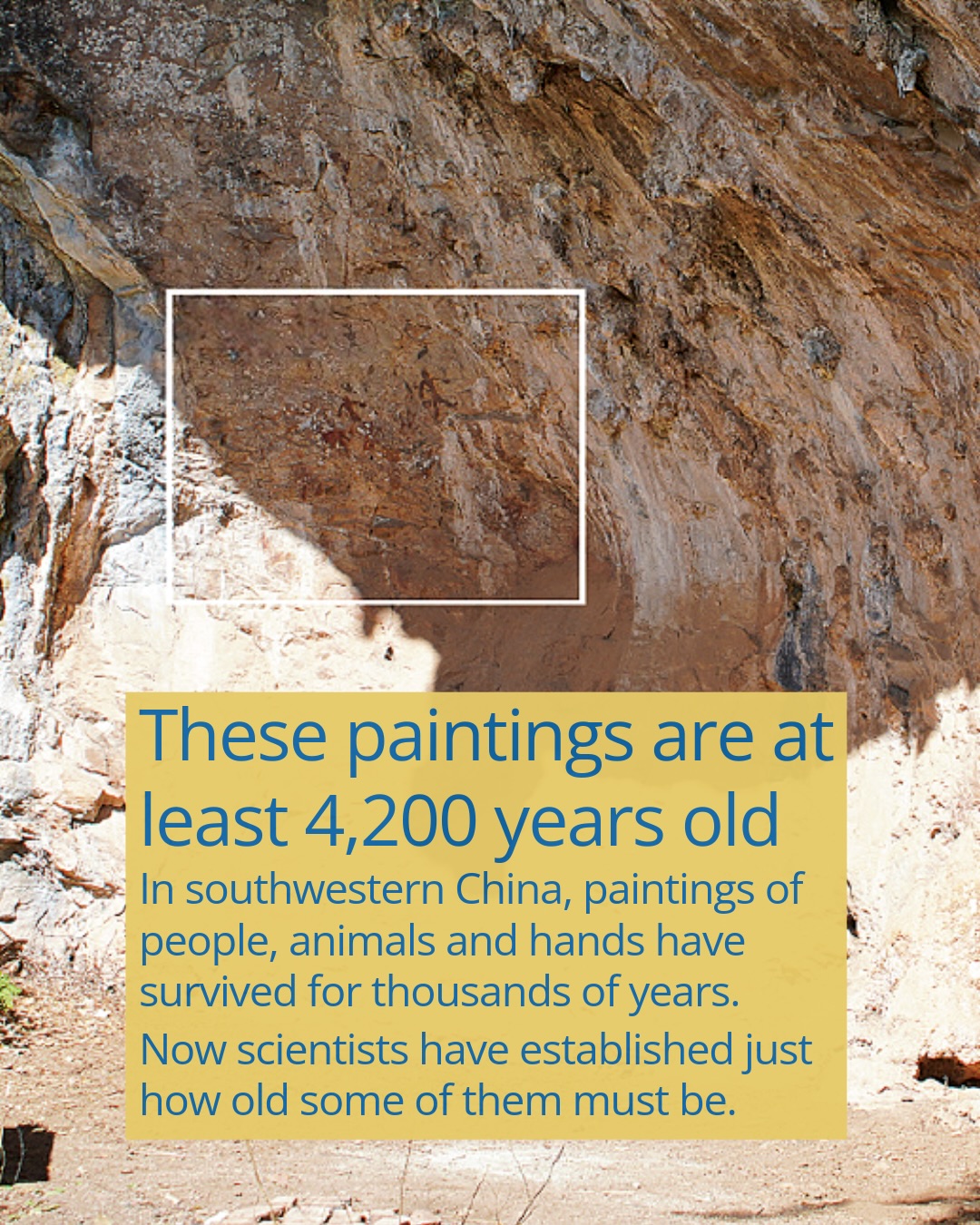
  • How old are the rock paintings of Mainland Southeast Asia? 🎨🪨

A new study from Mangguan in Yunnan, southwestern China, provides another important piece of the puzzle.

Using uranium-thorium dating, researchers analysed tiny calcite deposits that had formed over the paintings. Because the calcite must be younger than the pigment underneath, the dates provide a minimum age for the art. One deposit covering a human figure shows that the painting was already there at least 4,220 years ago.

Mangguan is particularly interesting because it lies only about 15 km from the better-known Cangyuan rock art complex. The two have stylistic similarities and overlapping dates, suggesting they formed part of a broader regional rock art tradition, a comparison can be taken farther south.

The rock paintings at Pha Taem in Luang Prabang, Laos, have previously been compared with Cangyuan, raising intriguing questions about relationships between the rock art traditions of southwestern China and Mainland Southeast Asia.

Most rock art in Mainland Southeast Asia remains poorly dated, so dates like those from Mangguan give us increasingly useful chronological anchors for thinking about these connections.

References:
Wu, Y. et al. 2026. U-Th dating of rock paintings in southwestern China: minimum age of ~4.2 ka BP at the Mangguan site. Journal of Archaeological Science: Reports 74, 105987. DOI: 10.1016/j.jasrep.2026.105987.

Bo, X. 2020. On the relationship between the Cangyuan rock art in Yunnan, China, and the Pha Taem rock art in Laos. Rock Art Research 37(2).

Tan, N.H. 2018. The Cliff Paintings of Pha Taem, Luang Prabang, Lao PDR. Rock Art Research 35(1).

#RockArt #SoutheastAsianArchaeology #Yunnan #China
  • Extraordinary claims about the past can be exciting. But how do we tell an exciting new hypothesis from pseudoarchaeology?

Recent controversy in Malaysia over claims that ancient Malays taught the Romans shipbuilding provides a useful case study. Rather than piling on the person behind the claims, I think there is a more useful question to ask: how would we actually test an idea like this?

Archaeology gives us some simple tools.

Do the dates work? What is the primary evidence? Does the evidence actually demonstrate the connection being claimed? Are there better explanations? And perhaps most importantly: what evidence would make us reject the hypothesis?

Ancient Southeast Asians really were sophisticated seafarers. Srivijaya really was one of Asia’s great maritime powers. Sungai Batu really does preserve remarkable evidence for early iron production.

None of those achievements needs embellishment to make Southeast Asian archaeology extraordinary.

Swipe through for five questions you can use the next time you encounter an astonishing claim about the ancient past.

🚩 Remember: possibility is not evidence, similarity does not necessarily mean transmission, and extraordinary claims still have to survive ordinary archaeological scrutiny.

Read more about the archaeology behind these claims in this week’s Southeast Asian Archaeology Newsletter.

#SoutheastAsianArchaeology #Pseudoarchaeology #Malaysia #MaritimeArchaeology #MediaLiteracy
Saturday, September 19, 2026
Southeast Asian Archaeology
  • News
  • Resources
  • Countries
    • Southeast Asia
    • Mainland Southeast Asia
      • Cambodia
      • Laos
      • Malaysia
      • Myanmar
      • Thailand
      • Vietnam
    • Island Southeast Asia
      • Brunei
      • Indonesia
      • Malaysia
      • Philippines
      • Singapore
      • Timor Leste
    • Peripheral Southeast Asia
  • Topics
    • Artifact Type
      • Architecture
      • Bones and Burials
      • Ceramics
      • Intangible Cultural Heritage
      • Lithics
      • Megaliths
      • Rock Art
      • Sculpture
    • Field
      • Anthropology
      • Bioarchaeology
      • Epigraphy
      • General Archaeology
      • Metallurgy and Metalworking
      • Paleontology
      • Underwater Archaeology
      • Visual Art
      • Zooarchaeology
    • Other Themes
      • Animism
      • Buddhism
      • Christianity
      • Disaster Risk Management
      • Hinduism
      • Islam
      • Archaeological Tourism in Southeast Asia
  • Visit
    • Virtual Archaeology
    • Unesco World Heritage
  • Jobs
  • Subscribe
  • About
    • About
    • Supporters
    • Terms of Use
    • Privacy Policy
    • Contact
No Result
View All Result
Southeast Asian Archaeology
  • News
  • Resources
  • Countries
    • Southeast Asia
    • Mainland Southeast Asia
      • Cambodia
      • Laos
      • Malaysia
      • Myanmar
      • Thailand
      • Vietnam
    • Island Southeast Asia
      • Brunei
      • Indonesia
      • Malaysia
      • Philippines
      • Singapore
      • Timor Leste
    • Peripheral Southeast Asia
  • Topics
    • Artifact Type
      • Architecture
      • Bones and Burials
      • Ceramics
      • Intangible Cultural Heritage
      • Lithics
      • Megaliths
      • Rock Art
      • Sculpture
    • Field
      • Anthropology
      • Bioarchaeology
      • Epigraphy
      • General Archaeology
      • Metallurgy and Metalworking
      • Paleontology
      • Underwater Archaeology
      • Visual Art
      • Zooarchaeology
    • Other Themes
      • Animism
      • Buddhism
      • Christianity
      • Disaster Risk Management
      • Hinduism
      • Islam
      • Archaeological Tourism in Southeast Asia
  • Visit
    • Virtual Archaeology
    • Unesco World Heritage
  • Jobs
  • Subscribe
  • About
    • About
    • Supporters
    • Terms of Use
    • Privacy Policy
    • Contact
No Result
View All Result
Southeast Asian Archaeology
No Result
View All Result
ADVERTISEMENT

Related Posts

Source: Vietnam Net 20240729

Vietnam Unveils Stamps Featuring Ceramic National Treasures

31 July 2024
0
66

...

Source: Free Malaysia Today 20240725

Kedah’s 1200-Year-Old Buddha Statue Rewrites History

26 July 2024
0
215

...

Source: Malay Mail 20240722

New Book Chronicles Kelabit Village History in Borneo

25 July 2024
0
45

...

Source: Citizens Journal 20240719

DNA Study of ‘Penang Woman’ Sheds Light on Prehistoric Malaysia

23 July 2024
0
80

...

Popular This Week

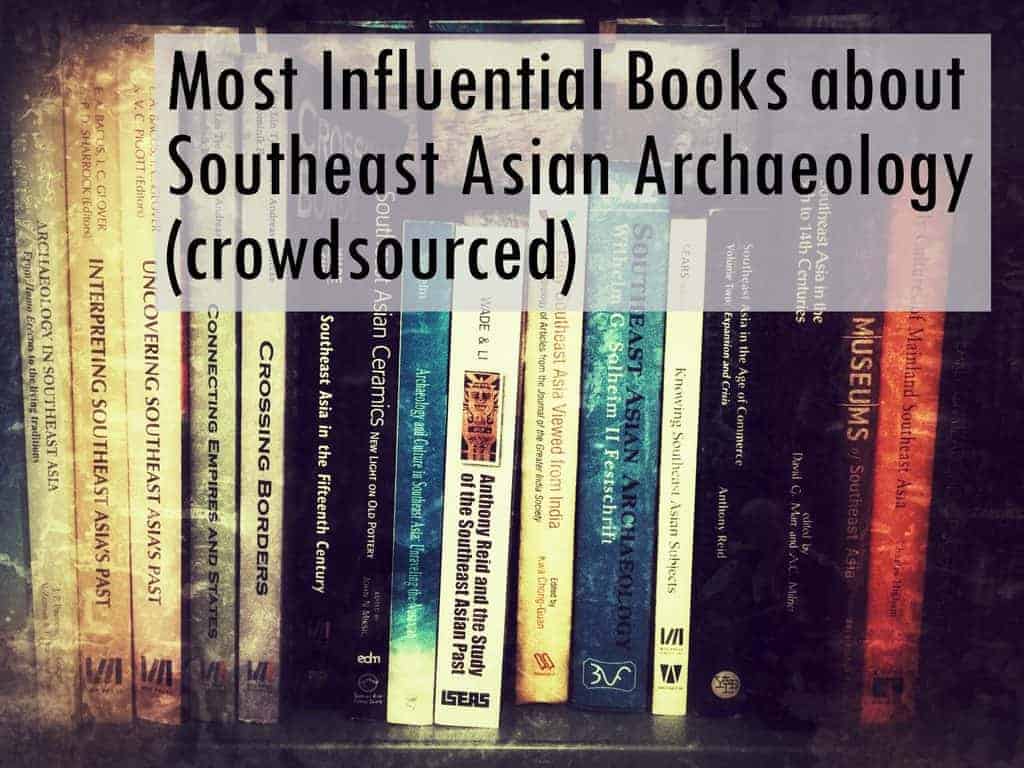
  • The most influential books on Southeast Asian Archaeology (a crowdsourced list)

    The most influential books on Southeast Asian Archaeology (a crowdsourced list)

    0 shares
    Share 0 Tweet 0
  • Southeast Asian Archaeology from a Rock Art Perspective (with annotations)

    0 shares
    Share 0 Tweet 0
  • Southeast Asian Archaeology memes that will tickle your funny bone and also make you ponder

    68 shares
    Share 68 Tweet 0
  • Rebutting the myth that Malays have the second oldest genes in the world

    25 shares
    Share 25 Tweet 0
  • Explore Southeast Asia through these virtual galleries

    616 shares
    Share 616 Tweet 0
Buy me a coffeeBuy me a coffee

If you found this site useful, you can help support it by buying me a coffee!

Spotlight on Sabah's stone age culture

22 April 2007
in Malaysia
Tags: Borneo (island)Bukit Tengkorak (site)Centre for Global Archaeological ResearchceramicsLapita (culture)lithicsmigrationNeolithicNew Britain (island)obsidianPolynesia (culture)prehistoryRasmi Shoocongdej (person)Sabah (state)Sabah MuseumSama-Bajau (people)Semporna (town)Silpakorn UniversitySophia UniversityStephen Chia (person)Universiti Sains Malaysia (university)Zuraina Majid (person)
0
SHARES
223
VIEWS
Spotlight on Sabah's stone age culture

22 April 2007 (New Straits Times) – Today’s NST features a special spotlight on the stone age culture – past and ethnographic present. The first story is about the prehistory ceramics industrial site at Bukit Tengkorak (Tengkorak Hill).

SpotLight: Stone Age Potters

Tampi villagers today don’t think twice about using clay from the foot of Bukit Tengkorak and nearby areas in southeastern Sabah for their pottery, digging wells for fresh water, burning wood for fuel and eating a wide range of fish, shellfish and molluscs.

But most of them are unaware that from about 3,000 until 2,000 years ago, people at the summit of the 600-foot hill did the same–when the Semporna peninsula was a late Stone Age population hub and craft centre.

Experts from Universiti Sains Malaysia (USM), the Sabah Museum Department and the Department of Natural Heritage have found millions of sherds which show that the site about five kilometres from Semporna town was one of the largest, if not the largest, pottery making sites in Island Southeast Asia (SEA) and the Pacific during the Neolithic era (the last part of the Stone Age, beginning 8,000 BC).

Their findings have overturned some theories about how prehistoric people lived and traded in the region.

Until the excavations here, archaeologists believed that long-distance sea trade and migration of people in insular SEA and the Pacific moved east from Melanesia (near Papua New Guinea) to Polynesia, leaving behind what is known as the “Lapita culture” of pottery, stone tools and ornaments.

“Our research at Bukit Tengkorak shows that 3,000 years ago, people were not only moving east towards New Britain in Melanesia but also westwards towards Sabah,” explains Dr Stephen Chia of USM’s Centre for Archaeological Research Malaysia, who based his PhD thesis on the site.

“This is one of the longest trading routes in the world during the Neolithic period,” says the archeochemist who found obsidian (a volcanic glass used to make tools) at the site and traced it chemically to Talasea in New Britain, 3500 kilometres away. His fieldwork in Southeast Asia also found stone tools and pottery similar to Bukit Tengkorak in the Zamboanga Peninsula, the Sulu Archipelago and Sulawesi.

The second story covers the Bajau people who live in the vicinity of Bukit Tengkorak on the Semporna peninsula of Sabah – the clay stoves produced by the Bajau are remarkably similar to the 3,000-year-old stoves unearthed nearby, implying an unbroken ceramics manufacturing tradition.

Bajaus carrying on a long tradition

The finished handiwork of this Bajau woman in Sabah’s southeastern Semporna peninsula looks exactly like the 3,000-year-old stove unearthed at nearby Bukit Tengkorak.

“Pottery has been made like this for hundreds of years,” says Rogayah. “Each house has a stove to grill fish or satay and cook rice.”

“The way of life of the Bajaus today and the food they eat are similar to what we found on site,” says Dr Stephen Chia of Universiti Sains Malaysia’s Centre for Archaeological Research Malaysia.

“We think that the nomadic Bajau Laut may have landed here to trade, mend their nets, dry fish and bury their dead, but it was the settled coastal Bajaus who made the pottery.”
However, he cautions: “The people of Bukit Tengkorak could also be a totally different group of maritime people who shifted here and then moved on.”


Related Books:
– Southeast Asia: From Prehistory to History by P. S. Bellwood and I. Glover (Eds)
– Man’s conquest of the Pacific: The prehistory of Southeast Asia and Oceania by P. Bellwood

Subscribe to the weekly Southeast Asian Archaeology news digest

Latest Books

The following are affiliate links for which I may earn a commission if you click and make a purchase. Click here for more books about Malaysian archaeology.
Sale Malay Silver and Gold: Courtly Splendour from Indonesia, Malaysia, Singapore, Brunei and Thailand
Malay Silver and Gold: Courtly Splendour from...
Amazon Prime
$38.54
Buy on Amazon
Sale Selected Topics on Archaeology, History and Culture in the Malay World
Selected Topics on Archaeology, History and...
Amazon Prime
$117.23
Buy on Amazon
Malay Seals from the Islamic World of Southeast Asia
Malay Seals from the Islamic World of Southeast...
Amazon Prime
$150.00
Buy on Amazon
Traces of the Ramayana and Mahabharata in Javanese and Malay Literature
Traces of the Ramayana and Mahabharata in Javanese...
Amazon Prime
$30.00
Buy on Amazon
The archaeology of the Niah Caves, Sarawak: Volume II
The archaeology of the Niah Caves, Sarawak: Volume...
Amazon Prime
$94.00
Buy on Amazon

Leave a Reply

Your email address will not be published. Required fields are marked *

I agree to the Terms & Conditions and Privacy Policy.

This site uses Akismet to reduce spam. Learn how your comment data is processed.

Southeast Asian Archaeology

© 2019

Navigate Site

  • News
  • Resources
  • Countries
  • Topics
  • Visit
  • Jobs
  • Subscribe
  • About

Follow

Never Miss a Discovery
Subscribe for Exclusive Southeast Asian Archaeology News!

Stay connected with the latest breakthroughs, research, and events from across Southeast Asia’s archaeology scene. Sign up today for exclusive weekly updates, trusted by over 2,000 subscribers.

×
No Result
View All Result
  • News
  • Resources
  • Countries
    • Southeast Asia
    • Mainland Southeast Asia
      • Cambodia
      • Laos
      • Malaysia
      • Myanmar
      • Thailand
      • Vietnam
    • Island Southeast Asia
      • Brunei
      • Indonesia
      • Malaysia
      • Philippines
      • Singapore
      • Timor Leste
    • Peripheral Southeast Asia
  • Topics
    • Artifact Type
      • Architecture
      • Bones and Burials
      • Ceramics
      • Intangible Cultural Heritage
      • Lithics
      • Megaliths
      • Rock Art
      • Sculpture
    • Field
      • Anthropology
      • Bioarchaeology
      • Epigraphy
      • General Archaeology
      • Metallurgy and Metalworking
      • Paleontology
      • Underwater Archaeology
      • Visual Art
      • Zooarchaeology
    • Other Themes
      • Animism
      • Buddhism
      • Christianity
      • Disaster Risk Management
      • Hinduism
      • Islam
      • Archaeological Tourism in Southeast Asia
  • Visit
    • Virtual Archaeology
    • Unesco World Heritage
  • Jobs
  • Subscribe
  • About
    • About
    • Supporters
    • Terms of Use
    • Privacy Policy
    • Contact

© 2019

This website uses cookies. By continuing to use this website you are giving consent to cookies being used. Visit our Privacy and Cookie Policy.