• This week on Southeast Asian Archaeology: fish traps, tidal flats and maritime memory.⠀
⠀
The main story looks at tambek, stone tidal fish weirs on Bawean Island in Indonesia. A new study records 54 of these structures and shows how they reflect local knowledge of tides, fish behaviour, construction, ownership and coastal life.⠀
⠀
Also in the highlights:⠀
⠀
Bronze and Iron Age layers beneath Korat’s historic city wall⠀
Nguyễn-era military posts at Hải Vân Pass⠀
A reminder that coastal archaeology is not always shipwrecks and trade ceramics⠀
Sometimes the quieter story is sitting in the tidal flats, waiting for the water to go out.⠀
⠀
Read the full issue: https://bit.ly/4wkInNI ⠀
⠀
#SoutheastAsianArchaeology #Archaeology #Indonesia #Bawean #MaritimeHeritage #CulturalHeritage #Thailand #Vietnam #HeritageConservation #IslandArchaeology
  • How do you catch fish without a net, hook or boat?⠀
⠀
On Bawean Island in Indonesia’s Java Sea, coastal communities developed tambek: stone walls built across the intertidal zone that use the movement of the tides to trap fish.⠀
⠀
A new study by Dwi Kurnia Sandy and colleagues documents these remarkable structures through archaeological survey, drone photography, interviews, historical sources and mapping. The researchers recorded different forms of tambek, from relatively simple U-shaped structures to more elaborate V-shaped systems directing fish into enclosed spaces. Their locations were carefully chosen around productive coastal environments, particularly extensive intertidal zones and mangroves.⠀
⠀
But tambek were more than fishing equipment. They were also part of Bawean’s social landscape. Individual structures could belong to particular families, with ownership remembered and passed down across generations. Tambek could even be traded, while customary rules governed who could fish around them at different stages of the tide.⠀
⠀
Today, new tambek are no longer being built and many surviving structures are little used or abandoned. The researchers link their decline to modern fishing technologies, damage to reefs and mangroves, and the gradual loss of knowledge about how the structures were used and maintained. Some have even been dismantled, with their stones reused for coastal infrastructure.⠀
⠀
The study highlights how archaeology can document not only things from the distant past, but also traditional technologies and knowledge systems that are disappearing within living memory.⠀
⠀
📖 Sandy, D. K., et al. 2026. “Tambek as Traditional Fish Trapping Techniques: The Role of Stone Tidal Fish Weirs in Bawean Island Indonesia’s Maritime Culture.” Journal of Island and Coastal Archaeology.⠀
 DOI: 10.1080/15564894.2026.2703955⠀
⠀
#Archaeology #SoutheastAsianArchaeology #Indonesia #Bawean #MaritimeArchaeology #UnderwaterArchaeology #FishingHeritage #MaritimeHeritage #TraditionalKnowledge
  • Tiger bones. Blood-bound pigments. Temple walls. Digital museums.⠀
⠀
This week’s newsletter leads with two fascinating studies: evidence for Ice Age tigers living on Palawan, and research into blood-bearing mineral binders used in the Huashan rock art of southern China.⠀
⠀
Also inside: UNESCO decisions, Angkor conservation, Chăm heritage digitisation and the archaeology of wartime railways.⠀
⠀
Read Blood, Big Cats and Buffer Zones at the link in bio.⠀
⠀
#SoutheastAsianArchaeology #Archaeology #RockArt #Palawan #CulturalHeritage #MuseumStudies #AsianArchaeology
  • New issue out now — and it’s a bumper one.⠀
⠀
This week:⠀
Wat Phra Mahathat Woramahawihan becomes Thailand’s newest World Heritage Site; Fort Cornwallis and the Penang State Museum reopen with fresh questions about how colonial and local histories are told; and at Don Yai Thong, archaeologists continue the careful work of lifting fragile burials, gold ornaments and all.⠀
⠀
Also featuring Muna rock art, Angkor conservation, Butuan boats, Cham exhibitions, Bagan finds, and archaeology’s awkward cameo in South China Sea claims.⠀
⠀
Read via the link in bio.⠀
⠀
#SoutheastAsianArchaeology #Archaeology #WorldHeritage #Museum #CulturalHeritage #Thailand #Malaysia #Penang #Indonesia #Cambodia #Vietnam
  • This week in Southeast Asian Archaeology: Prambanan gets some renewed attention, Phimai Black pottery surfaces at Mun Bon Dam, and I’m taking a short break next week.⠀
⠀
The featured stories look at the new Indonesia–India conservation project at Prambanan, focusing on the temple complex’s ruined perwara shrines, and a striking Late Prehistoric find in northeast Thailand: a remarkably complete Phimai Black vessel discovered as water levels fell at Mun Bon Dam.⠀
⠀
Temples, pottery, reservoirs, and a little scheduled rest. Back again on 27 July.⠀
⠀
Read this week’s newsletter: [link in bio]⠀
⠀
#SoutheastAsianArchaeology #Archaeology #Heritage #Prambanan #Thailand #Indonesia #Cambodia #Vietnam #CulturalHeritage #Substack
  • Gold rings, bronze drums, ancient burials, and better ethics in bioarchaeology — this week’s Southeast Asian Archaeology newsletter is a two-week catch-up edition.⠀
⠀
The lead story comes from Don Yai Thong in Phetchaburi, Thailand, where excavations have revealed gold ornaments, bronze drums, burials, beads, pottery and more. One newly reported gold signet ring bears Brahmi script, raising interesting questions about status, ritual and long-distance connections in the region.⠀
⠀
Also featured: a new paper on ethical collaboration when working with human remains in Southeast Asia — a timely reminder that care, respect, training, authorship and local authority are all part of good archaeological practice.⠀
⠀
Read the latest issue through the link in bio.
  • Cobbles, Caves and Committees 🪨⛰️📜⠀
⠀
This week’s Southeast Asian Archaeology newsletter moves from UNESCO heritage diplomacy to synchrotron science in Malaysia’s Nenggiri Valley, and then back into deep time with Early Palaeolithic cobble tools from Cambodia’s Mekong terraces.⠀
⠀
Cover image: Wat Phra Mahathat, Nakhon Si Thammarat — because temple towers do improve most things.⠀
⠀
Read the latest issue at the link in bio.⠀
⠀
#SoutheastAsianArchaeology #Archaeology #Heritage #Cambodia #Malaysia #UNESCO #WatPhraMahathat #NakhonSiThammarat #CulturalHeritage
  • This week in Southeast Asian Archaeology: broken pots, painted hands, and returning relics.⠀
⠀
The main story is a new paper on Angkorian ceramics from Thala Borivat and Sambor, showing how Angkor’s eastern Mekong provinces were connected through roads, rivers, rapids and local choices — not one neat supply chain.⠀
⠀
Also featured: Tham Pha Mue in Laos opens to visitors, a site I studied and helped document; Cambodia welcomes the return of three sculptures from the US; plus updates from Bujang Valley, Mỹ Sơn and Bagan.⠀
⠀
Read this week’s issue: https://bit.ly/3QjsdVO ⠀
⠀
#SoutheastAsianArchaeology #Angkor #Cambodia #Laos #RockArt #Archaeology #Heritage #Mekong
  • Boats, pots, and prehistoric know-how this week at Southeast Asian Archaeology.⠀
⠀
In the new newsletter:⠀
🛶 outrigger boat motifs in Sulawesi rock art⠀
🏺 new perspectives on pottery in Timor-Leste⠀
👑 the restored Nguyen Dynasty throne⠀
🎟️ falling ticket sales at Angkor⠀
⚖️ a new book on archaeology and Philippine law⠀
⠀
#Archaeology #SoutheastAsia #Heritage #RockArt #TimorLeste #Indonesia
  • Brunei’s archaeology does not get nearly enough attention.⠀
⠀
For this bonus post, I’m looking at Kota Batu Archaeological Park, the site of Brunei’s old capital. It is not a spectacular ruin in the usual sense — no towering temples, no monumental gateways — but its fragments tell a fascinating story: tombs, ceramics, sandstone pillar bases, river defences, house posts, imported wares, and traces of a working port city.⠀
⠀
Kota Batu shows Brunei not as a quiet corner of Southeast Asian archaeology, but as part of the maritime world that linked Borneo with China, Vietnam, Thailand, the Philippines and beyond.
Tuesday, August 18, 2026
Southeast Asian Archaeology
  • News
  • Resources
  • Countries
    • Southeast Asia
    • Mainland Southeast Asia
      • Cambodia
      • Laos
      • Malaysia
      • Myanmar
      • Thailand
      • Vietnam
    • Island Southeast Asia
      • Brunei
      • Indonesia
      • Malaysia
      • Philippines
      • Singapore
      • Timor Leste
    • Peripheral Southeast Asia
  • Topics
    • Artifact Type
      • Architecture
      • Bones and Burials
      • Ceramics
      • Intangible Cultural Heritage
      • Lithics
      • Megaliths
      • Rock Art
      • Sculpture
    • Field
      • Anthropology
      • Bioarchaeology
      • Epigraphy
      • General Archaeology
      • Metallurgy and Metalworking
      • Paleontology
      • Underwater Archaeology
      • Visual Art
      • Zooarchaeology
    • Other Themes
      • Animism
      • Buddhism
      • Christianity
      • Disaster Risk Management
      • Hinduism
      • Islam
      • Archaeological Tourism in Southeast Asia
  • Visit
    • Virtual Archaeology
    • Unesco World Heritage
  • Jobs
  • Subscribe
  • About
    • About
    • Supporters
    • Terms of Use
    • Privacy Policy
    • Contact
No Result
View All Result
Southeast Asian Archaeology
  • News
  • Resources
  • Countries
    • Southeast Asia
    • Mainland Southeast Asia
      • Cambodia
      • Laos
      • Malaysia
      • Myanmar
      • Thailand
      • Vietnam
    • Island Southeast Asia
      • Brunei
      • Indonesia
      • Malaysia
      • Philippines
      • Singapore
      • Timor Leste
    • Peripheral Southeast Asia
  • Topics
    • Artifact Type
      • Architecture
      • Bones and Burials
      • Ceramics
      • Intangible Cultural Heritage
      • Lithics
      • Megaliths
      • Rock Art
      • Sculpture
    • Field
      • Anthropology
      • Bioarchaeology
      • Epigraphy
      • General Archaeology
      • Metallurgy and Metalworking
      • Paleontology
      • Underwater Archaeology
      • Visual Art
      • Zooarchaeology
    • Other Themes
      • Animism
      • Buddhism
      • Christianity
      • Disaster Risk Management
      • Hinduism
      • Islam
      • Archaeological Tourism in Southeast Asia
  • Visit
    • Virtual Archaeology
    • Unesco World Heritage
  • Jobs
  • Subscribe
  • About
    • About
    • Supporters
    • Terms of Use
    • Privacy Policy
    • Contact
No Result
View All Result
Southeast Asian Archaeology
No Result
View All Result
ADVERTISEMENT

Related Posts

Source: Free Malaysia Today 20240725

Kedah’s 1200-Year-Old Buddha Statue Rewrites History

26 July 2024
0
210

...

Source: DAP News 20240723

APSARA Authority Uncovers Angkorian Iron Smelting Site on Phnom Bok

26 July 2024
0
31

...

Source: Bernama 20240711

Ancient Kedah Findings to Be Added to School Curriculum

22 July 2024
0
37

...

Source: The Vibes 20240719

Kedah Buddha Statue Discovery Prompts Cautious Excitement

22 July 2024
0
55

...

Popular This Week

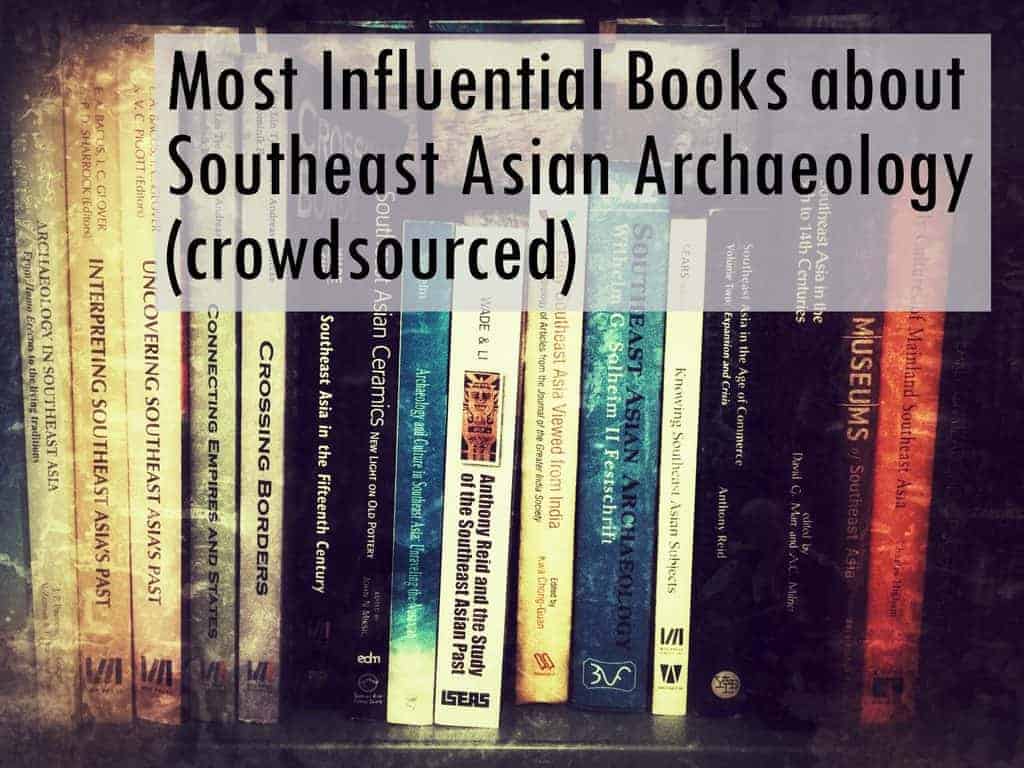
  • The most influential books on Southeast Asian Archaeology (a crowdsourced list)

    The most influential books on Southeast Asian Archaeology (a crowdsourced list)

    0 shares
    Share 0 Tweet 0
  • Southeast Asian Archaeology from a Rock Art Perspective (with annotations)

    0 shares
    Share 0 Tweet 0
  • Southeast Asian Archaeology memes that will tickle your funny bone and also make you ponder

    68 shares
    Share 68 Tweet 0
  • Negritos or Malays: Who are the original inhabitants of the Philippines?

    2 shares
    Share 2 Tweet 0
  • Philippines and India: Politics and ancient history

    3 shares
    Share 3 Tweet 0
Buy me a coffeeBuy me a coffee

If you found this site useful, you can help support it by buying me a coffee!

Iron smelting, temples and other characteristics of 'civilization'

9 March 2009
in Malaysia
Tags: Bujang Valleyiron (metal)Kedah (state)Metallurgysmelting furnace
0
SHARES
55
VIEWS

After a few days of news about the so-called “pre-Angkor” civilisation at the Bujang Valley, I was pleasantly surprised to read the AP’s (a notably non-local media organisation) focus on the iron-smelting discovery. There is an interesting question as to whether the remains that dot the valley really constitute as a ‘civilisation’ or not. What we do know is that the area seems to have been inhabited from the 3rd or 4th century right up to the 11th or 12th century. There are two main theories about the Bujang Valley settlement: was it was an outpost for Indian traders, who made a settlement there to stay for up to half a year while waiting for the monsoon winds to bring them back to India? Another theory is that the settlement was indigenous, and was gradually ‘Indianized’ from contacts with Indian traders – hopefully archaeological evidence can uncover which condition is true.

Our main source of archaeological information is from the ruins themselves, most of which appear to be remains of Buddhist stupas or Hindu temples with votive offerings; the tropical climate and frequent floods mean that there is little chance for human and other organic remains will be found. I am skeptical about the identification of one of the newly unearthed buildings as a house because houses in this region tend to be made from wood rather than stone. (Note: While affiliated with the Global Centre for Archaeological Research, I am not involved with this excavation in any way.)

One more note about iron smelting in Southeast Asia – the earliest evidence for such is around 1,500 BCE in the mainland, but the ranges of dates from the region go to as late as 500 CE. It does look as if the technology for metalworking diffused out from the mainland, probably from the north to south.

Malaysian dig reveals ancient people mastered iron
AP, via International Herald Tribune, 06 March 2009

Other than the Hindu and Buddhist temples that have been uncovered, little is known about the people of the Bujang Valley. There is even debate over whether they were an actual civilization.

Harry Truman Simanjuntak, a researcher at the National Research Center of Archaeology in Jakarta who was not involved in the dig, said the dating of the iron smelt to the third or fourth century appears reasonable.

But he cautioned that more evidence must be unearthed before concluding the Bunjang Valley people were an actual civilization, defined by complex hierarchical social and other structures.

“It’s too early to say it is a civilization,” he said.

Mokhtar argues the Bujang people are a civilization because temples imply a social structure.


Subscribe to the weekly Southeast Asian Archaeology news digest

Latest Books

The following are affiliate links for which I may earn a commission if you click and make a purchase. Click here for more books about Southeast Asian archaeology.
Sale Malay Silver and Gold: Courtly Splendour from Indonesia, Malaysia, Singapore, Brunei and Thailand
Malay Silver and Gold: Courtly Splendour from...
Amazon Prime
$38.54
Buy on Amazon
Sale The Oxford Guide to the Malayo-Polynesian Languages of Southeast Asia (Oxford Guides to the World's Languages)
The Oxford Guide to the Malayo-Polynesian...
Amazon Prime
$165.87
Buy on Amazon
Sale Majapahit: Sculptures from a Forgotten Kingdom
Majapahit: Sculptures from a Forgotten Kingdom
$44.08
Buy on Amazon
Sale Majapahit: Intrigue, Betrayal and War in Indonesia’s Greatest Empire
Majapahit: Intrigue, Betrayal and War in...
Amazon Prime
$15.74
Buy on Amazon
Sale The Story of Southeast Asia
The Story of Southeast Asia
$24.11
Buy on Amazon
Buddhist Landscapes: Art and Archaeology of the Khorat Plateau, 7th to 11th Centuries
Buddhist Landscapes: Art and Archaeology of the...
Amazon Prime
$56.00
Buy on Amazon

Comments 3

  1. Nicky says:
    17 years ago

    i read that one too when it first came out. I wonder how and why AP gets Prof Truman Simanjuntak to comment all the time. I remember the AP article on the 1.83 million year old handaxe, in which Prof Simajuntak was quite skeptical too.

    It’s good though. To get a different view. Just wondering why it is that we only hear from Prof Simajuntak again and again in AP. what do other scholars think?

  2. noelbynature says:
    17 years ago

    It’s probably a function of how the media works. Most reporters keep a list of experts who they can refer to – and comment on the archaeological news of the hour. It looks like Prof Truman is their go-to expert for anything archaeology in the Malay world.

  3. Nemi says:
    17 years ago

    This is so exciting! Thanks for sharing the news, Noel!

Leave a Reply

Your email address will not be published. Required fields are marked *

I agree to the Terms & Conditions and Privacy Policy.

This site uses Akismet to reduce spam. Learn how your comment data is processed.

Southeast Asian Archaeology

© 2019

Navigate Site

  • News
  • Resources
  • Countries
  • Topics
  • Visit
  • Jobs
  • Subscribe
  • About

Follow

Never Miss a Discovery
Subscribe for Exclusive Southeast Asian Archaeology News!

Stay connected with the latest breakthroughs, research, and events from across Southeast Asia’s archaeology scene. Sign up today for exclusive weekly updates, trusted by over 2,000 subscribers.

×
No Result
View All Result
  • News
  • Resources
  • Countries
    • Southeast Asia
    • Mainland Southeast Asia
      • Cambodia
      • Laos
      • Malaysia
      • Myanmar
      • Thailand
      • Vietnam
    • Island Southeast Asia
      • Brunei
      • Indonesia
      • Malaysia
      • Philippines
      • Singapore
      • Timor Leste
    • Peripheral Southeast Asia
  • Topics
    • Artifact Type
      • Architecture
      • Bones and Burials
      • Ceramics
      • Intangible Cultural Heritage
      • Lithics
      • Megaliths
      • Rock Art
      • Sculpture
    • Field
      • Anthropology
      • Bioarchaeology
      • Epigraphy
      • General Archaeology
      • Metallurgy and Metalworking
      • Paleontology
      • Underwater Archaeology
      • Visual Art
      • Zooarchaeology
    • Other Themes
      • Animism
      • Buddhism
      • Christianity
      • Disaster Risk Management
      • Hinduism
      • Islam
      • Archaeological Tourism in Southeast Asia
  • Visit
    • Virtual Archaeology
    • Unesco World Heritage
  • Jobs
  • Subscribe
  • About
    • About
    • Supporters
    • Terms of Use
    • Privacy Policy
    • Contact

© 2019

This website uses cookies. By continuing to use this website you are giving consent to cookies being used. Visit our Privacy and Cookie Policy.