
• Pots, perils and prehistory 🏺⠀
⠀
This week’s Southeast Asian Archaeology newsletter takes us from Sulawesi’s painted caves to the gold treasures of the Philippines—and the vessels that once carried food across the seas.⠀
⠀
Also inside:⠀
🔥 Wildfires threaten prehistoric rock art in Sulawesi⠀
🏛️ Eighteen Khmer antiquities move a step closer to returning home⠀
📚 Timor-Leste prepares to welcome its first university history students⠀
🍲 Singapore’s SHIPPED! exhibition connects archaeology with food traditions⠀
⠀
To everyone at the IPPA Congress in Yogyakarta: have a great conference! Sorry to miss you this time.⠀
⠀
Read the full edition via the link in bio.⠀
⠀
#SoutheastAsianArchaeology #Archaeology #CulturalHeritage #SoutheastAsia
  • Tiny traces, long histories. 🌿⠀
⠀
How do archaeologists recognise ginger, turmeric or cloves when the food itself has disappeared? And what was happening at Cambodia’s Baset village centuries before its royal temple was built?⠀
⠀
This week’s extra-large SEAArch newsletter explores two new papers on ancient food and village life, alongside two weeks of discoveries, conservation news and heritage debates from across Southeast Asia.⠀
⠀
A shoutout, too, to everyone gathering in Bali for the Asia Pacific Conference on Maritime & Underwater Cultural Heritage!⠀
⠀
Read the full edition through the link in bio.⠀
⠀
#SoutheastAsianArchaeology #SEAArch #Archaeology #Archaeobotany
  • What was inside these pottery vessels 3,000 years ago?

In Peninsular Malaysia, researchers have found something unexpected preserved in prehistoric pottery: traces of milk.

A new study analysed 15 pottery fragments from three archaeological cave sites—Gua Cha, Gua Kajang and Gua Harimau—using techniques that can identify microscopic traces of foods absorbed into ceramics.

Among the substances detected were caseins and β-lactoglobulin, proteins found in milk. Their presence provides the earliest direct evidence yet reported for dairy processing in equatorial Mainland Southeast Asia, dating to around 3,000 years ago.

Archaeologists have long struggled to establish when farming and animal domestication became part of life in prehistoric Peninsular Malaysia. Unlike sites further north in Southeast Asia, clear evidence of early livestock management and cultivation has been difficult to find here, partly because animal bones and plant remains are often poorly preserved.

The milk proteins suggest that Neolithic communities were processing dairy products thousands of years ago. This does not necessarily mean they were raising dairy animals locally but it provides an important new piece of evidence for understanding food production and consumption in the region.

The researchers also identified traces of plant and animal foods, suggesting that these vessels were used for a variety of food-processing activities.

Reference
Goh et al. 2026. “Pottery residues provide earliest direct evidence for domestication and dairy processing in equatorial Mainland Southeast Asia.” Journal of Archaeological Science: Reports, 75, 106066.
10.1016/j.jasrep.2026.106066

#SoutheastAsianArchaeology #SEAArch #Archaeology #MalaysiaArchaeology #milk
  • FORTS, FINDS AND FAST BIKES! ⠀
⠀
Archaeology isn
  • This week in Southeast Asian Archaeology:⠀
⠀
💀 What decades of funerary archaeology can tell us about the changing field of bioarchaeology in Indonesia.⠀
⠀
🏛️ Reconstructing the lost palaces of Lý dynasty Đại Việt—and what archaeology at Thăng Long reveals about their architecture.⠀
⠀
🙏 Two devas at Angkor Thom’s Victory Gate get their heads back, complete with an “eye-opening” ceremony.⠀
⠀
🪨 And the Singapore Stone has become Stoney, an absurdly adorable plushie - I want one.⠀
⠀
All that and much more in this week’s Stones, Skeletons and State Rooms.⠀
⠀
#SoutheastAsianArchaeology #Indonesia #Vietnam #Cambodia #Singapore
  • 🏺 CAVES, COMMUNITIES AND CULTURAL MEMORY⠀
⠀
An archaeological site doesn’t stop changing once the excavation ends.⠀
⠀
This week, we look at Ban Chiang through the memories of the people who live there, and at Sri Mahosot, where an ancient landscape remains part of contemporary worship and community identity.⠀
⠀
Also this week:⠀
⠀
🇵🇭 Rescue archaeology at a cave in Romblon⠀
🇮🇩 A possible Kadiri-era site in East Java⠀
🇻🇳 A new forest-and-heritage trail at Mỹ Sơn⠀
🇰🇭 Angkorian Buddhist sculpture⠀
📢 SPAFACON 2027 call for abstracts⠀
💼 New archaeology and heritage jobs⠀
💰 Grants, fellowships and PhD opportunities⠀
⠀
…plus archaeology and heritage stories from across Southeast Asia.⠀
⠀
Caves, Communities and Cultural Memory⠀
Southeast Asian Archaeology Newsletter | 21–27 September 2026⠀
⠀
🔗 Link in bio / southeastasianarchaeology.substack.com⠀
⠀
#Archaeology #SoutheastAsianArchaeology #SoutheastAsia
  • One river in northern Vietnam has yielded a remarkable record of more than 2,000 years of boatbuilding.

From the bed of the Kinh Thầy River at Cầu Bình, researchers documented 23 boat remains, including eight virtually complete logboat hulls and fragments of bows, sterns and planks. Radiocarbon dates place most of them between roughly 700 BCE and 1500 CE. 

Many hulls showed signs of sophisticated work beyond simply hollowing out a tree trunk. The hulls could be widened during manufacture, while wooden thwarts or bulkheads helped maintain their expanded shape. Some boats also carried additional boards along their upper edges, attached through holes with fibre lashings.

Around 2,000 years ago, during the late Đông Sơn and Han periods, several examples reveal another solution: mortise-and-tenon joints locked with wooden dowels. One boat even combined these joints with lashing holes. In later centuries, other Cầu Bình boats were built without this particular system.

This shows that over 2,200 years, boatbuilders used, combined and abandoned different solutions while continuing a long tradition of wooden river craft in the northern Red River Delta.

Reference
Bellwood, Nguyễn, , Lê, Hung, & Calo. 2026. “A 2,200-Year Logboat Sequence (700 BCE–1500 CE) from the Northern Red River Delta, Vietnam.” International Journal of Nautical Archaeology.
DOI: 10.1080/10572414.2026.2717219

#VietnamArchaeology #SoutheastAsianArchaeology #MaritimeArchaeology #NauticalArchaeology #RedRiverDelta
  • 🏺 Palaces, Pots and Porcelain⠀
⠀
Xin Chào! 🇻🇳 It’s a very Vietnam-heavy week in Southeast Asian archaeology: imperial palaces, ceremonial architecture, ancient brick tombs, early tile kilns, Cham heritage and the return of a Đông Sơn bronze drum.⠀
⠀
🔬 New research from Malaysia finds molecular evidence for dairy processing around 3,000 years ago.⠀
⠀
🏺 And in the Philippines, some very unusual earthenware decorated with fragments of Chinese porcelain tells a story about Manila, material culture and the early colonial encounter.⠀
⠀
There’s plenty more from around Southeast Asia in this week’s newsletter.⠀
⠀
Palaces, Pots and Porcelain — read via the link in bio.⠀
⠀
#Archaeology #SoutheastAsianArchaeology #VietnamArchaeology #MalaysiaArchaeology #PhilippineArchaeology
  • A 4.38-metre-long wooden rudder from the west coast of Sumatra is providing a rare glimpse of Southeast Asian seafaring around 1,300 years ago.

The rudder was recovered at the Bongal Site in Central Tapanuli, North Sumatra. Today the site lies inland, but geomorphological research suggests that in the 7th–8th centuries CE it was part of a shallow bay or estuarine environment.

The quarter rudder was carved from a single log and measures 4.38 metres long. Radiocarbon dating of the wood produced a calibrated date of 656–687 CE, making it the earliest securely dated rudder currently known from Southeast Asia.

Researchers also documented hull planks with raised wooden lugs, dowels and surviving palm-fibre ropes. These suggest that parts of these boats were pegged and tied together—a construction method archaeologists call the Southeast Asian lashed-lug tradition. Differences between the surviving planks even suggest that several vessels may have been present. 

Bongal also produced ceramics, glass, beads and coins pointing to connections with much wider exchange networks. The researchers do not argue that the Bongal boats themselves were making long-distance voyages across the Indian Ocean, but propose that locally constructed vessels formed part of a regional maritime network, moving through rivers and along Sumatra’s coast and connecting communities there to broader systems of exchange.

Reference
Mochtar et al. 2026. “Lashed-Lug Boats from the Bongal Site: New Evidence for Early Maritime Networks on the West Coast of Sumatra.” International Journal of Nautical Archaeology.
10.1080/10572414.2026.2714901

#SoutheastAsianArchaeology #Indonesia #Sumatra #MaritimeArchaeology #NauticalArchaeology
  • Betel, Boats and Border Stones is this week’s Southeast Asian Archaeology Newsletter.⠀
⠀
This issue starts with a fascinating new paper on ancient teeth from South Sulawesi, where unusual dental wear may point to the habitual sucking of whole areca nuts by pre-agricultural foragers.⠀
⠀
Then we move from teeth to timbers: lashed-lug boat remains from Bongal on Sumatra’s west coast, including a 7th-century quarter rudder, add new detail to Southeast Asia’s early maritime networks.⠀
⠀
And yes, there are more boats: Phanom Surin in Thailand and the Butuan boat sites in the Philippines both make appearances this week.⠀
⠀
Plus: Preah Vihear, Koh Ker, Prambanan, Đông Sơn drums, repatriation, digital heritage, and more.⠀
⠀
Read the full issue at the link in bio.⠀
⠀
#SoutheastAsianArchaeology #Archaeology #MaritimeArchaeology
Wednesday, November 4, 2026
Southeast Asian Archaeology
  • News
  • Resources
  • Countries
    • Southeast Asia
    • Mainland Southeast Asia
      • Cambodia
      • Laos
      • Malaysia
      • Myanmar
      • Thailand
      • Vietnam
    • Island Southeast Asia
      • Brunei
      • Indonesia
      • Malaysia
      • Philippines
      • Singapore
      • Timor Leste
    • Peripheral Southeast Asia
  • Topics
    • Artifact Type
      • Architecture
      • Bones and Burials
      • Ceramics
      • Intangible Cultural Heritage
      • Lithics
      • Megaliths
      • Rock Art
      • Sculpture
    • Field
      • Anthropology
      • Bioarchaeology
      • Epigraphy
      • General Archaeology
      • Metallurgy and Metalworking
      • Paleontology
      • Underwater Archaeology
      • Visual Art
      • Zooarchaeology
    • Other Themes
      • Animism
      • Buddhism
      • Christianity
      • Disaster Risk Management
      • Hinduism
      • Islam
      • Archaeological Tourism in Southeast Asia
  • Visit
    • Virtual Archaeology
    • Unesco World Heritage
  • Jobs
  • Subscribe
  • About
    • About
    • Supporters
    • Terms of Use
    • Privacy Policy
    • Contact
No Result
View All Result
Southeast Asian Archaeology
No Result
View All Result
ADVERTISEMENT

Related Posts

Source: Pattaya Mail 20240729

Thai King and Queen Inaugurate Royal Textile Exhibition

30 July 2024
0
84

...

Source: Bernama 20240713

Perak Museum Hosts Sundang Weaponry Exhibition

19 July 2024
0
60

...

Source: Thmey Thmey 20240710

Six-Month Exhibition of Khmer Gold Jewelry at National Museum

18 July 2024
0
94

...

Source: Phnom Penh Post 20240705

National Museum’s New Exhibit Draws Record Crowds

8 July 2024
0
47

...

Popular This Week

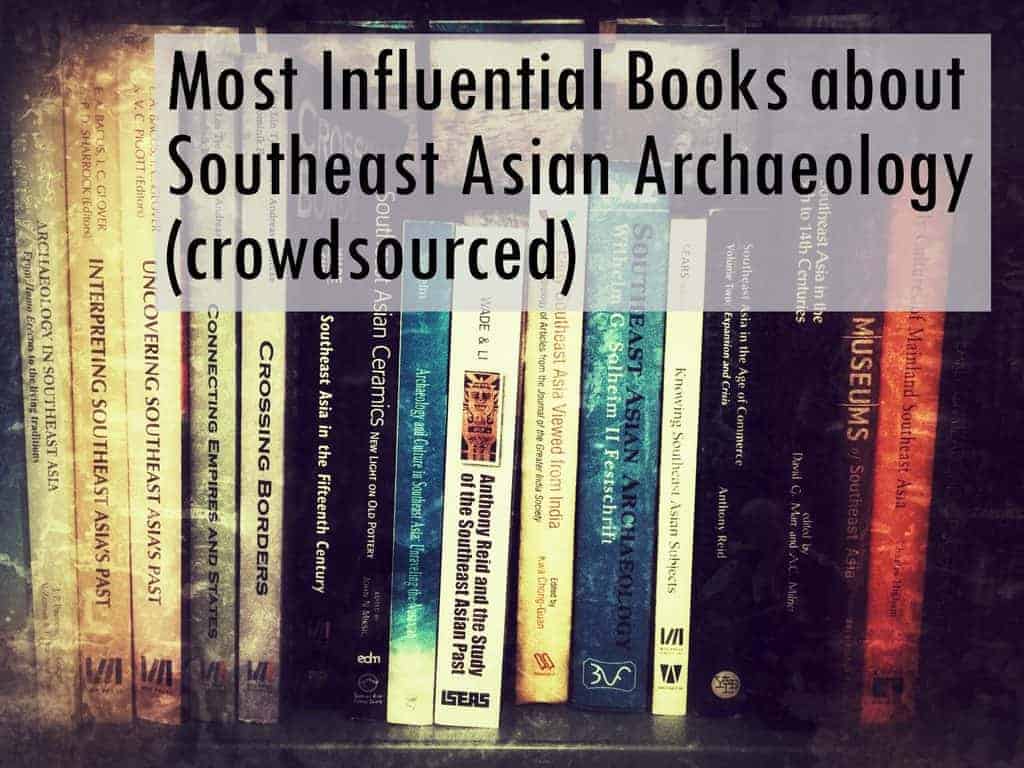
  • The most influential books on Southeast Asian Archaeology (a crowdsourced list)

    The most influential books on Southeast Asian Archaeology (a crowdsourced list)

    0 shares
    Share 0 Tweet 0
  • Southeast Asian Archaeology from a Rock Art Perspective (with annotations)

    0 shares
    Share 0 Tweet 0
  • Southeast Asian Archaeology memes that will tickle your funny bone and also make you ponder

    68 shares
    Share 68 Tweet 0
  • Negritos or Malays: Who are the original inhabitants of the Philippines?

    2 shares
    Share 2 Tweet 0
  • Australia returns recovered mid-20th century Igorot axe to PH

    0 shares
    Share 0 Tweet 0
Buy me a coffeeBuy me a coffee

If you found this site useful, you can help support it by buying me a coffee!

Explore Orchids of Angkor Wat at Gardens by the Bay

21 May 2024
in Cambodia, Singapore
Tags: exhibitions
0
SHARES
80
VIEWS
Source: Time Out Singapore 20240520

Source: Time Out Singapore 20240520

via Time Out Singapore, 20 May 2024: Singapore’s Gardens by the Bay in Singapore presents “Orchids of Angkor Wat,” showcasing 50 orchid species from Cambodia until September 8, 2024. This exhibition, in collaboration with the Royal Embassy of Cambodia, features floral displays alongside replicas of Angkor Wat, offering visitors a glimpse into Khmer culture and history.

This is Gardens by the Bay’s first collaboration with the Royal Embassy of Cambodia in Singapore. The country is home to at least 500 species of orchids, of which only slightly more than half have been documented. Nevertheless, orchids hold special meaning in Cambodian culture – standing as symbols of nobility and hallmarks of sacred beliefs in carvings throughout Angkor.

Some unusual orchid species to look out for include the slipper orchid, a slipper-like flower that lures practices “pollination by deceit” – insects that are lured by its bright colours fall into its pouch, pick up pollen, and escape without getting any nectar in return. Also keep your eyes peeled for Vandachostylis and Dendrobium Adastra, the latter of which will delight with its “waterfall of flowers”.

Source: Orchids of Angkor Wat

See also:

  • ‘Orchids of Angkor Wat’ stuns Singaporeans with treasures from the Kingdom | Phnom Penh Post, 21 May 2024

Subscribe to the weekly Southeast Asian Archaeology news digest

Latest Books

The following are affiliate links for which I may earn a commission if you click and make a purchase. Click here for more books about Cambodian archaeology.
Sale The Angkorian World (Routledge Worlds)
The Angkorian World (Routledge Worlds)
Amazon Prime
$250.00
Buy on Amazon
Reconstructing God: Style, Hydraulics, Political Power and Angkor's West Mebon Visnu
Reconstructing God: Style, Hydraulics, Political...
Amazon Prime
$85.00
Buy on Amazon
Early Theravadin Cambodia: Perspectives from Art and Archaeology (Art and Archaeology of Southeast Asia: Hindu-Buddhist Traditions)
Early Theravadin Cambodia: Perspectives from Art...
Amazon Prime
$48.00
Buy on Amazon
Museum-Making in Vietnam, Laos, and Cambodia: Cultural Institutions and Policies from Colonial to Post-Colonial Times
Museum-Making in Vietnam, Laos, and Cambodia:...
$41.79
Buy on Amazon
Photography in Cambodia: 1866 to the Present
$27.92
Buy on Amazon
Four Lost Cities: A Secret History of the Urban Age
Four Lost Cities: A Secret History of the Urban...
Amazon Prime
$30.21
Buy on Amazon

Leave a Reply

Your email address will not be published. Required fields are marked *

I agree to the Terms & Conditions and Privacy Policy.

This site uses Akismet to reduce spam. Learn how your comment data is processed.

Southeast Asian Archaeology

© 2019

Navigate Site

  • News
  • Resources
  • Countries
  • Topics
  • Visit
  • Jobs
  • Subscribe
  • About

Follow

Never Miss a Discovery
Subscribe for Exclusive Southeast Asian Archaeology News!

Stay connected with the latest breakthroughs, research, and events from across Southeast Asia’s archaeology scene. Sign up today for exclusive weekly updates, trusted by over 2,000 subscribers.

×
No Result
View All Result
  • News
  • Resources
  • Countries
    • Southeast Asia
    • Mainland Southeast Asia
      • Cambodia
      • Laos
      • Malaysia
      • Myanmar
      • Thailand
      • Vietnam
    • Island Southeast Asia
      • Brunei
      • Indonesia
      • Malaysia
      • Philippines
      • Singapore
      • Timor Leste
    • Peripheral Southeast Asia
  • Topics
    • Artifact Type
      • Architecture
      • Bones and Burials
      • Ceramics
      • Intangible Cultural Heritage
      • Lithics
      • Megaliths
      • Rock Art
      • Sculpture
    • Field
      • Anthropology
      • Bioarchaeology
      • Epigraphy
      • General Archaeology
      • Metallurgy and Metalworking
      • Paleontology
      • Underwater Archaeology
      • Visual Art
      • Zooarchaeology
    • Other Themes
      • Animism
      • Buddhism
      • Christianity
      • Disaster Risk Management
      • Hinduism
      • Islam
      • Archaeological Tourism in Southeast Asia
  • Visit
    • Virtual Archaeology
    • Unesco World Heritage
  • Jobs
  • Subscribe
  • About
    • About
    • Supporters
    • Terms of Use
    • Privacy Policy
    • Contact

© 2019

This website uses cookies. By continuing to use this website you are giving consent to cookies being used. Visit our Privacy and Cookie Policy.