• Boats, pots, and prehistoric know-how this week at Southeast Asian Archaeology.⠀
⠀
In the new newsletter:⠀
🛶 outrigger boat motifs in Sulawesi rock art⠀
🏺 new perspectives on pottery in Timor-Leste⠀
👑 the restored Nguyen Dynasty throne⠀
🎟️ falling ticket sales at Angkor⠀
⚖️ a new book on archaeology and Philippine law⠀
⠀
#Archaeology #SoutheastAsia #Heritage #RockArt #TimorLeste #Indonesia
  • Brunei’s archaeology does not get nearly enough attention.⠀
⠀
For this bonus post, I’m looking at Kota Batu Archaeological Park, the site of Brunei’s old capital. It is not a spectacular ruin in the usual sense — no towering temples, no monumental gateways — but its fragments tell a fascinating story: tombs, ceramics, sandstone pillar bases, river defences, house posts, imported wares, and traces of a working port city.⠀
⠀
Kota Batu shows Brunei not as a quiet corner of Southeast Asian archaeology, but as part of the maritime world that linked Borneo with China, Vietnam, Thailand, the Philippines and beyond.
  • This week’s Southeast Asian Archaeology newsletter is about movement, adaptation, and why archaeology is rarely as tidy as we pretend.⠀
⠀
Inside:⠀
🏹 a new review of bow-and-arrow evidence from India to Oceania⠀
🪙 a study of how Roman materials were filtered and remade in Southeast Asia⠀
🌊 new work on maritime links between Angkor and China during the megadrought period⠀
⠀
Also this week: Angkor palace waterworks, the Cẩm An shipwreck, and the reopening of Phimai National Museum.⠀
⠀
Link in bio / https://bit.ly/4dV88wS ⠀
#SoutheastAsianArchaeology #Archaeology #Heritage #Angkor #Vietnam #Thailand #Cambodia #AncientTrade #MaritimeArchaeology
  • New this week in Southeast Asian Archaeology: the Plain of Jars, trade beads, burial rituals, Philippine obsidian, coastal watchtowers, public archaeology, and a museum rethink of the galleon trade.⠀
⠀
The lead story is a new paper from Laos, where one huge jar at Site 75 contained the remains of at least 37 people and hints at a long, careful mortuary tradition. From there, the issue moves across the region, with a particularly strong run of stories from the Philippines on exchange networks, local histories, and the stories archaeology tells in public.⠀
⠀
Jars, beads, boats, and the occasional inconvenient fact. https://bit.ly/3RqKWyW ⠀
⠀
#SoutheastAsianArchaeology #Archaeology #Heritage #Laos #Philippines #Museums #PublicHistory
  • This week: Đồng Dương, ancient Champa, broken bricks, border temples, Buddhist architecture on the move, and a reminder that archaeology is rarely just about the past.⠀
⠀
Link in bio / read here: https://bit.ly/4ePHSpL ⠀
⠀
#SoutheastAsianArchaeology #DongDuong #Champa #Vietnam #Cambodia #Thailand #Myanmar #Archaeology #Heritage
  • This week in Southeast Asian Archaeology: a remarkable burial find in Phetchaburi, an old perahu under review in Kelantan, and the Po Nagar festival in Vietnam as a case of living heritage in action. ⠀
⠀
https://bit.ly/48PAeI5 ⠀
⠀
#archaeology #southeastAsia #southeastasianarchaeology
  • The Ayala Museum’s Gold of Ancestors exhibition showcases over a thousand gold objects, many originating from Butuan and the Surigao Treasure and generally dated to the 10th–13th centuries CE. These pieces demonstrate the Philippines’ participation in extensive regional trade networks and the high level of craftsmanship achieved before Spanish colonisation.

#southeastasianarchaeology #philippines #ayalamuseum #surigao #butuan
  • A quick visit to the National Museum of the Philippines earlier this week, particularly to the National Museum of Anthropology. Here are my 5 highlights.

Have you been to the National Museum in Manila? What are your favourite pieces?

#manila #philippines #nationalmuseum #archaeology #southeastasianarchaeology
  • From Angkor wall repairs and Óc Eo museum plans to Preah Vihear restoration politics and Sulawesi cliff burials, this week’s newsletter rounds up Southeast Asian archaeology with context. Subscribe for the stories behind the headlines.

https://bit.ly/4w8870M
  • 20 years ago I started Southeast Asian Archaeology with a few blog posts.⠀
It somehow turned into a weekly newsletter read around the world.⠀
Reflections, AMA, and what readers want next: ⠀
https://bit.ly/4cNZVKi⠀
Tuesday, June 9, 2026
Southeast Asian Archaeology
  • News
  • Resources
  • Countries
    • Southeast Asia
    • Mainland Southeast Asia
      • Cambodia
      • Laos
      • Malaysia
      • Myanmar
      • Thailand
      • Vietnam
    • Island Southeast Asia
      • Brunei
      • Indonesia
      • Malaysia
      • Philippines
      • Singapore
      • Timor Leste
    • Peripheral Southeast Asia
  • Topics
    • Artifact Type
      • Architecture
      • Bones and Burials
      • Ceramics
      • Intangible Cultural Heritage
      • Lithics
      • Megaliths
      • Rock Art
      • Sculpture
    • Field
      • Anthropology
      • Bioarchaeology
      • Epigraphy
      • General Archaeology
      • Metallurgy and Metalworking
      • Paleontology
      • Underwater Archaeology
      • Visual Art
      • Zooarchaeology
    • Other Themes
      • Animism
      • Buddhism
      • Christianity
      • Disaster Risk Management
      • Hinduism
      • Islam
      • Archaeological Tourism in Southeast Asia
  • Visit
    • Virtual Archaeology
    • Unesco World Heritage
  • Jobs
  • Subscribe
  • About
    • About
    • Supporters
    • Terms of Use
    • Privacy Policy
    • Contact
No Result
View All Result
Southeast Asian Archaeology
  • News
  • Resources
  • Countries
    • Southeast Asia
    • Mainland Southeast Asia
      • Cambodia
      • Laos
      • Malaysia
      • Myanmar
      • Thailand
      • Vietnam
    • Island Southeast Asia
      • Brunei
      • Indonesia
      • Malaysia
      • Philippines
      • Singapore
      • Timor Leste
    • Peripheral Southeast Asia
  • Topics
    • Artifact Type
      • Architecture
      • Bones and Burials
      • Ceramics
      • Intangible Cultural Heritage
      • Lithics
      • Megaliths
      • Rock Art
      • Sculpture
    • Field
      • Anthropology
      • Bioarchaeology
      • Epigraphy
      • General Archaeology
      • Metallurgy and Metalworking
      • Paleontology
      • Underwater Archaeology
      • Visual Art
      • Zooarchaeology
    • Other Themes
      • Animism
      • Buddhism
      • Christianity
      • Disaster Risk Management
      • Hinduism
      • Islam
      • Archaeological Tourism in Southeast Asia
  • Visit
    • Virtual Archaeology
    • Unesco World Heritage
  • Jobs
  • Subscribe
  • About
    • About
    • Supporters
    • Terms of Use
    • Privacy Policy
    • Contact
No Result
View All Result
Southeast Asian Archaeology
No Result
View All Result
ADVERTISEMENT

Related Posts

Source: Australian Geographic 20240725

Conserving Kabayan Mummies: Aussie Experts Unite with Ibaloi

31 July 2024
0
27

...

Source: Vietnam Net 20240704

Unique 17th-Century Monk Relics at Dau Pagoda

5 July 2024
0
232

...

Source: Vietnam Plus 20240622

Protecting Quang Nam’s Ancient Road in My Son

24 June 2024
0
23

...

Repatriated Durga. Source: VNA/Vietnam Plus 20240620

Vietnam Welcomes Repatriated Bronze Statue of Goddess Durga

21 June 2024 - Updated on 23 June 2024
0
99

...

Popular This Week

  • Southeast Asian Archaeology from a Rock Art Perspective (with annotations)

    Southeast Asian Archaeology from a Rock Art Perspective (with annotations)

    0 shares
    Share 0 Tweet 0
  • Southeast Asian Archaeology memes that will tickle your funny bone and also make you ponder

    68 shares
    Share 68 Tweet 0
  • The most influential books on Southeast Asian Archaeology (a crowdsourced list)

    0 shares
    Share 0 Tweet 0
  • Yamashita Gold: Myth vs. Archaeological Reality

    0 shares
    Share 0 Tweet 0
  • Negritos or Malays: Who are the original inhabitants of the Philippines?

    2 shares
    Share 2 Tweet 0
Buy me a coffeeBuy me a coffee

If you found this site useful, you can help support it by buying me a coffee!

The mystery of the Vietnamese mummies

26 November 2007
in Vietnam
Tags: Dau Pagoda (temple)Ha Tay (former province)Hanoi (city)monksmummyNguyen Lan Cuong (person)Vietnam Institute of Archaeology
0
SHARES
870
VIEWS
The mystery of the Vietnamese mummies

24 November 2007 (Vietnam Net Bridge) – The Vietnam Archaeology Institute take on the conservation of two 300-year-old preserved bodies of monks. The two mummies are regarded as sacred objects and how they came to be mummified (embalmed, really) is a mystery.

The mummies return
Duc Hanh heads to Dau pagoda where where two mysterious mummies have lived in silence for 300 years Past a lake and a number of paddy fields, the Dau pagoda sits in isolation near the outskirts of Gia Phuc village in Ha Tay province.

Although originally built in the 11th century under the Ly Dynasty, the pagoda bears the hallmarks of Le-Nguyen dynasty in the 17th century as a number of renovations occurred at that time. Dau pagoda is officially named Thanh Dao Tu or Phap Vu Tu and is dedicated to the Goddess of Rain.

But I’m here to meet two monks, who are shrouded in mystery. At first glance you’d be forgiven for thinking these monks were just statues. But in actual fact these are a pair of monks, Vu Khac Minh and monk Vu Khac Truong, who lived in the pagoda more than 300 years ago, were embalmed and preserved after their death.


These figures are called ‘xa loi Phat’ in Vietnamese, which means, basically, the valuable remains of Buddha that cannot be burnt with fire, dissolved in water or damaged by the passing of time or inclement weather. In other words, the monks are mummies.

When I enter, the pagoda is rather quiet. A few pilgrims are around but the head monk is absent.
On the altar, the mummified monks sit cross-legged in a permanent state of Zen as sweet smelling incense wafts through the air.

Before passing away, Vu Khac Minh confined himself to a room to meditate in the tradition of Zen Buddhism. Legend has it he took one jar of water and one jar of oil inside and informed his disciples to only open the door 100 days after no sound had been heard from inside.

“If my body is undamaged, cover it with tree resin. If it’s smelly, bury it in the room,” his final message read.

After 100 days the room was opened and his dead body was covered with wax-tree resin using traditional lacquer techniques. How exactly he was embalmed is somewhat of a mystery.

According to Professor Nguyen Lan Cuong from the Vietnam Archeology Institute, two monks were embalmed using different techniques.

“In most cases, people have to pull out the body’s internal organs and soak the body with chemicals before embalming, but I believe nothing has been drawn from the monks’ bodies. There is no sign of any chemicals except the waxy tree resin that was used and the statues have been displayed in open-air for 300 years,” says Cuong.

“Their bodies are well preserved thanks to the multi-layered coat of tree resin, cloth and paper. We know of traditional lacquer’s durability after finding lacquered cups in ancient tombs in Chau Can (Ha Tay province) which are 2,000 years old.”

Lacquer artist Dao Ngoc Han claims that not only is the lacquer coat an incredible feat, but the unknown craftsmen’s artistic sensibilities show real talent.

The two statues have been through the wars, quite literally, and survived some bad spells of weather.

“Two French soldiers smashed the knees of Vu Khac Minh to examine inside and both monks were damaged during heavy floods in 1893,” says Lai, a 78-year-old devout Buddhist. “The Vu Khac Truong mummy is clearly damaged with a lot of visible cracks and decay.”

This despite the fact that in 2003 a team from Vietnam Archaeology Institute and Vietnam History museum led by professor Nguyen Lan Cuong repaired the two statues. As I leave Lai is reciting Buddhist scriptures by the monks, and while a watchful eye is necessary, further and regular preservation is also required to ensure these precious and mysterious mummies continue to stand the test of time.

Getting there to Dau Pagoda

Dau pagoda is in Gia Phuc village, Nguyen Trai commune, Thuong Tin district, Ha Tay province, about 30km south of Hanoi. From the city centre, take the Giai Phong road for 15km, then turn right and after 13km you will come to a dyke, turn left there and you’ll find the pagoda on your righthand side 2km further along – you can’t miss it!

Subscribe to the weekly Southeast Asian Archaeology news digest

Latest Books

The following are affiliate links for which I may earn a commission if you click and make a purchase. Click here for more books about Vietnamese archaeology.
A Maritime Vietnam
A Maritime Vietnam
Amazon Prime
$34.99
Buy on Amazon
Heritage Conservation and Tourism Development at Cham Sacred Sites in Vietnam: Living Heritage Has A Heart (Global Vietnam: Across Time, Space and Community)
Heritage Conservation and Tourism Development at...
Amazon Prime
$59.99
Buy on Amazon
From the Red River to the Mekong Delta: Masterpieces of the History Museum Ho Chi Minh City
From the Red River to the Mekong Delta:...
Amazon Prime
$65.00
Buy on Amazon
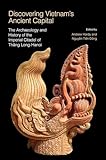
Discovering Vietnam’s Ancient Capital: The Archaeology and History of the Imperial Citadel of Thang Long-Hanoi
Discovering Vietnam’s Ancient Capital: The...
Amazon Prime
$28.00
Buy on Amazon
Museum-Making in Vietnam, Laos, and Cambodia: Cultural Institutions and Policies from Colonial to Post-Colonial Times
Museum-Making in Vietnam, Laos, and Cambodia:...
$41.79
Buy on Amazon
A History of Maritime Trade in Northern Vietnam, 12th to 18th Centuries: Archaeological Investigations in Vandon and Phohien (Studies in Economic History)
A History of Maritime Trade in Northern Vietnam,...
$103.88
Buy on Amazon

Leave a Reply

Your email address will not be published. Required fields are marked *

I agree to the Terms & Conditions and Privacy Policy.

This site uses Akismet to reduce spam. Learn how your comment data is processed.

Southeast Asian Archaeology

© 2019

Navigate Site

  • News
  • Resources
  • Countries
  • Topics
  • Visit
  • Jobs
  • Subscribe
  • About

Follow

Never Miss a Discovery
Subscribe for Exclusive Southeast Asian Archaeology News!

Stay connected with the latest breakthroughs, research, and events from across Southeast Asia’s archaeology scene. Sign up today for exclusive weekly updates, trusted by over 2,000 subscribers.

×
No Result
View All Result
  • News
  • Resources
  • Countries
    • Southeast Asia
    • Mainland Southeast Asia
      • Cambodia
      • Laos
      • Malaysia
      • Myanmar
      • Thailand
      • Vietnam
    • Island Southeast Asia
      • Brunei
      • Indonesia
      • Malaysia
      • Philippines
      • Singapore
      • Timor Leste
    • Peripheral Southeast Asia
  • Topics
    • Artifact Type
      • Architecture
      • Bones and Burials
      • Ceramics
      • Intangible Cultural Heritage
      • Lithics
      • Megaliths
      • Rock Art
      • Sculpture
    • Field
      • Anthropology
      • Bioarchaeology
      • Epigraphy
      • General Archaeology
      • Metallurgy and Metalworking
      • Paleontology
      • Underwater Archaeology
      • Visual Art
      • Zooarchaeology
    • Other Themes
      • Animism
      • Buddhism
      • Christianity
      • Disaster Risk Management
      • Hinduism
      • Islam
      • Archaeological Tourism in Southeast Asia
  • Visit
    • Virtual Archaeology
    • Unesco World Heritage
  • Jobs
  • Subscribe
  • About
    • About
    • Supporters
    • Terms of Use
    • Privacy Policy
    • Contact

© 2019

This website uses cookies. By continuing to use this website you are giving consent to cookies being used. Visit our Privacy and Cookie Policy.