

• Extraordinary claims about the past can be exciting. But how do we tell an exciting new hypothesis from pseudoarchaeology?

Recent controversy in Malaysia over claims that ancient Malays taught the Romans shipbuilding provides a useful case study. Rather than piling on the person behind the claims, I think there is a more useful question to ask: how would we actually test an idea like this?

Archaeology gives us some simple tools.

Do the dates work? What is the primary evidence? Does the evidence actually demonstrate the connection being claimed? Are there better explanations? And perhaps most importantly: what evidence would make us reject the hypothesis?

Ancient Southeast Asians really were sophisticated seafarers. Srivijaya really was one of Asia’s great maritime powers. Sungai Batu really does preserve remarkable evidence for early iron production.

None of those achievements needs embellishment to make Southeast Asian archaeology extraordinary.

Swipe through for five questions you can use the next time you encounter an astonishing claim about the ancient past.

🚩 Remember: possibility is not evidence, similarity does not necessarily mean transmission, and extraordinary claims still have to survive ordinary archaeological scrutiny.

Read more about the archaeology behind these claims in this week’s Southeast Asian Archaeology Newsletter.

#SoutheastAsianArchaeology #Pseudoarchaeology #Malaysia #MaritimeArchaeology #MediaLiteracy
  • A 4,000-year-old painted stone from Wetar Island may change how we understand the Austronesian story.⠀
⠀
Archaeologists excavating Huknaur 1 in Southeast Indonesia found a painted plaque with a red sun-ray motif linked to the Austronesian Painting Tradition — a wider visual tradition known from eastern Indonesia and nearby islands.⠀
⠀
What makes this find so important is that the plaque appears to be older than the first pottery at the site. That means a shared symbolic tradition may have been present before the full Neolithic package usually associated with Austronesian expansion. This discovery suggests that ideas, symbols, and identity may have travelled ahead of pottery.⠀
⠀
It is a reminder that the spread of people goes beyond tools, crops, or ceramics, and may also have been about belief, belonging, and a shared visual language carried across the sea.⠀
⠀
Swipe through to see why this small object has such big implications.⠀
⠀
Reference:⠀
O’Connor, S., Kealy, S., Kaharudin, H.A.F., et al. (2026). 4000-year-old painted plaque from Southeast Indonesia reveals Austronesian Painting Tradition preceded Neolithic pottery. PNAS 123(34): e2611580123.⠀
⠀
#SoutheastAsianArchaeology #RockArt #Austronesian #Indonesia #Wetar #SoutheastAsia #IslandSoutheastAsia #AustronesianPaintingTradition
  • Plaques, Ponds and Provenance⠀
⠀
This week’s newsletter begins with a 4,000-year-old painted plaque from Wetar Island — a small object with a big story.⠀
⠀
The plaque carries a red sun-like motif linked to the Austronesian Painting Tradition, and it appears before pottery at the site. That suggests visual symbols and shared ideas may have moved through maritime Southeast Asia before some of the usual archaeological markers we associate with Austronesian expansion.⠀
⠀
Also this week: archaeology beneath Angkor’s Sras Srang, suspected Ban Chiang artefacts offered for return from Switzerland, and more heritage news from across the region.⠀
⠀
Link in bio.
  • How do you make a 3-metre stone stand upright for centuries?

At Hintang in northern Laos, archaeologists are beginning to answer that question.

In 2025, a Lao-Australian team excavated Site 7A — the first excavation at a Hintang standing-stone site in around 90 years. Beneath the surface, they found that the stones had been set deeply into pits, with smaller rocks packed around their bases to stabilise them. Roughly one-third of each standing stone was buried underground.

One big question remains, though — how old are the Hintang stones?

Samples were collected for dating, but those results are still being analysed. So, for now, we understand a little more about how these monuments were built.

📖 Shewan, L., O’Reilly, D., Armstrong, B. & Butphachit, A. (2026). “Surveys of Hintang standing stone sites and excavations at Site 7A, Houaphanh, Lao PDR.” Antiquity.
doi: 10.15184/aqy.2026.10408

#Archaeology #SoutheastAsianArchaeology #Laos #Megaliths #Hintang #AncientTechnology #ArchaeologicalResearch #Heritage #NewResearch
  • Angkor’s water system is famous for its scale: enormous reservoirs, long canals, and monumental engineering.⠀
⠀
New research by archaeologist Sarah Klassen highlights how Angkor’s agricultural system also depended on more than 1,000 local temple communities spread across the Greater Angkor Region. These communities helped organise labour, manage local water systems, and coordinate rice production - and suggests that Angkor’s success was built through a combination of top-down and bottom-up management.⠀
⠀
The state created the large hydraulic framework. Local communities adapted to it, expanded around it, and helped make the wider agricultural landscape function.⠀
⠀
Over time, however, this balance changed. Land and resources became increasingly concentrated, the system became more centralised, and some of the flexibility that had helped Angkor cope with earlier environmental stress may have been lost.⠀
⠀
Beyond its temples and kings, Angkor
  • New Evidence from the Southeast Asian Borderlands⠀
⠀
This week in Southeast Asian Archaeology: new dates, new methods, and some wonderfully untidy timelines.⠀
⠀
🪨 Uranium-thorium dating pushes the Mangguan rock paintings in Yunnan back to at least 4,220 years ago⠀
 🥁 AI-assisted restoration takes on damaged imagery on Guangxi bronze drums⠀
 🌾 New work at Angkor asks how infrastructure, local communities and water management shaped resilience⠀
 🗿 Lao-Australian fieldwork maps and excavates the enigmatic Hintang standing stones⠀
⠀
Plus archaeology and heritage news from across Southeast Asia, new research, opportunities, and more.⠀
⠀
I’ve also started experimenting with short visual explainers of new archaeology papers here on Instagram — so follow along if you like your archaeology with fewer footnotes and more pixels.⠀
⠀
Read the latest SEAArch newsletter via the link in bio.⠀
⠀
#Archaeology #SoutheastAsianArchaeology #SoutheastAsia #RockArt #Angkor #Laos #Yunnan #Heritage #ArchaeologicalResearch #DigitalHeritage
  • This week on Southeast Asian Archaeology: fish traps, tidal flats and maritime memory.⠀
⠀
The main story looks at tambek, stone tidal fish weirs on Bawean Island in Indonesia. A new study records 54 of these structures and shows how they reflect local knowledge of tides, fish behaviour, construction, ownership and coastal life.⠀
⠀
Also in the highlights:⠀
⠀
Bronze and Iron Age layers beneath Korat’s historic city wall⠀
Nguyễn-era military posts at Hải Vân Pass⠀
A reminder that coastal archaeology is not always shipwrecks and trade ceramics⠀
Sometimes the quieter story is sitting in the tidal flats, waiting for the water to go out.⠀
⠀
Read the full issue: https://bit.ly/4wkInNI ⠀
⠀
#SoutheastAsianArchaeology #Archaeology #Indonesia #Bawean #MaritimeHeritage #CulturalHeritage #Thailand #Vietnam #HeritageConservation #IslandArchaeology
  • How do you catch fish without a net, hook or boat?⠀
⠀
On Bawean Island in Indonesia’s Java Sea, coastal communities developed tambek: stone walls built across the intertidal zone that use the movement of the tides to trap fish.⠀
⠀
A new study by Dwi Kurnia Sandy and colleagues documents these remarkable structures through archaeological survey, drone photography, interviews, historical sources and mapping. The researchers recorded different forms of tambek, from relatively simple U-shaped structures to more elaborate V-shaped systems directing fish into enclosed spaces. Their locations were carefully chosen around productive coastal environments, particularly extensive intertidal zones and mangroves.⠀
⠀
But tambek were more than fishing equipment. They were also part of Bawean’s social landscape. Individual structures could belong to particular families, with ownership remembered and passed down across generations. Tambek could even be traded, while customary rules governed who could fish around them at different stages of the tide.⠀
⠀
Today, new tambek are no longer being built and many surviving structures are little used or abandoned. The researchers link their decline to modern fishing technologies, damage to reefs and mangroves, and the gradual loss of knowledge about how the structures were used and maintained. Some have even been dismantled, with their stones reused for coastal infrastructure.⠀
⠀
The study highlights how archaeology can document not only things from the distant past, but also traditional technologies and knowledge systems that are disappearing within living memory.⠀
⠀
📖 Sandy, D. K., et al. 2026. “Tambek as Traditional Fish Trapping Techniques: The Role of Stone Tidal Fish Weirs in Bawean Island Indonesia’s Maritime Culture.” Journal of Island and Coastal Archaeology.⠀
 DOI: 10.1080/15564894.2026.2703955⠀
⠀
#Archaeology #SoutheastAsianArchaeology #Indonesia #Bawean #MaritimeArchaeology #UnderwaterArchaeology #FishingHeritage #MaritimeHeritage #TraditionalKnowledge
  • Tiger bones. Blood-bound pigments. Temple walls. Digital museums.⠀
⠀
This week’s newsletter leads with two fascinating studies: evidence for Ice Age tigers living on Palawan, and research into blood-bearing mineral binders used in the Huashan rock art of southern China.⠀
⠀
Also inside: UNESCO decisions, Angkor conservation, Chăm heritage digitisation and the archaeology of wartime railways.⠀
⠀
Read Blood, Big Cats and Buffer Zones at the link in bio.⠀
⠀
#SoutheastAsianArchaeology #Archaeology #RockArt #Palawan #CulturalHeritage #MuseumStudies #AsianArchaeology
  • New issue out now — and it’s a bumper one.⠀
⠀
This week:⠀
Wat Phra Mahathat Woramahawihan becomes Thailand’s newest World Heritage Site; Fort Cornwallis and the Penang State Museum reopen with fresh questions about how colonial and local histories are told; and at Don Yai Thong, archaeologists continue the careful work of lifting fragile burials, gold ornaments and all.⠀
⠀
Also featuring Muna rock art, Angkor conservation, Butuan boats, Cham exhibitions, Bagan finds, and archaeology’s awkward cameo in South China Sea claims.⠀
⠀
Read via the link in bio.⠀
⠀
#SoutheastAsianArchaeology #Archaeology #WorldHeritage #Museum #CulturalHeritage #Thailand #Malaysia #Penang #Indonesia #Cambodia #Vietnam
Thursday, August 27, 2026
Southeast Asian Archaeology
  • News
  • Resources
  • Countries
    • Southeast Asia
    • Mainland Southeast Asia
      • Cambodia
      • Laos
      • Malaysia
      • Myanmar
      • Thailand
      • Vietnam
    • Island Southeast Asia
      • Brunei
      • Indonesia
      • Malaysia
      • Philippines
      • Singapore
      • Timor Leste
    • Peripheral Southeast Asia
  • Topics
    • Artifact Type
      • Architecture
      • Bones and Burials
      • Ceramics
      • Intangible Cultural Heritage
      • Lithics
      • Megaliths
      • Rock Art
      • Sculpture
    • Field
      • Anthropology
      • Bioarchaeology
      • Epigraphy
      • General Archaeology
      • Metallurgy and Metalworking
      • Paleontology
      • Underwater Archaeology
      • Visual Art
      • Zooarchaeology
    • Other Themes
      • Animism
      • Buddhism
      • Christianity
      • Disaster Risk Management
      • Hinduism
      • Islam
      • Archaeological Tourism in Southeast Asia
  • Visit
    • Virtual Archaeology
    • Unesco World Heritage
  • Jobs
  • Subscribe
  • About
    • About
    • Supporters
    • Terms of Use
    • Privacy Policy
    • Contact
No Result
View All Result
Southeast Asian Archaeology
  • News
  • Resources
  • Countries
    • Southeast Asia
    • Mainland Southeast Asia
      • Cambodia
      • Laos
      • Malaysia
      • Myanmar
      • Thailand
      • Vietnam
    • Island Southeast Asia
      • Brunei
      • Indonesia
      • Malaysia
      • Philippines
      • Singapore
      • Timor Leste
    • Peripheral Southeast Asia
  • Topics
    • Artifact Type
      • Architecture
      • Bones and Burials
      • Ceramics
      • Intangible Cultural Heritage
      • Lithics
      • Megaliths
      • Rock Art
      • Sculpture
    • Field
      • Anthropology
      • Bioarchaeology
      • Epigraphy
      • General Archaeology
      • Metallurgy and Metalworking
      • Paleontology
      • Underwater Archaeology
      • Visual Art
      • Zooarchaeology
    • Other Themes
      • Animism
      • Buddhism
      • Christianity
      • Disaster Risk Management
      • Hinduism
      • Islam
      • Archaeological Tourism in Southeast Asia
  • Visit
    • Virtual Archaeology
    • Unesco World Heritage
  • Jobs
  • Subscribe
  • About
    • About
    • Supporters
    • Terms of Use
    • Privacy Policy
    • Contact
No Result
View All Result
Southeast Asian Archaeology
No Result
View All Result
ADVERTISEMENT

Related Posts

Source: Bangkok Post 20240719

Heritage and Harmony: Peranakan Legacy in Southeast Asia

22 July 2024
0
48

...

Source: The Star 20240715

South Moat at Fort Cornwallis Restored, West Moat to Follow

19 July 2024 - Updated on 23 July 2024
0
19

...

Source: The Star 20240612

Penang’s Fort Cornwallis Transforms into Historical Museum

14 June 2024
0
76

...

Source: UNESCO

Join the WHV 2024 Campaign: Volunteer for Global Heritage

10 June 2024
0
95

...

Popular This Week

  • Southeast Asian Archaeology memes that will tickle your funny bone and also make you ponder

    Southeast Asian Archaeology memes that will tickle your funny bone and also make you ponder

    68 shares
    Share 68 Tweet 0
  • The most influential books on Southeast Asian Archaeology (a crowdsourced list)

    0 shares
    Share 0 Tweet 0
  • Southeast Asian Archaeology from a Rock Art Perspective (with annotations)

    0 shares
    Share 0 Tweet 0
  • Negritos or Malays: Who are the original inhabitants of the Philippines?

    2 shares
    Share 2 Tweet 0
  • Rebutting the myth that Malays have the second oldest genes in the world

    25 shares
    Share 25 Tweet 0
Buy me a coffeeBuy me a coffee

If you found this site useful, you can help support it by buying me a coffee!

Sia Boey: A Glimpse into George Town’s Trading History

28 February 2024
in Malaysia
Tags: George Town (city)Penang (state)Sia Boey (site)
0
SHARES
82
VIEWS
Source: New Straits Times, 20240226

Source: New Straits Times, 20240226

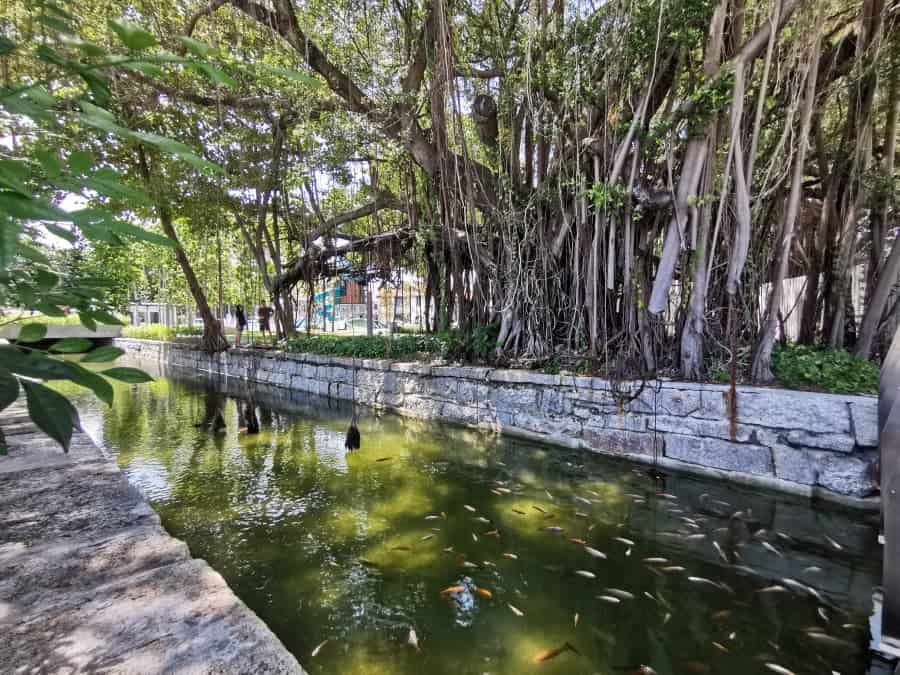
via New Straits Times, 26 February 2024: Nestled in George Town, Penang, the Sia Boey Archaeological Park is a testament to the city’s rich history and its journey from a bustling 19th-century marketplace to a serene urban oasis. The park offers insights into Penang’s vibrant past through archaeological remains such as old shop houses and a historic quay, alongside an array of artifacts that showcase the island’s role as a cultural melting pot.

In the heart of George Town, Penang, lies the Sia Boey Archaeological Park, a site where history and urban revitalisation converge.

Once a bustling trading area, Sia Boey has been transformed into an open-air archaeological park, preserving the legacy of Penang’s rich cultural tapestry.

The Sia Boey Archaeological Park sits on what was once the city’s busiest market, dating back to the 19th century.

Today, it serves as a testament to Penang’s commitment to safeguarding its historical roots while embracing modernity.

Source: Exploring the past at Penang’s Sia Boey Archaeological Park

Subscribe to the weekly Southeast Asian Archaeology news digest

Latest Books

The following are affiliate links for which I may earn a commission if you click and make a purchase. Click here for more books about Malaysian archaeology.
Sale Malay Silver and Gold: Courtly Splendour from Indonesia, Malaysia, Singapore, Brunei and Thailand
Malay Silver and Gold: Courtly Splendour from...
Amazon Prime
$38.54
Buy on Amazon
Sale Selected Topics on Archaeology, History and Culture in the Malay World
Selected Topics on Archaeology, History and...
Amazon Prime
$117.23
Buy on Amazon
Malay Seals from the Islamic World of Southeast Asia
Malay Seals from the Islamic World of Southeast...
Amazon Prime
$150.00
Buy on Amazon
Traces of the Ramayana and Mahabharata in Javanese and Malay Literature
Traces of the Ramayana and Mahabharata in Javanese...
Amazon Prime
$30.00
Buy on Amazon
The archaeology of the Niah Caves, Sarawak: Volume II
The archaeology of the Niah Caves, Sarawak: Volume...
Amazon Prime
$94.00
Buy on Amazon

Leave a Reply

Your email address will not be published. Required fields are marked *

I agree to the Terms & Conditions and Privacy Policy.

This site uses Akismet to reduce spam. Learn how your comment data is processed.

Southeast Asian Archaeology

© 2019

Navigate Site

  • News
  • Resources
  • Countries
  • Topics
  • Visit
  • Jobs
  • Subscribe
  • About

Follow

Never Miss a Discovery
Subscribe for Exclusive Southeast Asian Archaeology News!

Stay connected with the latest breakthroughs, research, and events from across Southeast Asia’s archaeology scene. Sign up today for exclusive weekly updates, trusted by over 2,000 subscribers.

×
No Result
View All Result
  • News
  • Resources
  • Countries
    • Southeast Asia
    • Mainland Southeast Asia
      • Cambodia
      • Laos
      • Malaysia
      • Myanmar
      • Thailand
      • Vietnam
    • Island Southeast Asia
      • Brunei
      • Indonesia
      • Malaysia
      • Philippines
      • Singapore
      • Timor Leste
    • Peripheral Southeast Asia
  • Topics
    • Artifact Type
      • Architecture
      • Bones and Burials
      • Ceramics
      • Intangible Cultural Heritage
      • Lithics
      • Megaliths
      • Rock Art
      • Sculpture
    • Field
      • Anthropology
      • Bioarchaeology
      • Epigraphy
      • General Archaeology
      • Metallurgy and Metalworking
      • Paleontology
      • Underwater Archaeology
      • Visual Art
      • Zooarchaeology
    • Other Themes
      • Animism
      • Buddhism
      • Christianity
      • Disaster Risk Management
      • Hinduism
      • Islam
      • Archaeological Tourism in Southeast Asia
  • Visit
    • Virtual Archaeology
    • Unesco World Heritage
  • Jobs
  • Subscribe
  • About
    • About
    • Supporters
    • Terms of Use
    • Privacy Policy
    • Contact

© 2019

This website uses cookies. By continuing to use this website you are giving consent to cookies being used. Visit our Privacy and Cookie Policy.