• Brunei’s archaeology does not get nearly enough attention.⠀
⠀
For this bonus post, I’m looking at Kota Batu Archaeological Park, the site of Brunei’s old capital. It is not a spectacular ruin in the usual sense — no towering temples, no monumental gateways — but its fragments tell a fascinating story: tombs, ceramics, sandstone pillar bases, river defences, house posts, imported wares, and traces of a working port city.⠀
⠀
Kota Batu shows Brunei not as a quiet corner of Southeast Asian archaeology, but as part of the maritime world that linked Borneo with China, Vietnam, Thailand, the Philippines and beyond.
  • This week’s Southeast Asian Archaeology newsletter is about movement, adaptation, and why archaeology is rarely as tidy as we pretend.⠀
⠀
Inside:⠀
🏹 a new review of bow-and-arrow evidence from India to Oceania⠀
🪙 a study of how Roman materials were filtered and remade in Southeast Asia⠀
🌊 new work on maritime links between Angkor and China during the megadrought period⠀
⠀
Also this week: Angkor palace waterworks, the Cẩm An shipwreck, and the reopening of Phimai National Museum.⠀
⠀
Link in bio / https://bit.ly/4dV88wS ⠀
#SoutheastAsianArchaeology #Archaeology #Heritage #Angkor #Vietnam #Thailand #Cambodia #AncientTrade #MaritimeArchaeology
  • New this week in Southeast Asian Archaeology: the Plain of Jars, trade beads, burial rituals, Philippine obsidian, coastal watchtowers, public archaeology, and a museum rethink of the galleon trade.⠀
⠀
The lead story is a new paper from Laos, where one huge jar at Site 75 contained the remains of at least 37 people and hints at a long, careful mortuary tradition. From there, the issue moves across the region, with a particularly strong run of stories from the Philippines on exchange networks, local histories, and the stories archaeology tells in public.⠀
⠀
Jars, beads, boats, and the occasional inconvenient fact. https://bit.ly/3RqKWyW ⠀
⠀
#SoutheastAsianArchaeology #Archaeology #Heritage #Laos #Philippines #Museums #PublicHistory
  • This week: Đồng Dương, ancient Champa, broken bricks, border temples, Buddhist architecture on the move, and a reminder that archaeology is rarely just about the past.⠀
⠀
Link in bio / read here: https://bit.ly/4ePHSpL ⠀
⠀
#SoutheastAsianArchaeology #DongDuong #Champa #Vietnam #Cambodia #Thailand #Myanmar #Archaeology #Heritage
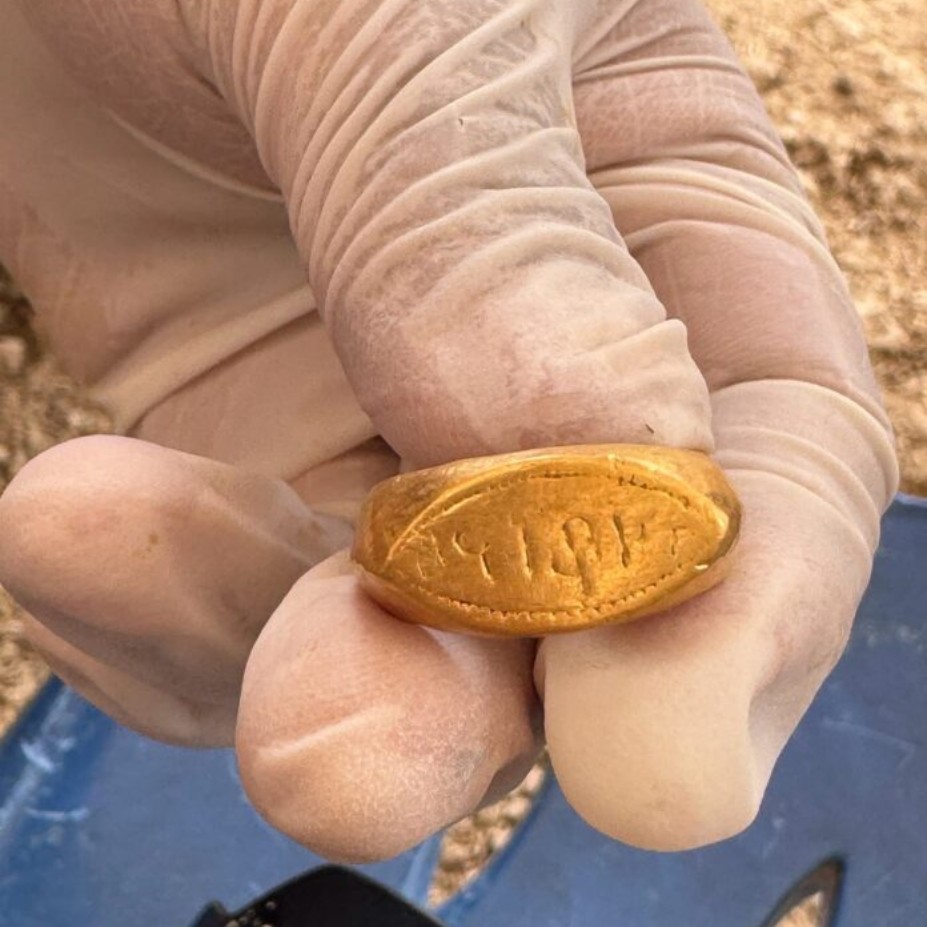
  • This week in Southeast Asian Archaeology: a remarkable burial find in Phetchaburi, an old perahu under review in Kelantan, and the Po Nagar festival in Vietnam as a case of living heritage in action. ⠀
⠀
https://bit.ly/48PAeI5 ⠀
⠀
#archaeology #southeastAsia #southeastasianarchaeology
  • The Ayala Museum’s Gold of Ancestors exhibition showcases over a thousand gold objects, many originating from Butuan and the Surigao Treasure and generally dated to the 10th–13th centuries CE. These pieces demonstrate the Philippines’ participation in extensive regional trade networks and the high level of craftsmanship achieved before Spanish colonisation.

#southeastasianarchaeology #philippines #ayalamuseum #surigao #butuan
  • A quick visit to the National Museum of the Philippines earlier this week, particularly to the National Museum of Anthropology. Here are my 5 highlights.

Have you been to the National Museum in Manila? What are your favourite pieces?

#manila #philippines #nationalmuseum #archaeology #southeastasianarchaeology
  • From Angkor wall repairs and Óc Eo museum plans to Preah Vihear restoration politics and Sulawesi cliff burials, this week’s newsletter rounds up Southeast Asian archaeology with context. Subscribe for the stories behind the headlines.

https://bit.ly/4w8870M
  • 20 years ago I started Southeast Asian Archaeology with a few blog posts.⠀
It somehow turned into a weekly newsletter read around the world.⠀
Reflections, AMA, and what readers want next: ⠀
https://bit.ly/4cNZVKi⠀
  • New finds lead this week’s Southeast Asian Archaeology newsletter: possible Khmer temple remains in Mondulkiri and Korat, a prehistoric settlement in Lào Cai dating to around 2000–1500 BCE, and wooden stakes in Hoa Lư that may yet reshape how we think about the Trần-era landscape.⠀
⠀
https://bit.ly/3QomnlM
Friday, June 5, 2026
Southeast Asian Archaeology
  • News
  • Resources
  • Countries
    • Southeast Asia
    • Mainland Southeast Asia
      • Cambodia
      • Laos
      • Malaysia
      • Myanmar
      • Thailand
      • Vietnam
    • Island Southeast Asia
      • Brunei
      • Indonesia
      • Malaysia
      • Philippines
      • Singapore
      • Timor Leste
    • Peripheral Southeast Asia
  • Topics
    • Artifact Type
      • Architecture
      • Bones and Burials
      • Ceramics
      • Intangible Cultural Heritage
      • Lithics
      • Megaliths
      • Rock Art
      • Sculpture
    • Field
      • Anthropology
      • Bioarchaeology
      • Epigraphy
      • General Archaeology
      • Metallurgy and Metalworking
      • Paleontology
      • Underwater Archaeology
      • Visual Art
      • Zooarchaeology
    • Other Themes
      • Animism
      • Buddhism
      • Christianity
      • Disaster Risk Management
      • Hinduism
      • Islam
      • Archaeological Tourism in Southeast Asia
  • Visit
    • Virtual Archaeology
    • Unesco World Heritage
  • Jobs
  • Subscribe
  • About
    • About
    • Supporters
    • Terms of Use
    • Privacy Policy
    • Contact
No Result
View All Result
Southeast Asian Archaeology
  • News
  • Resources
  • Countries
    • Southeast Asia
    • Mainland Southeast Asia
      • Cambodia
      • Laos
      • Malaysia
      • Myanmar
      • Thailand
      • Vietnam
    • Island Southeast Asia
      • Brunei
      • Indonesia
      • Malaysia
      • Philippines
      • Singapore
      • Timor Leste
    • Peripheral Southeast Asia
  • Topics
    • Artifact Type
      • Architecture
      • Bones and Burials
      • Ceramics
      • Intangible Cultural Heritage
      • Lithics
      • Megaliths
      • Rock Art
      • Sculpture
    • Field
      • Anthropology
      • Bioarchaeology
      • Epigraphy
      • General Archaeology
      • Metallurgy and Metalworking
      • Paleontology
      • Underwater Archaeology
      • Visual Art
      • Zooarchaeology
    • Other Themes
      • Animism
      • Buddhism
      • Christianity
      • Disaster Risk Management
      • Hinduism
      • Islam
      • Archaeological Tourism in Southeast Asia
  • Visit
    • Virtual Archaeology
    • Unesco World Heritage
  • Jobs
  • Subscribe
  • About
    • About
    • Supporters
    • Terms of Use
    • Privacy Policy
    • Contact
No Result
View All Result
Southeast Asian Archaeology
No Result
View All Result
ADVERTISEMENT

Related Posts

[Funding Opportunity] CAA-Getty International Program

31 July 2024
0
80

...

European Association for Asian Art and Archaeology

[CFP] The Fourth Conference of European Association for Asian Art and Archaeology

26 July 2024
0
101

...

[Call for Papers] Decolonization of Southeast Asian Studies

[Call for Papers] Decolonization of Southeast Asian Studies

18 July 2024
0
117

...

Source: Ohio University

[CFP] 2024 Meeting of the Council on Thai Studies

8 July 2024
0
58

...

Popular This Week

  • Southeast Asian Archaeology from a Rock Art Perspective (with annotations)

    Southeast Asian Archaeology from a Rock Art Perspective (with annotations)

    0 shares
    Share 0 Tweet 0
  • The most influential books on Southeast Asian Archaeology (a crowdsourced list)

    0 shares
    Share 0 Tweet 0
  • Southeast Asian Archaeology memes that will tickle your funny bone and also make you ponder

    68 shares
    Share 68 Tweet 0
  • The mystery of the Vietnamese mummies

    0 shares
    Share 0 Tweet 0
  • Borobudur’s Eco-Friendly Step: Upanat Sandals for Sustainable Tourism

    0 shares
    Share 0 Tweet 0
Buy me a coffeeBuy me a coffee

If you found this site useful, you can help support it by buying me a coffee!

[Call for Papers] International Conference on Material Culture (ICMC) 2021

3 March 2021
in Malaysia
Tags: call for papersconferences
0
SHARES
313
VIEWS
ICMC2021

ICMC2021

Readers may be interested in this CFP by Sunway University in Malaysia aimed at art history, archaeology, anthropology and other related disciplines. Deadline is 20 April 2021.

Material culture has most often been examined from a Western perspective in relation to the shift from mercantilism to the market economy and the expansion of capitalism, especially changes in (mass)production and consumption, forms of consumerism and waste, and the impact of the Industrial Revolution on European and American societies.[1] It has also been examined from the standpoint of trade, as Asian luxury goods were increasingly imported into Europe from the early modern period onwards. Innovative techniques were adapted, such as lacquer (French Martin varnish imitating Far Eastern lacquer), glassware (Japanese Kakiemon products imitated by the Dutch), as well as Oriental motifs. [2] They shaped new tastes and led to the development of new commodity cultures. [3]

These exotic worlds of commodities gradually attracted attention and were translated into material desires. They became visible through the new profusion of knick-knacks and foreign objects such as decorative porcelain in houses, and through the creation of fashion trends such as Chinoiseries in the 18th century or Japonisme later in the 19th century. Asian objects increasingly populated private spaces and became an integral part of the daily life of Westerners, to the point of being represented in paintings: accessories such as fans or hairpins, clothing such as kimonos, wallpapers, and furniture can be traced for example in portraits. These imported goods were most often dissociated from their culture of origin and often westernized, as can be seen in Pierre-Auguste Renoir’s portrait of Mrs Henriot, her kimono being worn in European fashion. [4] However, these goods were symbols of specific cultural identities and were embedded in the daily life of societies, [5] sometimes for a very long time, before being essentialized and becoming stereotypes in the eyes of Westerners — not to say ‘culturally appropriated’ as often claimed nowadays.

In recent years, historians have moved away from the Marxist or capitalist approach, to refocus on the cultural relationship between beings and things, and to rethink the various contexts other than purely economic ones, in which objects are signifiers (Thing theory). [6] As Bill Brown puts it, objects enable historians to “make contact with the “real” […] in accounts of everyday life and material habitus”.[7] Moreover, according to David Kingery, objects reflect “truest representations”[8] of values and meanings in societies. It seems important, therefore, to put “things” back into context — especially in their own life cycle in order to find the habits which they were associated with in the past — and to decipher the authentic cultural signs and symbols that have been forgotten or kept alive. The study by Craig Clunas Superfluous Things: Material Culture and Social Status in Early Modern China, symbolizes the effort to reconsider objects within their original context and the social and cultural messages they convey.[9] In recent years Anne Gerritsen and Dorothy Ko have also considerably renewed the approach to Asian material culture, especially the social life of objects.[10] The conference explores objects as forms of cultural heritage, paying attention to their use and importance, as well as to the different values and emotions that have been attached to them through the ages.

Things constitute a memory of identities through which mentalités can be assessed as they are reflected in the “subject-object relation”.[11] Indeed, according to Brown, they are more than objects as they “exceed their mere materialisation”[12] and have a presence. Things have a cultural layer; more exactly they are “culturalised, humanised, and can therefore be anthropomorphised”, even “personified and made into narrative characters”.[13] As such, they may be seen as processes of enculturation: Humans interact with them (or choose not), and integrate them in their social existence, often as markers of status and class. Things also reveal personal taste and material desires.

People can share things, pass them onto younger generations. They can project feelings on things and can be filled with sensations by these ones. They can sell those which no longer ‘talk’ to them, even destroy them or throw them away. Inanimate things are catalysts of life and pollinate lives. Thus, how did things in Asia and Southeast Asia affect daily lives and what were the relationships of their owners with specific goods, tools, or products? How was material culture perceived in the past in the East, and how in the present day, “vintage” objects survive in a globalized world that emphasizes consumerism?

This conference aims to provide a better understanding of past and present societies through objects that are no longer used or whose “life” is endangered by new modern lifestyles. We also aim to reconstruct the vision and perception of time through the use of objects, that is: routines; the idea of rapid or progressive obsolescence; phenomena such as “ageing” or travelling things; the different life cycles from the making to the “death” of objects (manufacturing, use/reuse, meaning in society, destruction etc.); the crystallisation and therefore immortalisation of some objects in the memory of some individuals through emotions and feelings.

Source: International Conference on Material Culture (ICMC) 2021 – Call for Paper | Sunway University

Subscribe to the weekly Southeast Asian Archaeology news digest

Latest Books

The following are affiliate links for which I may earn a commission if you click and make a purchase. Click here for more books about Southeast Asian archaeology.
Sale Malay Silver and Gold: Courtly Splendour from Indonesia, Malaysia, Singapore, Brunei and Thailand
Malay Silver and Gold: Courtly Splendour from...
Amazon Prime
$38.54
Buy on Amazon
Sale The Oxford Guide to the Malayo-Polynesian Languages of Southeast Asia (Oxford Guides to the World's Languages)
The Oxford Guide to the Malayo-Polynesian...
Amazon Prime
$165.87
Buy on Amazon
Sale Majapahit: Sculptures from a Forgotten Kingdom
Majapahit: Sculptures from a Forgotten Kingdom
$44.08
Buy on Amazon
Sale Majapahit: Intrigue, Betrayal and War in Indonesia’s Greatest Empire
Majapahit: Intrigue, Betrayal and War in...
Amazon Prime
$15.74
Buy on Amazon
Sale The Story of Southeast Asia
The Story of Southeast Asia
$24.11
Buy on Amazon
Buddhist Landscapes: Art and Archaeology of the Khorat Plateau, 7th to 11th Centuries
Buddhist Landscapes: Art and Archaeology of the...
Amazon Prime
$56.00
Buy on Amazon

Leave a Reply

Your email address will not be published. Required fields are marked *

I agree to the Terms & Conditions and Privacy Policy.

This site uses Akismet to reduce spam. Learn how your comment data is processed.

Southeast Asian Archaeology

© 2019

Navigate Site

  • News
  • Resources
  • Countries
  • Topics
  • Visit
  • Jobs
  • Subscribe
  • About

Follow

Never Miss a Discovery
Subscribe for Exclusive Southeast Asian Archaeology News!

Stay connected with the latest breakthroughs, research, and events from across Southeast Asia’s archaeology scene. Sign up today for exclusive weekly updates, trusted by over 2,000 subscribers.

×
No Result
View All Result
  • News
  • Resources
  • Countries
    • Southeast Asia
    • Mainland Southeast Asia
      • Cambodia
      • Laos
      • Malaysia
      • Myanmar
      • Thailand
      • Vietnam
    • Island Southeast Asia
      • Brunei
      • Indonesia
      • Malaysia
      • Philippines
      • Singapore
      • Timor Leste
    • Peripheral Southeast Asia
  • Topics
    • Artifact Type
      • Architecture
      • Bones and Burials
      • Ceramics
      • Intangible Cultural Heritage
      • Lithics
      • Megaliths
      • Rock Art
      • Sculpture
    • Field
      • Anthropology
      • Bioarchaeology
      • Epigraphy
      • General Archaeology
      • Metallurgy and Metalworking
      • Paleontology
      • Underwater Archaeology
      • Visual Art
      • Zooarchaeology
    • Other Themes
      • Animism
      • Buddhism
      • Christianity
      • Disaster Risk Management
      • Hinduism
      • Islam
      • Archaeological Tourism in Southeast Asia
  • Visit
    • Virtual Archaeology
    • Unesco World Heritage
  • Jobs
  • Subscribe
  • About
    • About
    • Supporters
    • Terms of Use
    • Privacy Policy
    • Contact

© 2019

This website uses cookies. By continuing to use this website you are giving consent to cookies being used. Visit our Privacy and Cookie Policy.