
• This week in Southeast Asian Archaeology: ancient mosquitoes hint at early hominins in Sundaland, AI takes a crack at reconstructing the Singapore Stone, and a call for your AMA questions! #southeastasianarchaeology

https://bit.ly/4bHlkW2
  • This week: a human-faced megalith spotted in Lore Lindu—right in an illegal gold-mining zone—and Korea & Vietnam’s first joint underwater survey in Quảng Ngãi, chasing shipwrecks + Chinese ceramics across old sea lanes
 
https://bit.ly/4btzR7E
  • This week on Southeast Asian Archaeology: rare bronze Mahoratuek drums surface in Thailand, gold-glazed terracotta helps redraw Vietnam’s Ho Citadel, and Aceh War “loot” gets a long-overdue digital reckoning.⠀
⠀
https://bit.ly/46lX88H
  • Circuits, Ceramics, and Colonial Archives is out now 🏛️🌊📜 CNY/Tết (Year of the Horse) greetings + this week’s theme: heritage in a hurry—Angkor’s “high risk” Baksei Chamkrong, Sibonga church repairs post-Odette, and Indonesia’s 152-site revitalisation push. Read: https://bit.ly/3Mswq7G
  • Heritage isn’t just awe—it’s upkeep. This week: a historic building floor collapse at Siak Palace, Beng Mealea’s walkway repairs, Ponagar Tower’s arts show paused over losses.⠀
 ⠀
https://bit.ly/4chkwIb⠀
  • Biases, Bones & Burāq — this week’s Southeast Asian Archaeology newsletter is all about how small corrections can change big histories.⠀
⠀
We’ve got four fresh research reads:⠀
 🐟 Neolithic expansion that looks a lot more “rice and fish” once recovery bias is taken seriously⠀
 📜 An illuminated Qur’an section from Java on dluwang (treebark paper), with clues that push it earlier than you might expect⠀
 🐀 Timor-Leste’s giant/large murids, measured in detail to track changing ecologies (and a late crash)⠀
 ⚱️ Ban Non Wat grave size and offerings, mapping a sharp spike—and then easing—of social distinction⠀
⠀
And for a screen break: a small mention of PBS’s Angkor: Hidden Jungle Empire.⠀
⠀
Read the full roundup here: https://bit.ly/45Gh2uN ⠀
 #Archaeology #SoutheastAsia #Heritage #Anthropology #Museums #History
  • This week in Southeast Asian Archaeology: Sulawesi just delivered a headline-grabbing ~67,800-year-old hand-stencil date, Huế’s Imperial Citadel restoration has revealed a trilingual astronomical mural, and Malaysia’s new Guar Kepah Archaeological Gallery opens with the “Penang Woman” at centre stage. Deep time, dynastic science, and fresh public heritage spaces—come catch up on the week’s stories.⠀
⠀
https://bit.ly/3NG7WIg
  • New week, new reads: a “Southwestern Silk Road” model for amber into Han China, the biggest Austroasiatic genomic dataset yet (with Dvaravati/Angkor-era signals), plus rock art methods and fresh motifs from Malaysia and Laos. Molecules, motifs, and migration stories — all in one roundup.

Amber, Ancestry and Arty hands https://bit.ly/3LAK20c
  • New year, new (very full) newsletter From Java Man coming home to Jakarta to Khmer sculptures heading back to Cambodia and a bleak month on the Thai–Cambodian border, catch up on a whole month of Southeast Asian archaeology: https://bit.ly/4syuWJh
  • This week’s Southeast Asian Archaeology newsletter is all about the invisible infrastructure of knowledge — the stuff behind the sites. We look at Cambodia’s push to access the late Emma Bunker’s notebooks as a potential roadmap to looted Khmer art, a Thanh Hóa village communal house where 47 imperial edicts were quietly stashed in bamboo tubes for centuries, and Jingdezhen’s “ceramic gene bank” in China, where millions of sherds and glaze recipes are treated like DNA for porcelain. From roof beams to databases, it’s a reminder that archives, records and lab data shape what we think we know about the past just as much as temples and shipwrecks do. Plus the usual mix of regional news, grants, jobs and heritage politics — link in bio/newsletter below.

https://bit.ly/3XIeV5h
Wednesday, March 18, 2026
Southeast Asian Archaeology
  • News
  • Resources
  • Countries
    • Southeast Asia
    • Mainland Southeast Asia
      • Cambodia
      • Laos
      • Malaysia
      • Myanmar
      • Thailand
      • Vietnam
    • Island Southeast Asia
      • Brunei
      • Indonesia
      • Malaysia
      • Philippines
      • Singapore
      • Timor Leste
    • Peripheral Southeast Asia
  • Topics
    • Artifact Type
      • Architecture
      • Bones and Burials
      • Ceramics
      • Intangible Cultural Heritage
      • Lithics
      • Megaliths
      • Rock Art
      • Sculpture
    • Field
      • Anthropology
      • Bioarchaeology
      • Epigraphy
      • General Archaeology
      • Metallurgy and Metalworking
      • Paleontology
      • Underwater Archaeology
      • Visual Art
      • Zooarchaeology
    • Other Themes
      • Animism
      • Buddhism
      • Christianity
      • Disaster Risk Management
      • Hinduism
      • Islam
      • Archaeological Tourism in Southeast Asia
  • Visit
    • Virtual Archaeology
    • Unesco World Heritage
  • Jobs
  • Subscribe
  • About
    • About
    • Supporters
    • Terms of Use
    • Privacy Policy
    • Contact
No Result
View All Result
Southeast Asian Archaeology
  • News
  • Resources
  • Countries
    • Southeast Asia
    • Mainland Southeast Asia
      • Cambodia
      • Laos
      • Malaysia
      • Myanmar
      • Thailand
      • Vietnam
    • Island Southeast Asia
      • Brunei
      • Indonesia
      • Malaysia
      • Philippines
      • Singapore
      • Timor Leste
    • Peripheral Southeast Asia
  • Topics
    • Artifact Type
      • Architecture
      • Bones and Burials
      • Ceramics
      • Intangible Cultural Heritage
      • Lithics
      • Megaliths
      • Rock Art
      • Sculpture
    • Field
      • Anthropology
      • Bioarchaeology
      • Epigraphy
      • General Archaeology
      • Metallurgy and Metalworking
      • Paleontology
      • Underwater Archaeology
      • Visual Art
      • Zooarchaeology
    • Other Themes
      • Animism
      • Buddhism
      • Christianity
      • Disaster Risk Management
      • Hinduism
      • Islam
      • Archaeological Tourism in Southeast Asia
  • Visit
    • Virtual Archaeology
    • Unesco World Heritage
  • Jobs
  • Subscribe
  • About
    • About
    • Supporters
    • Terms of Use
    • Privacy Policy
    • Contact
No Result
View All Result
Southeast Asian Archaeology
No Result
View All Result
ADVERTISEMENT

Related Posts

Archaeology of Southeast Asia

Remembering Southeast Asian Scholar James C. Scott

30 July 2024
0
39

...

Roderick Orlina. Source: SEALG Blog 20240625

Remembering Roderick Orlina and his Contributions to Southeast Asian Epigraphy

26 June 2024
0
62

...

Source: The Siam Society

[Talk] The Archaeology of Sites and Landscapes: Papers in Honour of Damian Evans

18 June 2024
0
28

...

Source: The Siam Society

[Talk] The Archaeology of Sites and Landscapes: Papers in Honour of Damian Evans

10 June 2024
0
31

...

Popular This Week

  • Source: Manila Bulletin 20240301

    Unearthing Palawan’s Ice Age Past

    0 shares
    Share 0 Tweet 0
  • Yamashita Gold: Myth vs. Archaeological Reality

    0 shares
    Share 0 Tweet 0
  • 14 Cambodian Artefacts Repatriated Thanks to SOAS Project

    0 shares
    Share 0 Tweet 0
  • APSARA Authority Sheds Light on Angkor Wat’s Stone Conservation

    0 shares
    Share 0 Tweet 0
  • Ninh Binh succeeds in promoting world heritage site’s value

    0 shares
    Share 0 Tweet 0
Buy me a coffeeBuy me a coffee

If you found this site useful, you can help support it by buying me a coffee!

[Obituary] Damian Evans

14 September 2023
in Cambodia, Laos
Tags: Damian Evans (person)LiDARobituary
0
SHARES
4.8k
VIEWS
Archaeologist Damian Evans at Beng Melea. Source: Phnom Penh Post 20150428

Archaeologist Damian Evans at Beng Melea. Source: Phnom Penh Post 20150428

I am saddened to convey this news on the passing of Damian Evans, best known for his work on the LiDAR survey of Angkor and other regions in Southeast Asia. His passing is a great loss to the archaeology community in Southeast Asia, particularly in Cambodia. I share the following obituary penned by colleagues Christophe Pottier, Martin Polkinghorne and Mitch Hendrickson:
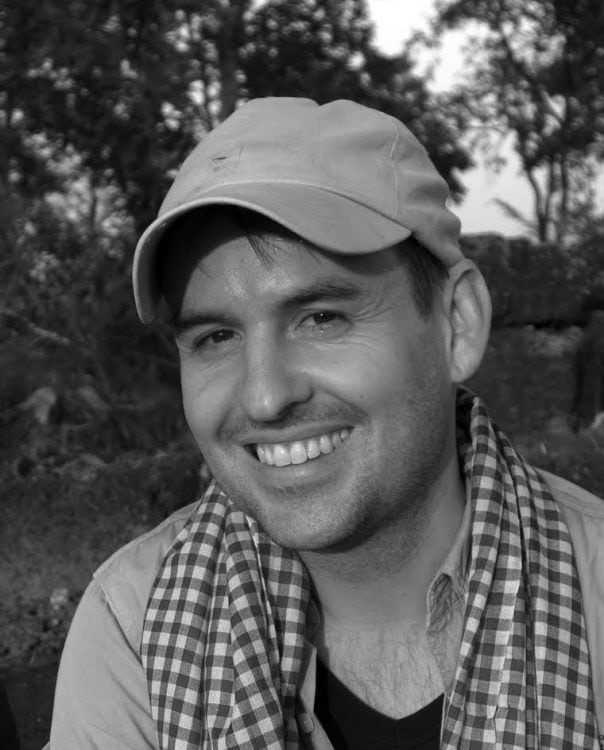
It is with deepest regret to inform you of the passing of Damian Evans on Sept 12 in Paris, France. For the last two years our dear friend and colleague had been tenaciously fighting an aggressive form of cancer. He died peacefully, accompanied by close family and will be deeply missed by those who knew and worked with him.

Damian’s career, cut far too short, greatly transformed the general understanding of Angkorian settlement patterns and we will be indebted to his efforts for decades to come. He began working in Cambodia as an undergraduate student in the late 90s and was a formative member of the Greater Angkor Project based at the University of Sydney. Damian’s Honours and PhD theses employed multiple remote sensing platforms and ground surveys to extend the map of Angkor and redefine the nature of occupation and hydraulic patterns utilized by the Khmer Empire. The pinnacle of his research career was the successful direction of two extensive lidar missions in Cambodia. The second mission, funded by the European Research Council (ERC) and based at the École française d’Extrême-Orient (EFEO), produced the single largest lidar data capture in the world and put Southeast Asia clearly on the map as a leader in global archaeological research. Earlier this year, he organized the delivery of a 3000sqkm lidar coverage in south Laos on an EFEO project supported by the Agence française de Dévelopement. Damian was also currently working on another pioneering ERC funded project that would extend the Cambodian experience to other sites and countries across Southeast Asia, and that would integrate AI and automatic learning into the analysis of settlement data.

Damian’s written contributions in ‘Angkor and the Khmer Civilization’ with Michael Coe and recent ‘The Angkorian World’ will remain essential English-language reference works for the next generation. His numerous articles, including those in PNAS changed perceptions of Angkor from a collection of temples to the vibrant pre-modern agro-urban city we understand today. Damian’s research was exacting, dynamic and always sought to push the needle that little bit further. Perhaps most importantly he worked from a truly collaborative ethic that he initiated and maintained around the lidar, evidenced through the numerous co-authors he published with.

On a personal note, he is survived by a loving family who will dearly miss him. Damian was father to two beautiful children who he loved ceaselessly. He made friends effortlessly across social and cultural boundaries and will be remembered for his relentless work ethic, boundless generosity, and good humour.

Rest in peace, dear friend.

I have good memories of Damian – he generously offered his residence for me to stay in during my first fieldwork stint in the Greater Angkor Project 12 years ago, and he was also a follower of this website. Condolences to his friends and family.

The Guardian has also published an obiturary, which can be found here.

Subscribe to the weekly Southeast Asian Archaeology news digest

Latest Books

The following are affiliate links for which I may earn a commission if you click and make a purchase. Click here for more books about Cambodian archaeology.
Sale The Angkorian World (Routledge Worlds)
The Angkorian World (Routledge Worlds)
Amazon Prime
$250.00
Buy on Amazon
Reconstructing God: Style, Hydraulics, Political Power and Angkor's West Mebon Visnu
Reconstructing God: Style, Hydraulics, Political...
Amazon Prime
$85.00
Buy on Amazon
Early Theravadin Cambodia: Perspectives from Art and Archaeology (Art and Archaeology of Southeast Asia: Hindu-Buddhist Traditions)
Early Theravadin Cambodia: Perspectives from Art...
Amazon Prime
$48.00
Buy on Amazon
Museum-Making in Vietnam, Laos, and Cambodia: Cultural Institutions and Policies from Colonial to Post-Colonial Times
Museum-Making in Vietnam, Laos, and Cambodia:...
$41.79
Buy on Amazon
Photography in Cambodia: 1866 to the Present
$27.92
Buy on Amazon
Four Lost Cities: A Secret History of the Urban Age
Four Lost Cities: A Secret History of the Urban...
Amazon Prime
$30.21
Buy on Amazon

Leave a Reply

Your email address will not be published. Required fields are marked *

I agree to the Terms & Conditions and Privacy Policy.

This site uses Akismet to reduce spam. Learn how your comment data is processed.

Southeast Asian Archaeology

© 2019

Navigate Site

  • News
  • Resources
  • Countries
  • Topics
  • Visit
  • Jobs
  • Subscribe
  • About

Follow

Never Miss a Discovery
Subscribe for Exclusive Southeast Asian Archaeology News!

Stay connected with the latest breakthroughs, research, and events from across Southeast Asia’s archaeology scene. Sign up today for exclusive weekly updates, trusted by over 2,000 subscribers.

×
No Result
View All Result
  • News
  • Resources
  • Countries
    • Southeast Asia
    • Mainland Southeast Asia
      • Cambodia
      • Laos
      • Malaysia
      • Myanmar
      • Thailand
      • Vietnam
    • Island Southeast Asia
      • Brunei
      • Indonesia
      • Malaysia
      • Philippines
      • Singapore
      • Timor Leste
    • Peripheral Southeast Asia
  • Topics
    • Artifact Type
      • Architecture
      • Bones and Burials
      • Ceramics
      • Intangible Cultural Heritage
      • Lithics
      • Megaliths
      • Rock Art
      • Sculpture
    • Field
      • Anthropology
      • Bioarchaeology
      • Epigraphy
      • General Archaeology
      • Metallurgy and Metalworking
      • Paleontology
      • Underwater Archaeology
      • Visual Art
      • Zooarchaeology
    • Other Themes
      • Animism
      • Buddhism
      • Christianity
      • Disaster Risk Management
      • Hinduism
      • Islam
      • Archaeological Tourism in Southeast Asia
  • Visit
    • Virtual Archaeology
    • Unesco World Heritage
  • Jobs
  • Subscribe
  • About
    • About
    • Supporters
    • Terms of Use
    • Privacy Policy
    • Contact

© 2019

This website uses cookies. By continuing to use this website you are giving consent to cookies being used. Visit our Privacy and Cookie Policy.