
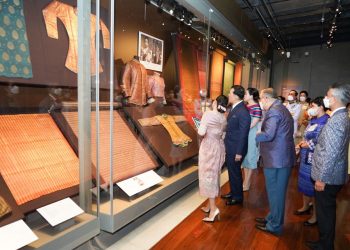
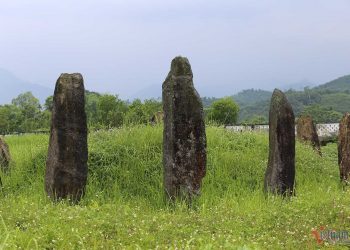
• This week: a human-faced megalith spotted in Lore Lindu—right in an illegal gold-mining zone—and Korea & Vietnam’s first joint underwater survey in Quảng Ngãi, chasing shipwrecks + Chinese ceramics across old sea lanes
 
https://bit.ly/4btzR7E
  • This week on Southeast Asian Archaeology: rare bronze Mahoratuek drums surface in Thailand, gold-glazed terracotta helps redraw Vietnam’s Ho Citadel, and Aceh War “loot” gets a long-overdue digital reckoning.⠀
⠀
https://bit.ly/46lX88H
  • Circuits, Ceramics, and Colonial Archives is out now 🏛️🌊📜 CNY/Tết (Year of the Horse) greetings + this week’s theme: heritage in a hurry—Angkor’s “high risk” Baksei Chamkrong, Sibonga church repairs post-Odette, and Indonesia’s 152-site revitalisation push. Read: https://bit.ly/3Mswq7G
  • Heritage isn’t just awe—it’s upkeep. This week: a historic building floor collapse at Siak Palace, Beng Mealea’s walkway repairs, Ponagar Tower’s arts show paused over losses.⠀
 ⠀
https://bit.ly/4chkwIb⠀
  • Biases, Bones & Burāq — this week’s Southeast Asian Archaeology newsletter is all about how small corrections can change big histories.⠀
⠀
We’ve got four fresh research reads:⠀
 🐟 Neolithic expansion that looks a lot more “rice and fish” once recovery bias is taken seriously⠀
 📜 An illuminated Qur’an section from Java on dluwang (treebark paper), with clues that push it earlier than you might expect⠀
 🐀 Timor-Leste’s giant/large murids, measured in detail to track changing ecologies (and a late crash)⠀
 ⚱️ Ban Non Wat grave size and offerings, mapping a sharp spike—and then easing—of social distinction⠀
⠀
And for a screen break: a small mention of PBS’s Angkor: Hidden Jungle Empire.⠀
⠀
Read the full roundup here: https://bit.ly/45Gh2uN ⠀
 #Archaeology #SoutheastAsia #Heritage #Anthropology #Museums #History
  • This week in Southeast Asian Archaeology: Sulawesi just delivered a headline-grabbing ~67,800-year-old hand-stencil date, Huế’s Imperial Citadel restoration has revealed a trilingual astronomical mural, and Malaysia’s new Guar Kepah Archaeological Gallery opens with the “Penang Woman” at centre stage. Deep time, dynastic science, and fresh public heritage spaces—come catch up on the week’s stories.⠀
⠀
https://bit.ly/3NG7WIg
  • New week, new reads: a “Southwestern Silk Road” model for amber into Han China, the biggest Austroasiatic genomic dataset yet (with Dvaravati/Angkor-era signals), plus rock art methods and fresh motifs from Malaysia and Laos. Molecules, motifs, and migration stories — all in one roundup.

Amber, Ancestry and Arty hands https://bit.ly/3LAK20c
  • New year, new (very full) newsletter From Java Man coming home to Jakarta to Khmer sculptures heading back to Cambodia and a bleak month on the Thai–Cambodian border, catch up on a whole month of Southeast Asian archaeology: https://bit.ly/4syuWJh
  • This week’s Southeast Asian Archaeology newsletter is all about the invisible infrastructure of knowledge — the stuff behind the sites. We look at Cambodia’s push to access the late Emma Bunker’s notebooks as a potential roadmap to looted Khmer art, a Thanh Hóa village communal house where 47 imperial edicts were quietly stashed in bamboo tubes for centuries, and Jingdezhen’s “ceramic gene bank” in China, where millions of sherds and glaze recipes are treated like DNA for porcelain. From roof beams to databases, it’s a reminder that archives, records and lab data shape what we think we know about the past just as much as temples and shipwrecks do. Plus the usual mix of regional news, grants, jobs and heritage politics — link in bio/newsletter below.

https://bit.ly/3XIeV5h
  • Genomes point to a 60,000-year “long chronology” for the first settlers of Sahul, while new DNA links China’s hanging coffins to the modern Bo people. #southeastasianarchaeology
 
Read here: https://bit.ly/4a64D6z
Tuesday, March 17, 2026
Southeast Asian Archaeology
  • News
  • Resources
  • Countries
    • Southeast Asia
    • Mainland Southeast Asia
      • Cambodia
      • Laos
      • Malaysia
      • Myanmar
      • Thailand
      • Vietnam
    • Island Southeast Asia
      • Brunei
      • Indonesia
      • Malaysia
      • Philippines
      • Singapore
      • Timor Leste
    • Peripheral Southeast Asia
  • Topics
    • Artifact Type
      • Architecture
      • Bones and Burials
      • Ceramics
      • Intangible Cultural Heritage
      • Lithics
      • Megaliths
      • Rock Art
      • Sculpture
    • Field
      • Anthropology
      • Bioarchaeology
      • Epigraphy
      • General Archaeology
      • Metallurgy and Metalworking
      • Paleontology
      • Underwater Archaeology
      • Visual Art
      • Zooarchaeology
    • Other Themes
      • Animism
      • Buddhism
      • Christianity
      • Disaster Risk Management
      • Hinduism
      • Islam
      • Archaeological Tourism in Southeast Asia
  • Visit
    • Virtual Archaeology
    • Unesco World Heritage
  • Jobs
  • Subscribe
  • About
    • About
    • Supporters
    • Terms of Use
    • Privacy Policy
    • Contact
No Result
View All Result
Southeast Asian Archaeology
  • News
  • Resources
  • Countries
    • Southeast Asia
    • Mainland Southeast Asia
      • Cambodia
      • Laos
      • Malaysia
      • Myanmar
      • Thailand
      • Vietnam
    • Island Southeast Asia
      • Brunei
      • Indonesia
      • Malaysia
      • Philippines
      • Singapore
      • Timor Leste
    • Peripheral Southeast Asia
  • Topics
    • Artifact Type
      • Architecture
      • Bones and Burials
      • Ceramics
      • Intangible Cultural Heritage
      • Lithics
      • Megaliths
      • Rock Art
      • Sculpture
    • Field
      • Anthropology
      • Bioarchaeology
      • Epigraphy
      • General Archaeology
      • Metallurgy and Metalworking
      • Paleontology
      • Underwater Archaeology
      • Visual Art
      • Zooarchaeology
    • Other Themes
      • Animism
      • Buddhism
      • Christianity
      • Disaster Risk Management
      • Hinduism
      • Islam
      • Archaeological Tourism in Southeast Asia
  • Visit
    • Virtual Archaeology
    • Unesco World Heritage
  • Jobs
  • Subscribe
  • About
    • About
    • Supporters
    • Terms of Use
    • Privacy Policy
    • Contact
No Result
View All Result
Southeast Asian Archaeology
No Result
View All Result
[vc_row][vc_column width="1/3" offset="vc_hidden-xs"]
ADVERTISEMENT

Related Posts

Source: Pattaya Mail 20240729

Thai King and Queen Inaugurate Royal Textile Exhibition

30 July 2024
0
0

...

Source: Free Malaysia Today 20240725

Kedah’s 1200-Year-Old Buddha Statue Rewrites History

26 July 2024
0
0

...

Source: Vietnam Net 20240715

Mystery of 400-Year-Old Muong Tombs in Vietnam

19 July 2024
0
0

...

Source: Bernama 20240713

Perak Museum Hosts Sundang Weaponry Exhibition

19 July 2024
0
0

...

Popular This Week

Plugin Install : Popular Post Widget need JNews - View Counter to be installed
[vc_raw_html]JTNDY2VudGVyJTNFJTNDc3R5bGUlM0UuYm1jLWJ1dHRvbiUyMGltZyU3QndpZHRoJTNBJTIwMzVweCUyMCUyMWltcG9ydGFudCUzQm1hcmdpbi1ib3R0b20lM0ElMjAxcHglMjAlMjFpbXBvcnRhbnQlM0Jib3gtc2hhZG93JTNBJTIwbm9uZSUyMCUyMWltcG9ydGFudCUzQmJvcmRlciUzQSUyMG5vbmUlMjAlMjFpbXBvcnRhbnQlM0J2ZXJ0aWNhbC1hbGlnbiUzQSUyMG1pZGRsZSUyMCUyMWltcG9ydGFudCUzQiU3RC5ibWMtYnV0dG9uJTdCcGFkZGluZyUzQSUyMDdweCUyMDVweCUyMDdweCUyMDEwcHglMjAlMjFpbXBvcnRhbnQlM0JsaW5lLWhlaWdodCUzQSUyMDM1cHglMjAlMjFpbXBvcnRhbnQlM0JoZWlnaHQlM0E1MXB4JTIwJTIxaW1wb3J0YW50JTNCbWluLXdpZHRoJTNBMjE3cHglMjAlMjFpbXBvcnRhbnQlM0J0ZXh0LWRlY29yYXRpb24lM0ElMjBub25lJTIwJTIxaW1wb3J0YW50JTNCZGlzcGxheSUzQWlubGluZS1mbGV4JTIwJTIxaW1wb3J0YW50JTNCY29sb3IlM0ElMjNmZmZmZmYlMjAlMjFpbXBvcnRhbnQlM0JiYWNrZ3JvdW5kLWNvbG9yJTNBJTIzNzlENkI1JTIwJTIxaW1wb3J0YW50JTNCYm9yZGVyLXJhZGl1cyUzQSUyMDVweCUyMCUyMWltcG9ydGFudCUzQmJvcmRlciUzQSUyMDFweCUyMHNvbGlkJTIwdHJhbnNwYXJlbnQlMjAlMjFpbXBvcnRhbnQlM0JwYWRkaW5nJTNBJTIwN3B4JTIwNXB4JTIwN3B4JTIwMTBweCUyMCUyMWltcG9ydGFudCUzQmZvbnQtc2l6ZSUzQSUyMDI4cHglMjAlMjFpbXBvcnRhbnQlM0JsZXR0ZXItc3BhY2luZyUzQTAuNnB4JTIwJTIxaW1wb3J0YW50JTNCYm94LXNoYWRvdyUzQSUyMDBweCUyMDFweCUyMDJweCUyMHJnYmElMjgxOTAlMkMlMjAxOTAlMkMlMjAxOTAlMkMlMjAwLjUlMjklMjAlMjFpbXBvcnRhbnQlM0Itd2Via2l0LWJveC1zaGFkb3clM0ElMjAwcHglMjAxcHglMjAycHglMjAycHglMjByZ2JhJTI4MTkwJTJDJTIwMTkwJTJDJTIwMTkwJTJDJTIwMC41JTI5JTIwJTIxaW1wb3J0YW50JTNCbWFyZ2luJTNBJTIwMCUyMGF1dG8lMjAlMjFpbXBvcnRhbnQlM0Jmb250LWZhbWlseSUzQSUyN0Nvb2tpZSUyNyUyQyUyMGN1cnNpdmUlMjAlMjFpbXBvcnRhbnQlM0Itd2Via2l0LWJveC1zaXppbmclM0ElMjBib3JkZXItYm94JTIwJTIxaW1wb3J0YW50JTNCYm94LXNpemluZyUzQSUyMGJvcmRlci1ib3glMjAlMjFpbXBvcnRhbnQlM0Itby10cmFuc2l0aW9uJTNBJTIwMC4zcyUyMGFsbCUyMGxpbmVhciUyMCUyMWltcG9ydGFudCUzQi13ZWJraXQtdHJhbnNpdGlvbiUzQSUyMDAuM3MlMjBhbGwlMjBsaW5lYXIlMjAlMjFpbXBvcnRhbnQlM0ItbW96LXRyYW5zaXRpb24lM0ElMjAwLjNzJTIwYWxsJTIwbGluZWFyJTIwJTIxaW1wb3J0YW50JTNCLW1zLXRyYW5zaXRpb24lM0ElMjAwLjNzJTIwYWxsJTIwbGluZWFyJTIwJTIxaW1wb3J0YW50JTNCdHJhbnNpdGlvbiUzQSUyMDAuM3MlMjBhbGwlMjBsaW5lYXIlMjAlMjFpbXBvcnRhbnQlM0IlN0QuYm1jLWJ1dHRvbiUzQWhvdmVyJTJDJTIwLmJtYy1idXR0b24lM0FhY3RpdmUlMkMlMjAuYm1jLWJ1dHRvbiUzQWZvY3VzJTIwJTdCLXdlYmtpdC1ib3gtc2hhZG93JTNBJTIwMHB4JTIwMXB4JTIwMnB4JTIwMnB4JTIwcmdiYSUyODE5MCUyQyUyMDE5MCUyQyUyMDE5MCUyQyUyMDAuNSUyOSUyMCUyMWltcG9ydGFudCUzQnRleHQtZGVjb3JhdGlvbiUzQSUyMG5vbmUlMjAlMjFpbXBvcnRhbnQlM0Jib3gtc2hhZG93JTNBJTIwMHB4JTIwMXB4JTIwMnB4JTIwMnB4JTIwcmdiYSUyODE5MCUyQyUyMDE5MCUyQyUyMDE5MCUyQyUyMDAuNSUyOSUyMCUyMWltcG9ydGFudCUzQm9wYWNpdHklM0ElMjAwLjg1JTIwJTIxaW1wb3J0YW50JTNCY29sb3IlM0ElMjNmZmZmZmYlMjAlMjFpbXBvcnRhbnQlM0IlN0QlM0MlMkZzdHlsZSUzRSUzQ2xpbmslMjBocmVmJTNEJTIyaHR0cHMlM0ElMkYlMkZmb250cy5nb29nbGVhcGlzLmNvbSUyRmNzcyUzRmZhbWlseSUzRENvb2tpZSUyMiUyMHJlbCUzRCUyMnN0eWxlc2hlZXQlMjIlM0UlM0NhJTIwY2xhc3MlM0QlMjJibWMtYnV0dG9uJTIyJTIwdGFyZ2V0JTNEJTIyX2JsYW5rJTIyJTIwaHJlZiUzRCUyMmh0dHBzJTNBJTJGJTJGd3d3LmJ1eW1lYWNvZmZlZS5jb20lMkZzZWFhcmNoJTIyJTNFJTNDaW1nJTIwc3JjJTNEJTIyaHR0cHMlM0ElMkYlMkZjZG4uYnV5bWVhY29mZmVlLmNvbSUyRmJ1dHRvbnMlMkZibWMtbmV3LWJ0bi1sb2dvLnN2ZyUyMiUyMGFsdCUzRCUyMkJ1eSUyMG1lJTIwYSUyMGNvZmZlZSUyMiUzRSUzQ3NwYW4lMjBzdHlsZSUzRCUyMm1hcmdpbi1sZWZ0JTNBMTVweCUzQmZvbnQtc2l6ZSUzQTI4cHglMjAlMjFpbXBvcnRhbnQlM0IlMjIlM0VCdXklMjBtZSUyMGElMjBjb2ZmZWUlM0MlMkZzcGFuJTNFJTNDJTJGYSUzRSUzQyUyRmNlbnRlciUzRSUwQSUzQ3AlM0VJZiUyMHlvdSUyMGZvdW5kJTIwdGhpcyUyMHNpdGUlMjB1c2VmdWwlMkMlMjB5b3UlMjBjYW4lMjBoZWxwJTIwc3VwcG9ydCUyMGl0JTIwYnklMjBidXlpbmclMjBtZSUyMGElMjBjb2ZmZWUlMjElM0MlMkZwJTNF[/vc_raw_html][/vc_column][vc_column width="2/3"][vc_row_inner][vc_column_inner]

The ancient scripts of Southeast Asia – Part 1

[/vc_column_inner][/vc_row_inner][vc_row_inner][vc_column_inner width="2/3"]
15 June 2007
in Singapore
Tags: BuddhismepigraphyexhibitionsinscriptionKota Kapur InscriptionNational Library of SingaporePallava Grantha ScriptSanskrit (language)Srivijaya (kingdom)steleVo Canh Stele
[/vc_column_inner][vc_column_inner width="1/3"]
The ancient scripts of Southeast Asia – Part 1
[/vc_column_inner][/vc_row_inner][vc_row_inner][vc_column_inner]

I chanced upon “Aksara: The Passage of Malay Scripts” while I was doing research at the National Library last weekend and was surprised at the richness of the exhibits and artefacts gathered there. Aksara features the early script of the Malay world in Southeast Asia, drawing from the collections of the National Museum of Indonesia and the Vietnam History Museum – this is indeed a rare opportunity to see the epigraphy of ancient Southeast Asia in one collection. I had not realised that this exhibition was going on, but it’s still not too late to catch it as there are two more weeks left.

The Aksara exhibition is divided into four galleries, each covering a particular time period: The Sacred Knowledge of Writing, The Coming of Islam, Colonial Encounters and Singapore and Modern Writing. For this series, I’ll be concentrating on the first two galleries, but the entire exhibition will be covered elsewhere. See that stone pillar on the right? I almost wet my pants My heart literally skipped a beat when I discovered what it was:

The Kota Kapur Stone was discovered on Bangka Island off Sumatra and dates to the 7th century. It describes a punishment for disobeying the law, as well as Srivijaya’s attempt to conquer Javanese territories. In fact, the Kota Kapur Stone was one of the first few inscriptions which led the emminent French scholar George Coèdes to conclude the existence of a polity named Srivijaya, a polity that once held influence over much of the island Southeast Asia and the all-important trade route between China and India. Say, didn’t I just write something about Srivijaya…?

Other exhibits were no less exciting. This is a rubbing of the Vo Canh Stele, the earliest evidence for Buddhism in Southeast Asia, which describes a donation of property by the King Sri Mara to his relatives. Written in Sanskrit and dating to around the 4th century, the stele is named after the Vietnamese village of Vo Canh where it was found. Short of going up to Vietnam and visiting the Vietnam History Museum, this is the closest anyone can be to the actual stele.

The use of writing of course was a highly specialised skill, a knowledge usually reserved for members of the religious caste or leadership. To the commoner, the act of inscribing in words would have been seen as a very powerful form of magic. Examples of these stele would in fact be displayed not to be read by people but as symbols of power exercised by the inscriber. Hence one sees the common themes of cursing, warning and commemorating in early writing – not just in Southeast Asia, but the rest of the world.

There are two more artefacts that I will feature in a Part 2 of The Ancient Script of Southeast Asia, but for now, if you are in Singapore, this is your last chance to visit this spectacular – and underrated – exhibition at the National Library. The exhibit is at Level 10 and admission is free. The last day of this exhibtion is on June 30.

SEAArch would like to thank the National Library Board, Singapore for the permission to take photographs in this exhibition.
Books featuring ancient Southeast Asian scripts and inscriptions:
– Uncovering Southeast Asia’s Past: Selected Papers from the 10th International Conference of the European Association of Southeast Asian Archaeologists by E. A. Bacus, I. Glover and V. C. Pigott (Eds)
– Southeast Asia: From Prehistory to History by P. S. Bellwood and I. Glover (Eds)
– The Pararaton by I Gusti Putu Phalgunadi

[vc_column_text]

Subscribe to the weekly Southeast Asian Archaeology news digest

[/vc_column_text][vc_column_text css=""]

Latest Books

The following are affiliate links for which I may earn a commission if you click and make a purchase. Click here for more books about Southeast Asian archaeology.
[amazon box="019880735X, 6164510775, 9813252138, 1915310288, 3897907011, 9813252340" grid="3" orderby="amount_saved" order="desc"][/vc_column_text][vc_raw_html]JTNDYnIlM0UlM0NkaXYlMjBpZCUzRCUyMmFtem4tYXNzb2MtYWQtMzQ2NTU4MDctZTcwYy00NDUzLWE5YTQtZTM1YzU3NmFmNzAxJTIyJTNFJTNDJTJGZGl2JTNFJTNDc2NyaXB0JTIwYXN5bmMlMjBzcmMlM0QlMjIlMkYlMkZ6LW5hLmFtYXpvbi1hZHN5c3RlbS5jb20lMkZ3aWRnZXRzJTJGb25lanMlM0ZNYXJrZXRQbGFjZSUzRFVTJTI2YWRJbnN0YW5jZUlkJTNEMzQ2NTU4MDctZTcwYy00NDUzLWE5YTQtZTM1YzU3NmFmNzAxJTIyJTNFJTNDJTJGc2NyaXB0JTNF[/vc_raw_html]

Comments 9

  1. Preetam Rai says:
    19 years ago

    Hi, I am regular reader of this blog. Like your podcasts too. I visited the Akshara exhibition couple of weeks back. Saw an interesting book with a mix of Arabic and South East Asian script. I think it was a Koran from a Cham area. Maybe you can shed more light on it. Here is the picture.

    http://tinyurl.com/yspqw2

  2. noelbynature says:
    19 years ago

    Hi Preetam!

    Thanks for dropping by the blog. Yes, it certainly is an interesting thing you noticed about the uses of different scripts there. Unfortunately, I wasn’t paying too much attention to the Koranic manuscripts while I was there (I was more taken by the various stone inscriptions) so I can’t tell you anything in particular about that manuscript. However, it is not uncommon to find a mix of scripts used in Southeast Asia -eg, using sanskrit and jawi for a Javanese-language text, although I’m not sure if this was the case if this is Koran. The SE Asian script looks like a Cham script though.

  3. panji says:
    18 years ago

    This is a wonderful blog!! Why can’t I find it before? allow me to link your short essays to id.wikipedia

  4. noelbynature says:
    18 years ago

    Hi panji! Thanks for dropping by. Yes, please feel free to link to id.wikipedia.

  5. Bonny says:
    18 years ago

    Hi Preetam, i had helped bring up both the Cham Koran and the Vo Canh steele but i was only the messenger. The person behind it were several scholars including Effendy Mohammad who is now based in Hawaii pursuing his doctorate. The Cham Koran is both in Arabic as well as Cham. If you like, i can make further enquiries from the scholar who owns it – Dr Thanh Phan. In fact, he has just released an invaluable catalogue of Cham manuscripts in his personal collections. I reside in Ho Chi Minh City and can easily get in touch with Dr Thanh Phan if you need further help.

  6. Rowena says:
    18 years ago

    Hi,

    My name is Rowena and I came a cross this blog, because of my intrest in scripts used in Maluku which is part of Indonesia. I can’t realy manage to find out what kind of script was used there, beacuse different websites tell me different things.

    I was hoping someone here could shed some light for me on this matter. There is not much data on Maluku, but maybe someone would know where to look.

    Thanks before hand for your help.

    Greetz,
    Rowena

  7. alibata-baybayin master says:
    17 years ago

    Maluku script is closely related to the Baybyain of the Philippines. History says that in ancient times there were already trade between Kingdoms of the Philippine islands(zabag later Lusung) and East Indoneasia and as far as East africa and japan to north.

    from “Quests of the Dragon and Bird clan”

  8. Hu sen says:
    17 years ago

    dear.
    I have some question about the cham script. when the cham they can use scrip? 2/ why the cham in cambodai and in vietname they pronunce some word different? like Akhar (akhan) Nagar (nghan).

    Husen. Cambodai

  9. noelbynature says:
    17 years ago

    It’s probably because languages at different places can evolve independently and drift over time. It’s much like how we have many different dialects in China, Mandarin, Cantonese, Hokkien, etc… but they all still adhere to the same script.

Leave a Reply

Your email address will not be published. Required fields are marked *

I agree to the Terms & Conditions and Privacy Policy.

[/vc_column_inner][/vc_row_inner][/vc_column][/vc_row]
Southeast Asian Archaeology

© 2019

Navigate Site

  • News
  • Resources
  • Countries
  • Topics
  • Visit
  • Jobs
  • Subscribe
  • About

Follow

No Result
View All Result
  • News
  • Resources
  • Countries
    • Southeast Asia
    • Mainland Southeast Asia
      • Cambodia
      • Laos
      • Malaysia
      • Myanmar
      • Thailand
      • Vietnam
    • Island Southeast Asia
      • Brunei
      • Indonesia
      • Malaysia
      • Philippines
      • Singapore
      • Timor Leste
    • Peripheral Southeast Asia
  • Topics
    • Artifact Type
      • Architecture
      • Bones and Burials
      • Ceramics
      • Intangible Cultural Heritage
      • Lithics
      • Megaliths
      • Rock Art
      • Sculpture
    • Field
      • Anthropology
      • Bioarchaeology
      • Epigraphy
      • General Archaeology
      • Metallurgy and Metalworking
      • Paleontology
      • Underwater Archaeology
      • Visual Art
      • Zooarchaeology
    • Other Themes
      • Animism
      • Buddhism
      • Christianity
      • Disaster Risk Management
      • Hinduism
      • Islam
      • Archaeological Tourism in Southeast Asia
  • Visit
    • Virtual Archaeology
    • Unesco World Heritage
  • Jobs
  • Subscribe
  • About
    • About
    • Supporters
    • Terms of Use
    • Privacy Policy
    • Contact

© 2019

This website uses cookies. By continuing to use this website you are giving consent to cookies being used. Visit our Privacy and Cookie Policy.